Top 12 Best AIO Cooler for 14700K You Can’t Miss!
Choosing the best aio cooler for 14700k matters because standard or low-quality coolers frequently struggle to handle the processor’s heat output. The 14700k generates a lot of heat under load, and inadequate cooling can lead to throttling, higher noise levels, or even hardware damage over time.
Many users find their temps spike rapidly during gaming or heavy multitasking when their cooler can’t keep up.
A reliable aio cooler for this chip will typically have a radiator size of 240mm or more to provide sufficient surface area for heat dissipation. The pump’s flow rate needs to maintain good coolant circulation, commonly around 200-300 liters per hour.
Compatibility with your case and socket is crucial because mounting pressure and clearance affect performance and safety. Materials like copper for the base and addressable RGB or easy-to-clean tubing are practical features that distinguish effective models from the rest.
Need a Quick Check?
| Image | Product | Price |
|---|---|---|
Our Top Picks 1  | ARCTIC Liquid Freezer III 360 | Check Price |
Our Top Picks 2  | ARCTIC Liquid Freezer III 360 | Check Price |
Our Top Picks 3  | ARCTIC Liquid Freezer III 420 | Check Price |
Our Selected Top 12 Aio Cooler for 14700k Picks for Every Need
This list features a variety of all-in-one coolers designed to optimize the performance of the 14700k processor. Each review explains how the cooler performs, highlights its best uses, and outlines key strengths and potential drawbacks to help you make an informed choice.
1. ARCTIC Liquid Freezer III Pro 360
77 cfm airflow delivers powerful cooling suited for intense desktop use, especially with Intel 14700k processors. The standout feature is the integrated VRM fan, which helps keep critical voltage regulators cool for more reliable performance during heavy workloads. This setup benefits gamers and power users looking for steady temperature control.
Installation involves careful mounting with the native offset cold plate centered on the CPU hotspot, creating better heat transfer. The included ARCTIC P12 PRO fans operate quietly at low speeds while ramping up to 3000 rpm for high-load scenarios.
PWM control manages the VRM fan speed automatically, so extra cooling keeps voltage converters safe without extra noise during relaxed use.
Cooling performance feels solid in handling the heat output of demanding processors due to the combination of large radiator, efficient fans, and optimized contact pressure distribution. It has a sturdy build with a 4-pin power connector and a liquid cooling method. Praised for quiet operation especially at low speeds, though some note the fans can get loud when maxed out.
The quieter performance at low speeds is the most appreciated aspect, allowing for a calm environment while still managing heat well. The main drawback mentioned is the increased noise when fans reach full 3000 rpm during intensive tasks. The build prioritizes functionality but can be a bit tricky to set up properly.
This cooler suits those who want reliable temperature control with a focus on VRM cooling and don’t mind tuning fan speeds. People sensitive to louder fan noise or looking for a simpler installation process might want to consider other options tailored for ease of setup or quieter max performance.
Pros
- Integrated VRM fan controls voltage converter temperatures
- Quiet operation at lower fan speeds
- Optimized contact pressure for better heat dissipation
- Supports Intel LGA1700 with offset cold plate
Cons
- Fan noise noticeable at maximum speed
- Complex mounting might take extra installation time
| Specification | Details |
|---|---|
| Air Flow Capacity | 77 cfm |
| Maximum Rotational Speed | 3000 rpm |
| Voltage | 12 volts |
| Wattage | 3.96 watts |
| Power Connector Type | 4-Pin |
| Cooling Method | Liquid |
2. ARCTIC Liquid Freezer III Pro 360 A-RGB
People looking to keep a high-performance CPU like the 14700k cool under heavy loads will appreciate this liquid cooler. It’s built to deliver strong cooling power while quietly supporting your system’s stability. Its standout feature is an integrated VRM fan, which helps keep voltage regulators cool for reliable operation.
Setup involves installing a mounting frame optimized for Intel LGA1700 sockets, ensuring good contact with the CPU hotspot for better heat transfer. The included P12 PRO fans run quietly at low speeds but can ramp up to 3000 rpm when needed. Day-to-day use shows a balance between noise and cooling efficiency, with the cooler adjusting fan speeds based on workload.
Cooling performance matches what you’d want for demanding CPUs, handling heat well under sustained loads. The build uses a contact frame designed to spread pressure evenly, likely extending CPU lifespan.
Most praise highlights how quiet the fans stay at lower speeds. Common feedback points out that the radiator size requires enough space in your case and occasional dust cleaning to maintain airflow.
Quietness at low fan speeds attracts the most praise, while the radiator’s large size and required maintenance are the main drawbacks. Pressure distribution on the CPU socket improves heat transfer and durability. Fan speed can reach up to 3000 rpm to meet high cooling demands.
Those running heavy workloads on a 14700k will find reliable cooling and quieter operation suited to their needs. People with smaller cases or who prefer very low-maintenance coolers might consider alternatives with a smaller radiator footprint.
Pros
- Quiet operation at low speeds
- Integrated VRM fan improves voltage regulator cooling
- Optimized mounting for Intel LGA1700 socket
- High airflow capacity of 77 cfm
Cons
- Requires sufficient case space for 360mm radiator
- Radiator and fans need occasional dust cleaning
| Specification | Details |
|---|---|
| Power Connector Type | 4-Pin |
| Voltage | 12 volts |
| Wattage | 3.96 watts |
| Maximum Rotational Speed | 3000 rpm |
| Air Flow Capacity | 77 cfm |
3. ARCTIC Liquid Freezer III Pro 420 A-RGB
Big liquid cooling setups rarely combine powerful performance with quiet operation as well as the ARCTIC Liquid Freezer III Pro 420 A-RGB. Built with Intel’s LGA1700 socket in mind, it’s perfect for anyone running a 14700k who wants solid cooling without constant fan noise.
What stands out most is the integrated VRM fan for extra voltage regulator cooling.
Installation involves native offset mounting, which means the cold plate lines up precisely with the CPU hotspot for better heat transfer. The included P14 PRO fans quietly ramp up when needed, running smoothly even at higher speeds. Day-to-day use benefits from well-balanced airflow and a design that distributes contact pressure evenly to protect your CPU over time.
Heat management feels very reliable thanks to the water-cooling method paired with those high airflow fans operating at up to 2500 rpm. The built-in VRM fan ensures voltage converters stay cool, which supports long-term performance stability. A noted downside is the overall noise can reach 1 sones under heavy load, which is noticeable for ultra-quiet setups.
The strongest praise from reviews highlights the quiet yet powerful P14 PRO fans and the clever offset cold plate design for better heat transfer. The most frequent complaint concerns fan noise reaching 1 sones under peak loads, which affects very quiet system builds. Those who prioritize effective VRM cooling will find the integrated fan a plus.
This cooler suits anyone with a spacious case who runs their 14700k under heavy workloads and wants reliable, efficient water cooling. Those with very small cases or who need ultra-quiet performance might want to look for more compact or quieter alternatives.
Pros
- Optimized contact pressure for CPU lifespan
- Quiet P14 PRO fans with high cooling power
- Integrated VRM fan improves voltage converter cooling
- Offset mounting targets CPU hotspot efficiently
Cons
- Noise can be noticeable at maximum fan speed
- Large 420mm radiator requires spacious cases
| Specification | Details |
|---|---|
| Power Connector Type | 4-Pin |
| Voltage | 12 volts |
| Wattage | 4.2 watts |
| Maximum Rotational Speed | 2500 rpm |
| Air Flow Capacity | 110 cfm |
| Noise Level | 1 sones |
4. Thermalright Frozen Warframe 360 SE ARGB V2
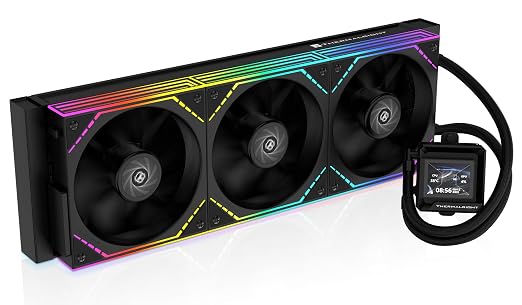
Thermalright Frozen Warframe 360 SE ARGB V2 offers powerful liquid cooling for gaming and creative desktop builds, making it an excellent match for the Intel 14700K. It stands out with a large 360mm radiator and a customizable 2 LCD screen, providing both efficient temperature control and a personalized aesthetic.
Setting up the cooler is straightforward with its three 120mm PWM fans that daisy-chain to reduce cable clutter and assist airflow inside the case. The 3000RPM pump supports stable cooling, while the customizable LCD lets you display system info or personalized images, making the daily use feel tailored to your setup without adding noise beyond 28.2 dB at max fan speed.
The cooling performance keeps the 14700K stable under load thanks to the large aluminum radiator and high RPM fans pushing 68.9 CFM airflow with a pressure of 2.21mmH2O. Build quality is solid, with thought given to noise and airflow.
The most praised feature is the vivid 2 LCD screen, while some find the fan speed reaching 2000RPM a bit too loud during heavy loads.
Users appreciate the bright, customizable LCD screen that adds visual flair while keeping an eye on temps. The downside often mentioned is that pushing the fans to 2000 RPM can lead to louder operation than some would prefer during intense workloads.
Enthusiasts who want strong cooling and personalized display features will find this cooler a great match. Those with smaller cases or those sensitive to fan noise might want to look for alternatives with quieter fans or smaller form factors.
Pros
- Excellent cooling for high-performance CPUs
- Customizable 2″ LCD screen for system info
- Efficient cable management with daisy-chain fans
- Compatible with a wide range of Intel and AMD sockets
Cons
- Fans can be noisy at maximum speed
- Large radiator requires sufficient case clearance
| Specification | Details |
|---|---|
| Radiator Size | 397×120×27mm |
| Fan Size and Speed | 3×120mm, up to 2000 RPM |
| Airflow | 68.9 CFM |
| Pump Speed | 3000 RPM |
| Noise Level | 28.2 dB |
| Power Connector | 4-Pin, 12 volts, 3 watts |
5. CORSAIR NAUTILUS 360 RS

Cooling feels reliable and quiet, making it a solid choice for anyone running a 14700k who wants efficient heat management without constant noise. Compatibility with recent Intel and AMD sockets means it fits many builds, but its standout feature is the strong airflow driven by the RS120 fans with AirGuide technology.
Setup is straightforward thanks to the daisy-chain fan design, which cuts down on messy cables by connecting all fans to the motherboard via a single 4-pin connector. The magnetic dome bearing in the fans keeps noise low while maintaining solid static pressure, so daily use stays quiet even under load. Water cooling helps keep temps down while letting you avoid bulky air coolers.
It handles heat effectively thanks to the strong airflow and pressure of the RS120 fans that spin up to 2100 rpm. Build quality feels sturdy and well thought out with CPU support across multiple modern sockets. Most praise focuses on quiet operation, while the typical complaint centers around the fan noise ramping up when pushing the CPU hard.
Quiet operation ranks high among positive remarks, but fan noise is noticeable when the CPU faces significant stress. The easy cable management and solid cooling combine to make daily use simple and effective.
People upgrading with modern AMD or Intel processors will appreciate its fit and cooling strength. Users sensitive to noise during heavy workloads might look for alternatives with more advanced fan control options.
Pros
- Strong airflow with AirGuide technology
- Single cable for multiple daisy-chained fans
- Quiet operation due to magnetic dome bearing
- Supports latest AMD and Intel sockets
Cons
- Fans get noisy under heavy CPU load
- Only 4-pin power connector limits fan control options
| Specification | Details |
|---|---|
| Cooling Method | Water |
| Maximum Rotational Speed | 2100 rpm |
| Power Connector Type | 4-Pin |
| Compatible Devices | Desktop |
| Socket Compatibility | AMD AM5, AM4; Intel LGA 1851, LGA 1700 |
6. Cooler Master Elite Liquid 360

Great for anyone running a 14700k looking for consistent cooling and quiet operation, the Cooler Master Elite Liquid 360 stands out for its reliable low-noise performance. It’s designed with a dual-chamber ceramic pump that keeps temperatures stable without drawing too much attention from its sound.
Installation on AM5, AM4, LGA 1851, or 1700 platforms is smooth thanks to pre-installed brackets that save time and effort. The pre-applied CryoFuze thermal paste takes care of thermal conductivity between the CPU and cooler, so you don’t have to worry about adding any yourself.
Fans adjust dynamically from 650 to 2100 RPM to balance noise and airflow depending on what the processor needs.
Cooling is effective with a maximum rotational speed of 2100 RPM and an airflow capacity of 84.2 cubic inches per minute, keeping the CPU in check during heavier loads. The build quality is solid, featuring the signature translucent hexagon ARGB cap that adds a custom look without compromise. A common note is that some might find the 3-pin power connector less flexible than PWM 4-pin options, but the overall quiet operation at 30 dB is a big plus.
The standout feature people appreciate most is the low-noise cooling combined with solid temperature control thanks to the ceramic pump and thermal paste. On the downside, some find the 3-pin connector less adaptable and worry about airflow when pushing the cooler hard.
A good fit for those who need dependable, quiet liquid cooling for high-performance CPUs like the 14700k. Enthusiasts seeking maximum airflow or PWM fan control might prefer alternative coolers offering those specific capabilities.
Pros
- Quiet operation with dynamic PWM fan control
- Pre-installed CryoFuze thermal paste ensures good heat transfer
- Easy installation with pre-fit brackets for modern sockets
- ARGB lighting customizable through motherboard control
Cons
- Uses a 3-pin power connector instead of PWM 4-pin
- Airflow might be limited compared to higher RPM fans
| Specification | Details |
|---|---|
| Power Connector Type | 3-Pin |
| Voltage | 12 volts |
| Wattage | 12 |
| Maximum Rotational Speed | 2100 rpm |
| Noise Level | 30 db |
| Air Flow Capacity | 84.2 cubic_inches_per_minute |
7. Noctua NL-LC1-36

Built around a premium Asetek Emma V2 liquid cooling platform, this AIO cooler suits desktop users seeking serious thermal management with low noise. Its standout feature lies in combining a large 360mm radiator and three carefully tuned Noctua fans to balance cooling power with whisper-quiet operation.
Setting up with the 4-pin power connector is straightforward, fitting well into standard desktop cases that accommodate a 360mm radiator. The innovative pump noise absorber cuts down vibration and pump noise noticeably.
Daily operation remains impressively quiet thanks to the clever speed-offset fans, making it ideal for those who want a cooler that doesn’t distract from work or gaming.
Performance matches the expectations for a high-end AIO, with the large radiator and high airflow fans keeping a 14700k well under control. Manufacturing quality feels solid, especially in the pump’s noise reduction design.
The strongest praise routinely points to its quiet and effective cooling, while some note the 1.8-watt pump can get a bit loud at maximum speed.
The cooler’s standout feature is its ability to maintain low noise thanks to the 3-layer acoustic soundproofing and tuned-mass damper. Some reviews mention the pump noise as a common complaint when pushed to high RPMs. Quiet performance is a consistent highlight across daily use.
Ideal for users building near-silent gaming PCs or workstations who have room in their cases for a 360mm radiator. Those with smaller cases or more sensitive to occasional pump noise spikes might want to consider alternatives.
Pros
- Impressive quiet operation through pump noise absorber
- Strong cooling power from large 360mm radiator
- High airflow with three NF-A12x25 G2 PWM fans
- Low vibration levels for stable operation
Cons
- Pump noise can rise at maximum rotational speed
- Larger radiator size requires compatible case space
| Specification | Details |
|---|---|
| Power Connector Type | 4-Pin |
| Voltage | 12 volts |
| Wattage | 1.8 watts |
| Noise Level | 22.5 db |
| Maximum Rotational Speed | 1800 rpm |
| Air Flow Capacity | 107.3 cubic meter per hour |
8. LIAN LI HydroShift II OLED Curved 360

A standout feature of the LIAN LI HydroShift II OLED Curved 360 is its impressive 6.67” curved OLED display, perfect for those wanting a visual centerpiece on their CPU cooler. Designed for desktop use with the 14700k, it shines brightest in the blend of cooling power and customization options it offers.
Setting the pump head with motorized control makes adjusting viewing angles straightforward. The L-Connect 3 software manages the lift, rotation, and dual-axis movement smoothly, offering tailored positioning that fits the case and personal preference.
During daily tasks, noise stays low at 33 dB, keeping things quiet while the fan spins up to 2600 rpm to handle heat efficiently.
Cooling performance meets expectations for water-based methods, keeping the CPU within solid temperature ranges. The build quality feels solid, especially with the OLED screen adding both function and style. Most remarks praise the display’s visual appeal, though some find the motorized adjustments a bit finicky initially.
Visual appeal ranks high with the crisp OLED display and smooth motorized movement praised most. Some users note that adjusting the pump head’s motorized control requires patience for the exact angle.
Enthusiasts looking for aesthetics and customizable positioning will appreciate this unit. Those prioritizing straightforward, no-fuss installation or needing extreme brightness for well-lit rooms might consider alternatives.
Pros
- Vibrant 2K curved OLED display
- Motorized pump head for angle adjustments
- Quiet operation at 33 dB
- Supports high fan speed for cooling
Cons
- Motorized controls can be tricky to fine-tune
- Brightness maxed at 500 nits may struggle in direct sunlight
| Specification | Details |
|---|---|
| Cooling Method | Water |
| Compatible Devices | CPU, Desktop |
| Noise Level | 33 db |
| Maximum Rotational Speed | 2600 rpm |
| Display | 6.67” 2K Curved OLED |
9. NZXT Kraken Plus 360

High-performance cooling paired with a customizable LCD screen makes the NZXT Kraken Plus 360 a great choice for anyone running a 14700k who values both solid temps and a bit of flair in their setup. Its biggest strength lies in keeping your CPU cool under heavy workloads while remaining surprisingly quiet.
Setting it up involves standard water cooling installation steps, and the included NZXT CAM software allows you to customize the 1.54 LCD screen easily. Day-to-day operation is smooth thanks to its quiet airflow, and the Zero RPM Mode means the fans don’t spin at low loads, so noise is almost nonexistent when your system isn’t working hard.
The cooling performance stands out with the Turbine pump’s efficiency in moving coolant, maintaining stable temperatures even during intense tasks. Construction feels solid with quality materials, but a few users mention that the noise level can reach 30 dB at peak fan speeds of 2800 rpm.
Most appreciate the powerful cooling and quiet operation at low loads, while some find fan noise noticeable when pushed hard.
Users praise the cooler’s ability to keep the CPU temperatures low without constant fan noise thanks to the Zero RPM Mode. Noise spikes at high fan speeds are the most frequent downside mentioned, particularly under heavy workloads. The customizable LCD screen adds a personal touch but doesn’t impact performance.
Anyone prioritizing quiet, effective cooling with the option to display system info visually will appreciate it. Those seeking absolute silence under full load or those needing higher wattage support for extreme builds might want to consider alternatives.
Pros
- Efficient cooling with high flow and head pressure
- Quiet operation with Zero RPM Mode at low loads
- Fully customizable LCD screen with diverse display options
- Strong build quality and reliable pump design
Cons
- Fans can get noisy at maximum rotational speed
- Limited wattage power might restrict future upgrades
| Specification | Details |
|---|---|
| Power Connector Type | 3-Pin or 4-Pin |
| Voltage | 12 volts_of_direct_current |
| Wattage | 2.16 watts |
| Noise Level | 30 db |
| Maximum Rotational Speed | 2800 rpm |
| Cooling Method | Water |
10. Cooler Master 360 Atmos

Keeping a high-performance CPU like the 14700k cool during intense gaming or heavy workloads demands reliable liquid cooling. Perfect for those seeking powerful, quiet operation, the Cooler Master 360 Atmos stands out with its innovative dual chamber design that targets the CPU hotspot efficiently.
Installation is straightforward thanks to redesigned brackets that fit AM5 and LGA 1851|1700 sockets with ease. The pre-installed SickleFlow 120 Edge fans help maintain excellent airflow without unnecessary noise, while the ultra-thin spade fins inside the radiator optimize heat transfer. Customizing the ARGB lighting with your own 3D designs adds a personal touch to daily setup and use.
Cooling performance matches the demands of Intel i9 and AMD R9 CPUs, making it more than capable of handling the 14700k. Built with precision-engineered microchannels and fine fins, it keeps temperatures under control quietly at 25 dB under load. The strongest points are its effective cooling and quiet fans; some mention the maximum fan speed of 2500 rpm could be louder when pushed hard.
Performance holds up well for high-powered CPUs with targeted cooling and quiet fans praised most. The typical complaint focuses on noise when fans reach their maximum rotational speed. Assembly benefits from easy-to-mount brackets but only for select newer CPU sockets, limiting compatibility.
Anyone running a 14700k or similar high-end processor looking for efficient and quiet cooling will appreciate this model. Users needing compatibility with older or different socket types should look elsewhere. The stylish lighting adds a nice touch for those who like customization without compromising cooling ability.
Pros
- Strong, targeted cooling on CPU hotspot
- Quiet operation at 25 dB
- Easy installation with simplified brackets
- Customizable ARGB lighting with 3D design options
Cons
- Fans can get loud at top 2500 rpm speed
- Brackets only support specific platforms
| Specification | Details |
|---|---|
| Cooling Method | Water |
| Power Connector Type | 4-Pin |
| Noise Level | 25 db |
| Maximum Rotational Speed | 2500 rpm |
| Air Flow Capacity | 70.7 cfm |
11. Noctua NL-LC1-42

Extra-large 420mm radiator with three 140mm fans makes it perfect for those needing serious cooling power for their 14700k. Suits builders targeting quiet and efficient performance with a liquid cooler that can handle demanding workloads without loud noise.
Setup involves mounting the sizable radiator and connecting its 4-pin power, which runs at a modest 12 volts with low wattage of 2.28 watts. The three Noctua NF-A14x25 G2 PWM fans use speed-offset technology to keep noise down during regular use, and the advanced noise absorber on the pump cuts vibration sounds substantially.
It’s clearly designed for anyone who values low sound levels while keeping temperatures in check.
Thermal performance is very effective thanks to the premium Asetek Emma V2 platform, managing heat well even under load. Build quality is sturdy with excellent materials, and the large radiator ensures good heat dissipation.
The most common complaint centers on the radiator size requiring roomy cases and the cooler’s installation being more complex than smaller units. Noise is usually praised as very low, making this cooler stand out.
The strongest praise is about its quiet operation, thanks to the innovative noise absorber and speed-offset fan design. A frequent complaint involves the large radiator demanding more internal space and making installation a bit challenging in some setups.
Builders seeking a silent, powerful cooler for demanding CPUs will appreciate this model. Those with smaller cases or who prefer an easier installation might want to explore more compact liquid coolers instead.
Pros
- Very quiet pump with acoustic soundproofing
- Large 420mm radiator for excellent heat dissipation
- Three award-winning 140mm PWM fans
- Low power consumption of 2.28 watts
Cons
- Requires a spacious case for radiator fitting
- Installation is more involved than smaller coolers
| Specification | Details |
|---|---|
| Power Connector Type | 4-Pin |
| Voltage | 12 volts |
| Wattage | 2.28 watts |
| Noise Level | 24.8 db |
| Maximum Rotational Speed | 1500 rpm |
| Air Flow Capacity | 155.6 cubic meter per hour |
12. NZXT Kraken Elite 360 RGB

People running a high-performance CPU like the 14700k will appreciate the cooling and smart display this AIO offers. It excels at keeping temps down while offering a vibrant screen on the pump that can show whatever you want, from system stats to fun images. It suits anyone who wants both strong cooling and a bit of flair in their build.
Setup involves fitting the radiator and plugging in the 8-pin power connector, which is straightforward on most desktops. The LCD on the pump is really bright and shows clear system info or your favorite GIF, which makes daily checks quick and interesting. Noise stays low at 30 db, so your PC won’t get distracting even under load.
Cooling performance benefits from the custom-designed pump with a fast flow rate and solid head pressure, helping the CPU avoid heat spikes. The build feels solid, with a large 360mm radiator and well-designed tubing.
Praise centers on the improved cooling and quiet operation, while some users find the pump’s speed up to 2400 rpm a bit louder at full blast.
Consistent praise comes from how well it cools demanding CPUs quietly, paired with a bright, customizable LCD that makes monitoring easy. The most common gripe involves noise at full pump speed, which can be distracting. You get a cooling system that balances performance and style effectively.
Gamers and enthusiasts wanting strong cooling and a customizable display will enjoy this cooler. Those sensitive to noise or without an 8-pin header on their motherboard might want to consider alternatives better suited to quieter operation or simpler power requirements.
Pros
- Efficient cooling with high flow rate pump
- Large 2.72-inch IPS LCD with vibrant colors
- Low noise level at 30 db
- Syncs RGB LED with system and apps
Cons
- Pump noisy at maximum 2400 rpm speed
- Requires 8-pin power connection
| Specification | Details |
|---|---|
| Power Connector Type | 8-Pin |
| Voltage | 12 volts |
| Wattage | 28.44 watts |
| Noise Level | 30 db |
| Maximum Rotational Speed | 2400 rpm |
| Air Flow Capacity | 78.86 cfm |
Best AIO Coolers for 14700k Comparison Table
| Product | Cooling Method | Max RPM | Noise Level | Air Flow Capacity |
|---|---|---|---|---|
| ARCTIC Liquid Freezer III 360 | Liquid | 3000 rpm | – | 77 cfm |
| ARCTIC Liquid Freezer III 360 | Liquid | 3000 rpm | – | 77 cfm |
| ARCTIC Liquid Freezer III 420 | Water | 2500 rpm | 1 sones | 110 cfm |
| Thermalright Frozen Warframe 360 ARGB | Water | 2000 rpm | 28.2 db | 68.9 cfm |
| CORSAIR Nautilus 360 RS | Water | 2100 rpm | – | – |
| Cooler Master Elite Liquid 360 | Water | 2100 rpm | 30 db | 84.2 cubic_inches_per_minute |
| Noctua NL-LC1-36 | Water | 1800 rpm | 22.5 db | 107.3 cubic meter per hour |
| LIAN LI HydroShift II OLED | Water | 2600 rpm | 33 db | – |
| NZXT Kraken Plus 360 | Water | 2800 rpm | 30 db | – |
| Cooler Master 360 Atmos | Water | 2500 rpm | 25 db | 70.7 cfm |
| Noctua NL-LC1-42 | Water | 1500 rpm | 24.8 db | 155.6 cubic meter per hour |
| NZXT Kraken Elite 360 RGB | Water | 2400 rpm | 30 db | 78.86 cfm |
- Cooling MethodLiquid
- Max RPM3000 rpm
- Noise Level–
- Air Flow Capacity77 cfm
- Cooling MethodLiquid
- Max RPM3000 rpm
- Noise Level–
- Air Flow Capacity77 cfm
- Cooling MethodWater
- Max RPM2500 rpm
- Noise Level1 sones
- Air Flow Capacity110 cfm
- Cooling MethodWater
- Max RPM2000 rpm
- Noise Level28.2 db
- Air Flow Capacity68.9 cfm
- Cooling MethodWater
- Max RPM2100 rpm
- Noise Level–
- Air Flow Capacity–
- Cooling MethodWater
- Max RPM2100 rpm
- Noise Level30 db
- Air Flow Capacity84.2 cubic_inches_per_minute
- Cooling MethodWater
- Max RPM1800 rpm
- Noise Level22.5 db
- Air Flow Capacity107.3 cubic meter per hour
- Cooling MethodWater
- Max RPM2600 rpm
- Noise Level33 db
- Air Flow Capacity–
- Cooling MethodWater
- Max RPM2800 rpm
- Noise Level30 db
- Air Flow Capacity–
- Cooling MethodWater
- Max RPM2500 rpm
- Noise Level25 db
- Air Flow Capacity70.7 cfm
- Cooling MethodWater
- Max RPM1500 rpm
- Noise Level24.8 db
- Air Flow Capacity155.6 cubic meter per hour
- Cooling MethodWater
- Max RPM2400 rpm
- Noise Level30 db
- Air Flow Capacity78.86 cfm
How to Choose the Right AIO Cooler
Choosing an AIO cooler for the 14700k involves focusing on factors like cooling performance, radiator size, and compatibility with your case and motherboard. Getting these right ensures efficient heat management and quiet operation, preventing overheating issues and potential hardware damage, which saves both money and hassle.
Compatibility with Cpu Socket and Case
Many users find themselves double-checking build compatibility after purchasing an AIO cooler only to discover it doesn’t fit the motherboard socket or case mounting points. Support for the LGA 1700 socket is not universal, so the cooler must explicitly mention compatibility, or mounting brackets may need to be purchased separately.
Radiator size is another key factor; common sizes are 120mm, 240mm, 280mm, and 360mm, but the case must have matching mounting spots and enough clearance to accommodate the radiator and fans together.
Clearance around the CPU socket directly affects RAM and VRM cooling. Taller RAM modules can conflict with the pump block or tubing, especially with compact or tight layouts. Checking measurements in millimeters against your build helps prevent awkward adjustments or switching components later.
Cooler models designed with low-profile fittings and flexible tubing ease installation and avoid blocking adjacent motherboard features.
Cooling Performance and Tdp Rating
The processor’s TDP rating sets a baseline for how much heat the cooler should manage continuously. A 125W or higher rating calls for larger radiators and higher CFM fans to move enough air.
For example, a 240mm radiator might suffice for mid-range loads, but 280mm or 360mm radiators provide better cooling under heavy or sustained multitasking and gaming. Fan airflow measured in CFM should be balanced with noise considerations.
Pump quality matters just as much. A well-performing pump maintains steady liquid flow rates, avoiding hotspots even under load.
Efficiency metrics like cooling capacity and power consumption reveal how well the system handles thermal stress without overworking. Skimping on radiator size or pump speed leads to throttling or thermal spikes that reduce performance and stability.
Noise Levels and Fan Quality
Loud fans quickly become a major annoyance, especially during extended gaming or editing sessions. Fans with PWM support let you adjust speeds dynamically, reducing noise during low CPU usage and ramping up cooling only as needed. Cheaper fans often run at fixed speeds and stay noisy at all times.
Bearings like fluid dynamic or magnetic levitation types tend to last longer and produce less hum compared to sleeve bearings.
Fan blade design influences how much noise air movement generates. Larger blades spinning slower push air more quietly than smaller blades spinning fast.
Long-term use benefits from high-quality fans that don’t degrade into rattling or buzzing after months of operation. Checking decibel ratings at load gives a realistic expectation of daily noise levels.
Build Quality and Materials
Radiators made from aluminum are common for affordability but can corrode when paired with certain metals inside the loop. Copper radiator cores offer better thermal conduction and longevity but cost more.
The pump housing and water block need solid construction and quality seals to prevent leaks, a frequent issue with cheaper units. Reinforced tubing with nylon or braided sleeves resists kinking and cracking, important for moving components or tight builds.
Thermal interface materials included with coolers vary in quality. Stock paste is generally okay for a start, but high-performance thermal compounds or pads significantly improve heat transfer between the CPU and cooler. Some brands even recommend specific TIM replacements for better sustained temperatures during heavy use.
Installation Ease and Maintenance
Installation can be frustrating without clear, step-by-step instructions or all mounting brackets included. Coolers that come with comprehensive hardware kits save the hassle of sourcing missing parts after buying.
The mounting system should securely fasten without needing excessive force or complicated tools. Compatibility with standard CPU socket brackets, especially for LGA 1700, simplifies the process greatly.
Maintenance varies. Closed-loop systems require little to no refilling but need occasional dusting of fans and radiators to maintain airflow.
Filters that are easy to remove and clean reduce buildup and preserve cooling performance. Some units offer modular designs allowing pump or fan replacement without dismantling the entire setup, which lengthens product lifespan and reduces downtime.
Optimizing AIO Cooler Performance with Intel 14700K
The Intel 14700K generates significant heat under load, which requires efficient cooling to maintain stable performance. AIO coolers with a larger radiator surface area, typically 240mm or 280mm, provide better heat dissipation compared to smaller units.
Using high static pressure fans is important because they push air more effectively through the radiator fins. Positioning the radiator at the top or front of your case can assist in consistent airflow, improving cooling efficiency.
Thermal paste application also influences performance. Applying a thin, even layer between the CPU and cold plate of the AIO helps with heat transfer. Monitoring temperatures with software during heavy usage ensures the cooler performs as expected, allowing early detection of any issues like pump failure or insufficient fan speed.
Proper cable management prevents airflow obstruction, keeping temperatures lower.
Maintenance Tips to Extend the Lifespan of Your AIO Cooler
Regular maintenance of your AIO cooler prevents performance drops and extends its lifespan. Dust accumulation on the radiator and fans reduces airflow, which can cause temperatures to rise.
Cleaning these components every few months using compressed air or a soft brush keeps the cooling system efficient.
Checking for pump noise or irregular vibrations periodically is important. A failing pump can lead to overheating and hardware damage.
Inspect the tubes for any signs of leakage or cracks, which might indicate the need for replacement. Maintaining good case airflow prevents heat buildup around the radiator, ensuring the cooler operates under optimal conditions.
- Clean radiator and fans regularly
- Monitor pump operation and noises
- Inspect tubing for leaks or damage
- Ensure proper case ventilation
Comparing Air Cooling and AIO Solutions for the 14700K
Air coolers generally offer reliable and quiet performance with fewer points of failure compared to AIO liquid coolers. High-end air coolers can handle the heat output of the 14700K in less demanding cases or when overclocking is minimal.
They also avoid risks associated with liquid leaks.
AIO coolers, on the other hand, are better at dissipating heat from high-performance CPUs like the 14700K, especially during intensive workloads or heavy overclocking. They consume less space around the socket, improving RAM clearance and providing a cleaner build aesthetic.
However, AIOs require more upkeep and pose potential pump or leak issues over time.
Choosing between the two depends on your budget, case compatibility, noise tolerance, and whether you plan to push the CPU beyond stock settings.
People Also Asked
How Do I Install an AIO Cooler on a 14700k?
Mount the backplate on your motherboard, apply thermal paste, position the cold plate over the 14700k, then secure the radiator and fans in your case. Tighten screws evenly to avoid damaging the CPU or motherboard. Double-check the mounting to ensure good contact for optimal cooling.
Is a 240mm AIO Cooler Sufficient for 14700k Cooling?
A 240mm AIO cooler can keep a 14700k at safe temperatures under normal workloads. Heavy overclocking or high ambient temperatures might require a larger radiator or better airflow in your case. Make sure your case supports 240mm radiators comfortably.
What Maintenance Does an AIO Cooler Need for Longevity?
Clean dust off the radiator and fans at least every few months to maintain airflow. Check the fan speeds and listen for unusual pump noise. Avoid moving or tilting the system frequently since this can stress seals and shorten the pump’s life.
Are There Common Leaks or Pump Failures with AIO Coolers?
Leaks are rare but can happen if seals degrade or the unit suffers physical damage. Pumps might fail gradually, causing temperature spikes or strange noise. Regularly monitor temperatures and listen for abnormal sounds to catch issues early.
Will My Motherboard Support an AIO Cooler for 14700k?
Most modern motherboards support standard AIO coolers with the typical 115x or 120x mounting brackets used by Intel CPUs like the 14700k. Verify that the cooler’s socket compatibility matches the motherboard’s socket type to avoid installation issues.
Conclusion
Choosing a good AIO cooler for the 14700k depends mostly on the cooler’s ability to handle the CPU’s heat output, the size compatibility with your case, and how quiet the fans run during heavy loads. Cooling performance and fit are not optional since they directly affect your system’s stability and noise levels.
Consider your case size and budget before picking a cooler, especially if you only occasionally push your CPU hard. A smaller or less expensive model might be enough. Check the comparison table and product details above to find a cooler that fits your setup and cooling needs without overspending or worrying about space constraints.

I’m Grant Mitchell, a firearms and hunting writer with years of experience at the range and in the field. I write about rifles, shotguns, handguns, optics, safe storage, cleaning, and responsible ownership, along with practical hunting tips. My goal is to share accurate, safety-first information that helps you choose the right firearm, maintain it properly, and become a more confident shooter.