Top 12 Best GMRS Handheld Radio You Can’t Miss Today!
There’s a familiar frustration when your radio cuts out just as you need it most, whether you’re coordinating a group hike or managing a work site. The best GMRS handheld radio solves this by providing reliable communication with clear sound and a solid connection over a good range. Cheap or poorly made radios often suffer from weak signals, short battery life, or confusing controls that make them more of a hassle than help.
A quality GMRS handheld radio typically features durable construction to withstand outdoor use, with impact-resistant plastic and water resistance rated at least IP54. Power output usually ranges up to 5 watts, which affects how far your voice carries, typically between 1 and 5 miles depending on terrain.
Ease of use is key, so a well-designed model has straightforward buttons and a clear display, plus rechargeable batteries that last several hours on a single charge.
Need a Quick Check?
| Image | Product | Price |
|---|---|---|
Our Top Picks 1  | Midland GXT67 PRO | Check Price |
Our Top Picks 2  | Radioddity GM-30 Plus | Check Price |
Our Top Picks 3  | Midland GXT3000 | Check Price |
Our Selected Top 12 Gmrs Handheld Radio Worth Your Money
This list features reliable handheld GMRS radios designed for various needs, from outdoor adventures to everyday communication. Each review covers performance, ideal users, strengths, and drawbacks, helping you find the right device based on your specific requirements and preferences.
1. Midland GXT67 PRO GMRS Two-Way Radio
GMRS radios with strong power output like this one stand out for those needing reliable communication in rough terrain or over long distances. Ideal for outdoor enthusiasts or work crews, it delivers a full 5-watt signal that keeps you connected well beyond typical walkie-talkie range.
Setup is straightforward thanks to an easy-to-use interface that avoids complex programming. It comes pre-loaded with 22 channels and 28 privacy codes, so you’re ready to go right away. Daily operation benefits from features like silent mode and weather alerts, while the included lithium-ion battery lasts up to four days before needing a recharge.
Communication quality remains clear across open country and through challenging obstacles like dense trees and valleys. The waterproof and dustproof design means it handles outdoor conditions without fear of damage. Users often mention the excellent range and dependability, though some find the channel variety larger than practical in typical use.
The radio’s strongest point is its clear long-distance transmission and tough weatherproof build. Common critiques focus on the large number of channels, making it less straightforward than some simpler models. Those who need serious range and durability will appreciate this device, while casual users might prefer something with fewer channels and a simpler feature set.
Great for hikers, campers, and people working in remote areas where range and reliability matter most. Less suited for casual neighborhood or short-range use where a lower-powered, simpler radio would do the job just fine.
Pros
- Full 5-watt power cuts through tough terrain
- IP67 waterproof and dustproof rating
- Up to 4 days on one battery charge
- Simple interface with pre-set channels and codes
Cons
- Excessive number of channels can be confusing
- Lithium-ion battery lifetime may vary with usage
| Specification | Details |
|---|---|
| Number of Channels | 99 |
| Battery Average Life | 4 days |
| Water Resistance Level | Waterproof |
| Frequency Range | 462-467 MHz |
| Talking Range Maximum | 100 mile |
2. Radioddity GM-30 Plus GMRS Handheld Radio
Keeping in touch over long distances during outdoor trips or team activities often requires reliable radios. A handheld radio suited for GMRS channels, with plenty of customizability and range, is ideal for anyone needing solid communication. Its biggest strength lies in offering up to 1,000 channels, covering every common band and many customizable options.
Setting it up is straightforward thanks to a feature that copies frequencies and tone settings between radios with just one button press. This simplifies syncing multiple units without much fuss. Day-to-day use covers a wide variety of communication needs with GMRS, UHF, VHF, NOAA, FM, and other bands all accessible.
Batteries last nicely, and the water-resistant body allows use in different weather conditions without worry.
Performance holds up well with a claimed maximum talking range of 15 miles, making it suitable for large outdoor areas. The build feels sturdy and made for rough handling but still lightweight enough to carry comfortably. Positive notes often mention the large number of channels and easy frequency sharing, while some users find the complexity of so many channels a bit overwhelming at first.
Many appreciate how easy it is to transfer frequencies between radios, speeding up setup when using multiple units. The vast number of channels is a strong point but also causes some confusion among users who want a simpler setup. Water resistance is helpful but the range depends heavily on the surroundings.
People who want a highly customizable GMRS radio with support for many signals and a sturdy build will find this a good fit. Those who need a basic, easy-to-use unit with fewer settings might want to select a simpler model instead.
Pros
- Up to 1000 channels with 970 fully modifiable
- One-click frequency and tone copying
- Wide band support including NOAA and Air
- Water resistant design for outdoor use
Cons
- Complex channel options can be confusing initially
- Maximum range can vary greatly with environment
| Specification | Details |
|---|---|
| Number of Channels | 1000 |
| Voltage | 8.4 volts |
| Talking Range Maximum | 15 mile |
| Water Resistance Level | Water Resistant |
| Connectivity Protocol | GMRS |
| Number of Batteries | 2 Lithium Ion batteries required (included) |
3. Midland GXT3000 GMRS Two-Way Radios
Extending communication up to 65 miles via GMRS repeater makes these radios a solid pick for those who need long-range coverage in off-road convoys, farms, or search teams. Rechargeable lithium-ion batteries delivering about 27 hours on a single charge stand out for day-long use without frequent recharging.
Setting up is straightforward with 50 channels and 142 privacy codes to keep your conversations clear across rugged landscapes. The USB-C charging option lets you easily top off the battery from a power bank or vehicle outlet.
An integrated flashlight and weather alert add useful tools that fit well with outdoor activities. The radios are built to handle weather resistance, so you don’t worry about light rain or dust during your trips.
Communication stays clear over timber and mountain passes where cell signals usually fail, making it reliable for wide-area tasks. The radios feel solid and practical but the reliance on two AA batteries for operation is a twist considering the rechargeable lithium-ion packs also come with the package. Users appreciate the long battery life and reach, while some critique the bulkiness and occasional interface complexity.
Long range and battery endurance are consistent positives. Most find the radios reliable across rough terrain but note the odd combo of requiring AA batteries alongside rechargeable packs is inconvenient. The flashlight and weather features get appreciation for added practicality on outdoor trips.
People who need solid, extended-range communication outdoors or coordination over large areas will find these radios a practical tool. Those preferring lighter, simpler devices with only rechargeable power might want to consider other options for easier daily use.
Pros
- Up to 65 miles communication with repeater link
- 27-hour battery life with lithium-ion packs
- USB-C charging from multiple power sources
- 142 privacy codes for clearer communication
Cons
- Requires two AA batteries despite rechargeable packs
- Interface can be confusing for beginners
| Specification | Details |
|---|---|
| Number of Channels | 50 |
| Frequency Range | 462.5500 – 467.7125 MHz |
| Talking Range Maximum | 50 mile |
| Battery Average Life | 27 hours |
| Number of Batteries | 2 AA batteries required |
| Connectivity Protocol | GMRS |
4. BTECH GMRS-PRO GMRS Radio

People who rely on clear communication during outdoor adventures or in remote areas will appreciate this GMRS handheld radio. Its main advantage lies in simple management through an app connection, making setup painless and quick for those who prefer a tech-friendly approach.
Pairing the radio with the dedicated app streamlines the initial setup and day-to-day adjustments. Managing channels and syncing contacts happens on your phone, so there’s no need to wrestle with tiny buttons or complex menus.
The waterproof design helps it hold up well in various weather, and it connects easily to compatible headsets or vehicle systems using Bluetooth or traditional GMRS frequencies.
The two-way radio performs solidly within its typical 1–2 mile range without obstacles, providing reliable communication whether handheld or paired with a repeater to extend reach up to 20 miles. Its rugged waterproof build supports use outdoors, though some find the size a bit bulky for long-term carry.
Strong battery life and adjustable channels get praised, while the biggest drawback often mentioned is that range shrinks noticeably indoors or in cluttered settings.
The strongest praise goes to the app-assisted setup and contact syncing, which make managing channels and settings straightforward. The most common complaint is about range reduction caused by buildings, trees, and other obstacles, limiting its reach indoors or in dense areas despite repeater support.
People who want a waterproof, feature-rich radio and prefer managing it via an app will find this a good fit. Those needing the absolute maximum portable range or a smaller device might prefer a different model designed for lighter carry or stronger indoor penetration.
Pros
- App connection for easy setup and channel control
- Waterproof for tough outdoor conditions
- Compatible with hands-free headsets and vehicle audio
- Supports repeater use for extended range
Cons
- Range decreases significantly indoors and in wooded areas
- Size feels bulky compared to other handheld radios
| Specification | Details |
|---|---|
| Number of Channels | 180 |
| Talking Range Maximum | 2 mile |
| Voltage | 7.4 volts |
| Water Resistance Level | Waterproof |
| Number of Batteries | 1 Lithium Ion batteries required. (included) |
| Connectivity Protocol | Bluetooth, GMRS, GPS |
5. Midland GXT1000VP4 GMRS Two-Way Radios

Midland GXT1000VP4 GMRS Two-Way Radios deliver long-range communication with an impressive array of 50 channels and 142 privacy codes. Great for outdoor enthusiasts or anyone needing reliable connection where phone signals fail, its standout feature is how far it can keep you in touch, even in rugged environments.
Setup is straightforward, arriving charged with two radios, rechargeable battery packs, and a desktop charger. Daily use is smooth thanks to features like the hands-free VOX operation, letting you talk without pressing buttons.
You get weather alerts with the built-in NOAA scan, which is handy for knowing when to prepare for sudden storms during hiking, camping, or fishing trips.
The radios perform well across distances up to 36 miles in open areas. They feel solid and weather-resistant, built to handle outdoor conditions. The strongest praise comes from how clear and reliable the voice communication is.
A common complaint mentions the need for AA batteries if the rechargeable pack runs out, which can be inconvenient without spares.
Clear communication up to 36 miles stands out, allowing dependable connection far from cell towers. Most users find the switch to AA batteries necessary when rechargeable packs deplete inconvenient but manageable. Weather-resistant design and NOAA alerts keep you informed in changing outdoor conditions.
Anyone who spends time outdoors in remote areas or works where phones don’t reach will appreciate this radio set. Those who rely exclusively on rechargeable power without backup batteries may want to consider alternatives with built-in longer-lasting power sources.
Pros
- Long-range communication across 36 miles
- Built-in NOAA weather scan for alerts
- Hands-free voice activation with VOX
- Includes rechargeable batteries and charger
Cons
- AAs required when rechargeable battery runs low
- May need spares for extended use
| Specification | Details |
|---|---|
| Number of Channels | 50 |
| Talking Range Maximum | 36 mile |
| Battery Average Life | 10 hours |
| Water Resistance Level | Water Resistant |
| Frequency Range | 462.5500 – 467.7125 MHz |
6. TIDRADIO TD-H3 GMRS Handheld Radios

TIDRADIO TD-H3 GMRS Handheld Radio stands out for its flexibility in switching between GMRS, Ham, and normal modes. It suits beginners wanting a reliable multi-band radio with a long antenna to boost communication range.
Its biggest strength is its ability to handle various frequencies with ease.
Setting up includes activating the Bluetooth programming feature through an app or web, which makes channel management straightforward. The 15.15-inch antenna noticeably extends range, and switching between modes is quick and simple. Its water resistance means daily use outdoors isn’t a worry, and the dual lithium polymer batteries provide solid standby time.
Communication is clear across the 199 available channels, covering 462-467MHz for GMRS transmission. The build feels durable and resistant to typical outdoor conditions. The strongest praise highlights the extended range from the long antenna, while the most common complaint involves occasional complexity with advanced settings for those unfamiliar with multi-band radios.
The long 15.15-inch antenna improves communication distance significantly, which many find valuable. The most frequent complaint is about the complexity of programming and mode switching when first using it, as the multi-band setup introduces a learning curve.
People looking for a versatile radio capable of handling multiple frequency bands and who don’t mind learning some advanced controls will appreciate this model. Anyone wanting a simpler, single-frequency device might prefer an alternative without the multi-mode features.
Pros
- Supports GMRS, Ham, and Normal modes
- Long 15.15-inch antenna for extended range
- Water resistant design for outdoor use
- Bluetooth programming through app and web
Cons
- Advanced settings can be confusing for beginners
- Requires dual lithium polymer batteries
| Specification | Details |
|---|---|
| Number of Channels | 199 |
| Frequency Range | 462-467MHz |
| Battery Average Life | 48 hours |
| Number of Batteries | 2 Lithium Polymer batteries required (included) |
| Antenna Length | 15.15 inches |
| Connectivity Protocol | Bluetooth |
7. Retevis RB48PLUS GMRS Walkie Talkies
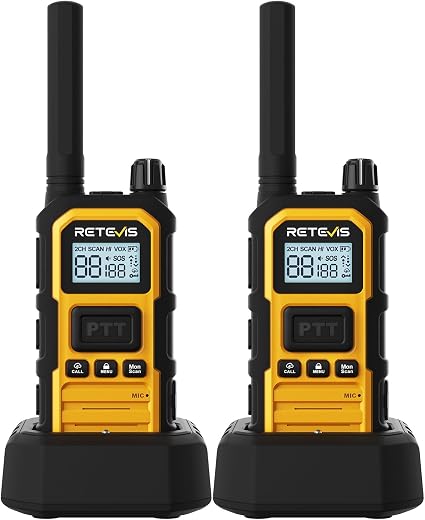
Feeling connected in remote areas becomes easier with these radios made for outdoor adventures. Designed for those who need reliable communication over distances, their standout feature is the strong battery life, which keeps conversations going without constant recharging.
Getting started is straightforward, and daily operation focuses on staying linked with teammates. The variety of 30 channels, including 11 NOAA weather channels, helps keep everyone informed and ready for changes.
Emergency alerts add a safety layer, while the radios’ waterproof rating means they can handle rough conditions without fuss.
Communication stays clear up to 3 miles, making it effective for convoy travel or hiking. Built tough with IP67 waterproofing and a sturdy design, these radios take some knocks and still work.
Praise lands on the long battery life, but some mention the size feels bulkier than other models, which can be a minor drawback for pocket carry.
Long battery life stands out, allowing up to 18 hours of use and over 100 hours on standby, which suits extended outings. The most reported drawback is the radios’ bulk, making them less convenient to carry in tighter pockets.
Anyone needing dependable, weather-aware communication for day-long activities will appreciate these radios. Those wanting something ultra-compact or with longer range might prefer exploring other options.
Pros
- Long 18-hour battery life
- Includes NOAA weather channels
- IP67 waterproof rating
- Remote emergency alarm feature
Cons
- Bulkier size limits pocket comfort
- Range is effective but not extreme
| Specification | Details |
|---|---|
| Number of Channels | 30 |
| Battery Average Life | 18 hours |
| Talking Range Maximum | 3 mile |
| Water Resistance Level | Waterproof (IP67) |
| Frequency Range | GMRS |
8. TIDRADIO TD-H9 GMRS Handheld Radio

Great for anyone needing a versatile and rugged GMRS radio, this unit stands out by combining powerful features like GPS and Bluetooth connectivity in a compact handheld. Its biggest strength is the wide feature set paired with a solid battery life, making it suitable for outdoor adventures and everyday communication.
Setup involves using the USB-C port or Bluetooth for programming, which works well once you get past the initial learning curve. Daily use benefits from dual customizable PTT buttons and SMS texting for quick, clear communication. The compass, NOAA weather alerts, and noise reduction add layers of usefulness when out in the field or on the move.
Performance-wise, it offers a maximum 10-kilometer range and holds a charge for around 72 hours on a single 9V battery, which is impressive. The IP54 water resistance and rugged design make it reliable under tough conditions. Common praise highlights its rich features and durability, while some users find the menu system and display a bit tricky to use initially.
The radio impresses with its rich set of features like GPS and Bluetooth, making communication reliable and multifunctional. Many find the rugged design and battery longevity a strong plus. On the downside, the interface takes some getting used to, which might slow down new users during setup or quick adjustments.
People who want a feature-packed radio for hiking, camping, or emergency use will be satisfied by its capability and toughness. Those preferring simpler or rechargeable models might look elsewhere due to the menu complexity and the use of a standard 9V battery.
Pros
- Dual customizable PTT buttons for flexible use
- Bluetooth connectivity supports headphones and speakers
- Rugged, IP54 water-resistant build for outdoor use
- GPS location sharing and APRS tracking included
Cons
- Menu navigation can feel complicated initially
- Uses 9V battery, which may not be as common as rechargeable packs
| Specification | Details |
|---|---|
| Number of Channels | 199 |
| Battery Average Life | 72 hours |
| Water Resistance Level | Water Resistant (IP54) |
| Voltage | 7.4 volts_of_direct_current |
| Maximum Talking Range | 10 kilometer |
9. TIDRADIO TD-H9 GMRS Handheld Radio

Rugged design paired with an IP54 rating makes this handheld radio suited for outdoor use and demanding environments. It fits anyone who needs a versatile GMRS radio with extensive features, particularly strong on connectivity and navigation options, offering an edge in both communication and locating contacts.
Setup involves charging four included nonstandard batteries and downloading any needed programming files via the USB-C side port or Bluetooth. Daily use is straightforward with dual PTT buttons and a clear 1.8-inch color display you can customize across 18 menu colors and three display modes.
Bluetooth compatibility allows connecting to headphones or speakers, which makes hands-free communication easier, and the GPS location sharing feature helps track precise positions on the go.
Performance is steady with a maximum talking range of 10 km, well-suited for typical GMRS scenarios. The built-in GPS and APRS tracking add valuable safety and coordination tools. Several reviews highlight the durable build as a plus, but some mention the use of nonstandard batteries as inconvenient since replacements need ordering.
The interface is generally appreciated for its new user-focused UI, though the multitude of features might require a learning curve.
The strongest praise lies in its combination of durability and navigation features, allowing reliable communication even while tracking locations. The most common complaint revolves around the nonstandard batteries, which can be inconvenient when replacements are needed, slightly impacting its practicality in long-term use.
Those needing advanced features like GPS sharing and Bluetooth connectivity will find this radio suits their needs well, especially in rugged conditions. Users preferring straightforward, simple radios or those worried about battery sourcing might want to explore other models with standard battery types and fewer advanced functions.
Pros
- Built-in GPS and APRS tracking
- Bluetooth headphone and speaker support
- Customizable dual PTT buttons
- Rugged IP54 rated design
Cons
- Uses nonstandard batteries that are hard to replace
- Complex interface may overwhelm new users
| Specification | Details |
|---|---|
| Number of Channels | 199 |
| Battery | 4 Nonstandard Battery batteries included |
| Voltage | 7.4 volts_of_direct_current |
| IP Rating | IP54 rugged |
| Maximum Talking Range | 10 km |
| Display | 1.8-inch color display with 18 menu color options |
10. TIDRADIO TD-H9 GMRS Handheld Radio

Large display and advanced Bluetooth features stand out right away, making it a solid choice for those needing more than basic communication. It works well for people who want a rugged radio with GPS and text message capabilities, fitting outdoor enthusiasts or families staying in touch over longer distances.
Getting started involves charging the radio via USB-C and trying out the dual PTT buttons that you can customize. You’ll find GPS location sharing handy, especially when using APRS tracking in group trips. Text messaging via SMS is a rare feature on handheld radios, which adds convenience.
Programming and updates can be done through USB or Bluetooth, so setup feels modern. The IP54 rating means light rain or dust won’t stop you during daily use.
Performance covers a pretty broad 199 channels with a maximum talking range around 15 miles, which suits many outdoor or neighborhood uses. The build is noticeably sturdy with IP54 water resistance for mild weather exposure. Users praise its bright 1.8-inch color display and reliable call alert, but a common downside is the use of nonstandard batteries that complicate replacements.
The interface includes some nice extras like NOAA weather alerts and a compass, helpful features in emergencies or adventures.
The most appreciated feature is the GPS location sharing combined with a bright color screen, which many find helpful for tracking and messaging in outdoor scenarios. The common complaint centers on the nonstandard batteries that make replacements harder and less convenient. Users value the radio’s ruggedness but note its water resistance isn’t top-tier.
Those wanting a durable radio with comprehensive features like Bluetooth and text messaging will enjoy this model. People needing stronger waterproofing or standard battery options might want to explore other radios better suited for harsh weather or simpler upkeep.
Pros
- GPS location sharing and APRS tracking
- Customizable dual PTT buttons
- Large 1.8-inch color display with multiple modes
- Supports NOAA weather alerts and compass
Cons
- Uses nonstandard batteries
- IP54 rating offers limited water resistance only
| Specification | Details |
|---|---|
| Number of Channels | 199 |
| Talking Range Maximum | 15 mile |
| Water Resistance Level | Water Resistant (IP54) |
| Voltage | 7.4 volts_of_direct_current |
| Battery Type | 2 Nonstandard Battery batteries required (included) |
| Bluetooth Connectivity | Yes, including programming and audio |
11. Radioddity GM-30 Pro GMRS Handheld Radio

Great for anyone wanting a versatile GMRS handheld radio with advanced features, Radioddity GM-30 Pro stands out because it offers broad frequency coverage combined with wireless programming. It suits those needing a tool for both local communication and emergency monitoring, especially for off-grid use or storm preparation.
Setup is straightforward using the “Walkie-talkie tool” app on your phone, avoiding cables or a PC entirely. Navigation through channels and zones feels natural, whether switching among preloaded GMRS channels or customizing up to 1000 channels in 10 zones. Daily use benefits from the ability to listen across multiple bands like NOAA weather, air traffic, and FM, keeping you informed without changing devices.
Performance delivers solid communication up to a 5-mile range on GMRS frequencies, handling talk clearly within that distance. It’s built with practical materials but lacks water resistance, so careful handling in wet conditions is necessary.
One common praise praises the versatility of multiple band reception; the main complaint points to the lack of water resistance, which limits outdoor ruggedness.
The radio’s strongest point is how it handles multiple frequency bands in one device while allowing quick wireless programming. Many users appreciate its scanning ability for NOAA and airband signals alongside GMRS communication. The main downside noticed is the absence of water resistance, requiring mindful use outdoors during bad weather.
People looking for flexible communication options and easy smartphone control will find this radio meets their needs well. Those needing a rugged, weatherproof radio should consider models designed specifically for wet or extreme conditions instead.
Pros
- Wireless app programming for easy setup
- Supports extensive custom channels and zones
- Multi-band receiver for broad monitoring
- Includes battery needed to start right away
Cons
- Not water resistant, so avoid wet conditions
- Relies on single 9V battery, may limit run time
| Specification | Details |
|---|---|
| Number of Channels | 1000 |
| Frequency Range | GMRS |
| Talking Range Maximum | 5 mile |
| Voltage | 7.4 volts |
| Number of Batteries | 1 9V batteries required (included) |
12. Midland MXT275 GMRS MicroMobile Radio

Staying connected on long drives or outdoor trips can be tricky without strong communication gear. A GMRS handheld radio with wide range and alert features suits people who need reliable talk signals and weather updates.
The Midland MXT275 stands out with its ability to cover up to 50 miles, making it perfect for rural or expansive areas.
Setting it up involves connecting to a 12-volt power source, which fits well in vehicles. There are 15 channels to choose from, allowing flexibility in communication without interference.
Weather alerts keep you informed about sudden changes, a helpful safety feature when outdoors. The radio works smoothly with Midland FRS and GMRS walkie-talkies, making it easy to link with others on the same frequency.
Signal strength reaches impressive distances on open land, fulfilling the primary goal of long-range communication. The unit is designed for mobile use rather than handheld, requiring stable installation and a constant power supply.
The build is straightforward but lacks water resistance, so it needs protection in wet conditions. A common complaint points out that the radio cannot run on standard batteries, limiting its use away from a vehicle.
The radio excels at providing clear voice communication across long distances, especially when installed in vehicles. Users appreciate the weather alert function for staying updated, but many find the lack of water resistance and need for nonstandard batteries limiting in outdoor or handheld use.
People who mostly communicate from cars or fixed setups and need a solid range will find it useful. Those needing a truly handheld, waterproof radio for hiking or erratic conditions might want to look for a different model better suited to their lifestyle.
Pros
- Long maximum range of 50 miles
- Includes important weather alert feature
- Works with Midland FRS and GMRS radios
- Offers 15 channels for communication flexibility
Cons
- Requires 12-volt power; not truly handheld
- Not water resistant, vulnerable to moisture
| Specification | Details |
|---|---|
| Number of Channels | 15 |
| Talking Range Maximum | 50 miles |
| Voltage | 12 volts |
| Water Resistance Level | Not Water Resistant |
| Compatible Devices | Midland FRS and GMRS walkie-talkies |
Best GMRS Handheld Radios Comparison Table
| Product | Channels | Range | Water Resistance | Batteries |
|---|---|---|---|---|
| Midland GXT67 PRO | 99 | 100 mile | Waterproof | 1 Lithium Ion |
| Radioddity GM-30 Plus | 1000 | 15 mile | Water Resistant | 2 Lithium Ion |
| Midland GXT3000 | 50 | 50 mile | Water Resistant | – |
| BTECH GMRS-PRO | 180 | 2 mile | Waterproof | 1 Lithium Ion |
| Midland GXT1000VP4 | 50 | 36 mile | Water Resistant | 8 AA |
| TIDRADIO TD-H3 | 199 | 3.1 mile | – | – |
| Retevis RB48PLUS | 30 | 3 mile | Waterproof | – |
| TIDRADIO TD-H9 | 199 | 6.2 mile | IP54 rated | – |
| TIDRADIO TD-H9 Alt | 199 | 6.2 mile | IP54 rated | 1 Lithium Ion |
| TIDRADIO TD-H9 Backup | 199 | 15 mile | IP54 rated | – |
| Radioddity GM-30 Pro | 1000 | 5 mile | Not Water Resistant | – |
| Midland MXT275 Mobile | 15 | 50 mile | Not Water Resistant | Nonstandard |
- Channels99
- Range100 mile
- Water ResistanceWaterproof
- Batteries1 Lithium Ion
- Channels1000
- Range15 mile
- Water ResistanceWater Resistant
- Batteries2 Lithium Ion
- Channels50
- Range50 mile
- Water ResistanceWater Resistant
- Batteries–
- Channels180
- Range2 mile
- Water ResistanceWaterproof
- Batteries1 Lithium Ion
- Channels50
- Range36 mile
- Water ResistanceWater Resistant
- Batteries8 AA
- Channels199
- Range3.1 mile
- Water Resistance–
- Batteries–
- Channels30
- Range3 mile
- Water ResistanceWaterproof
- Batteries–
- Channels199
- Range6.2 mile
- Water ResistanceIP54 rated
- Batteries–
- Channels199
- Range6.2 mile
- Water ResistanceIP54 rated
- Batteries1 Lithium Ion
- Channels199
- Range15 mile
- Water ResistanceIP54 rated
- Batteries–
- Channels1000
- Range5 mile
- Water ResistanceNot Water Resistant
- Batteries–
- Channels15
- Range50 mile
- Water ResistanceNot Water Resistant
- BatteriesNonstandard
How to Choose the Best GMRS Handheld Radio
Choosing a good GMRS handheld radio depends on factors like range, battery life, durability, and ease of use. Prioritizing these features ensures clear communication, reliable performance, and longevity, which saves money and hassle by avoiding frequent replacements or signal problems during critical moments.
Transmission Power and Range
Using a handheld radio with low wattage often means losing signal faster, especially in places with hills, trees, or buildings blocking the way. Radios that push out 1 to 5 watts can cover a few miles in open areas but might drop to less than a mile in dense woods or urban settings.
The terrain plays a major role in how far your message can travel, and obstacles like walls or hills often reduce range significantly.
Legal limits cap most personal radios at 5 watts, so it’s not about picking the highest power but how radios manage that power efficiently. A solid radio sticks close to the 5-watt mark and balances battery life with decent transmission. Radios underpowered won’t get you far; ones at the limit provide better coverage but might drain batteries faster.
Battery Life and Charging Options
Battery life often defines how useful a radio is over a day outdoors or during events. Most handheld radios run 8 to 12 hours on a full rechargeable battery, depending on usage and screen brightness.
Having replaceable batteries is a plus if you can’t recharge easily, making a set of spare AA or AAA batteries a reliable backup.
Charging options vary from USB cables to dock stations. USB charging is handy for travel as it can use power banks or car adapters, but charging speed might be slower compared to dedicated charging docks.
Some radios support quick charging, which helps reduce downtime in the field.
Durability and Build Quality
Radios that look tough don’t always hold up after a drop or in wet conditions. Those made with impact-resistant plastics and rubberized edges usually survive falls better.
Water resistance ratings like IP67 or at least IP54 mean the device can handle rain and dust without breaking down.
For outdoor or rough use, a solid casing and protected ports matter. Radios that fail here mean repairs or replacements, disrupting communication. Expect good models to still work after getting wet, dropped off a small height, or being covered in dirt.
User Interface and Ease of Use
Small buttons and cramped screens make using a radio frustrating, especially when you need to change channels quickly or in poor light. Radios with larger displays and well-spaced controls reduce errors and speed up operation. Backlit screens plus tactile buttons come in handy in low-visibility situations.
Menus should be simple enough to use quickly, so radios with easy-to-understand menus and dedicated function buttons make handling faster when time is limited or in emergencies. Scanning channels or setting privacy codes should take just a few button presses.
Channel Compatibility and Features
Supporting a broad range of channels, such as both GMRS and FRS, improves compatibility with different radios around you, which is useful for group use. Dedicated privacy codes cut down on interference from others nearby using the same channel, keeping conversations clearer.
Extras like NOAA weather alerts help stay ahead of incoming storms, while scanning modes let radios cycle through channels automatically to catch active transmissions. These features add value by keeping you informed without constant manual checks.
Maximizing Battery Life for GMRS Handheld Radios
Battery life in GMRS handheld radios varies widely, but several common habits can extend usage between charges. Radios often drain power faster when the volume is high or the backlight stays on continuously. Adjusting these settings offers quick savings.
Carrying a spare fully charged battery or a portable USB charger proves helpful during long outings or emergencies. Some radios feature power-saving modes that automatically reduce battery consumption when idle.
Checking the type of batteries your radio uses also matters; rechargeable lithium-ion packs usually last longer and weigh less compared to alkaline options. Also, turn off the radio when not in use instead of leaving it in standby.
Small steps like these can make a noticeable difference in how long your radio stays operational without hunting for an outlet.
Essential Safety Practices When Using GMRS Radios
Using GMRS radios safely starts with proper channel management and volume control. Avoid overcrowding channels by selecting the right frequencies, especially in areas with multiple users.
Loud volumes can damage hearing, so keep sound at a comfortable level. Maintain a clear line of sight to improve signal quality and reduce transmission power. Waterproof or weather-resistant models add protection during outdoor use.
Always follow local regulations governing GMRS usage, including licensing requirements if applicable. Before heading out, test your radio’s functionality and confirm batteries are charged. Avoid transmitting personal or sensitive information to protect privacy.
Practicing these steps helps maintain reliable communication and prevents accidents or misunderstandings during critical moments.
Comparing GMRS Handheld Radios with Other Communication Devices
GMRS handheld radios differ from other communication devices like FRS radios, CB radios, and smartphones mainly in range and licensing requirements. GMRS radios can often transmit over longer distances than FRS since they use higher power levels. Unlike CB radios, GMRS units usually operate on fewer channels but support repeater use, boosting coverage in hilly areas.
Smartphones depend on cellular networks and offer internet-based messaging, which is unreliable in remote locations without service. GMRS radios work independently of cell towers, making them practical for outdoor activities such as hiking or camping.
Cost and complexity also come into play: GMRS radios typically require a license, while FRS radios do not. Comparing these factors helps users choose communication tools suited for their specific needs.
People Also Asked
How Do I Properly Care for My GMRS Handheld Radio?
Keep your GMRS handheld radio clean and store it in a dry place to prevent damage. Avoid dropping it or exposing it to extreme temperatures. Regularly check and clean battery contacts to maintain good power connection.
What Is the Typical Battery Life of a GMRS Handheld Radio?
The battery life typically lasts 8 to 12 hours on a full charge during regular use. Reducing screen brightness and using the radio at lower volume settings helps extend the battery life.
Are GMRS Radios Compatible with FRS Radios for Communication?
GMRS radios can communicate with FRS radios, but the range and power settings might vary. For the best results, both radios should be set to the same channel and privacy code.
How Do I Safely Use a GMRS Radio in Outdoor Environments?
Avoid using your GMRS radio in wet conditions unless it is rated water-resistant or waterproof. Use a protective case and keep the antenna clear of obstructions to maintain strong signal strength outdoors.
What Are Common Problems with GMRS Handheld Radios and Fixes?
Common problems include poor audio quality and limited range. These can often be fixed by ensuring the battery is fully charged, adjusting the antenna, or resetting the radio to factory settings.
Conclusion
Choosing the right GMRS handheld radio mainly depends on battery life, range, and ease of use. A radio that lasts several hours on a single charge helps avoid downtime.
The effective range should match where you plan to use it, whether that is in the city or out in the woods. Controls and display need to be straightforward, especially if quick access is important during communication.
Consider how often you will use the radio and the environment it will operate in when making your decision. Radios for occasional use or short trips don’t need to be as rugged or expensive as those used for daily outdoor work.
Review the comparison table and detailed picks above to find the model that fits your needs and budget best. This helps ensure you get the right balance of features without paying for extras you won’t use.

I’m Grant Mitchell, a firearms and hunting writer with years of experience at the range and in the field. I write about rifles, shotguns, handguns, optics, safe storage, cleaning, and responsible ownership, along with practical hunting tips. My goal is to share accurate, safety-first information that helps you choose the right firearm, maintain it properly, and become a more confident shooter.