Top 12 Best Airflow CPU Cooler That Will Boost Your PC!
Overheating CPUs can cause random shutdowns or slow performance during gaming or heavy workloads. Choosing the best airflow cpu cooler is crucial for maintaining stable temperatures without sacrificing noise levels. Many basic coolers either fail to move enough air or become loud over time and trap dust, reducing effectiveness.
A good airflow cooler typically has larger, well-spaced fan blades moving at least 50 CFM of air without excessive noise. The heatsink should be made from aluminum or copper with a design that maximizes surface area for heat dissipation. Compatibility with various motherboard sizes and easy removal for cleaning are important to prevent dust buildup and maintain performance over months of use.
Need a Quick Check?
| Image | Product | Price |
|---|---|---|
Our Top Picks 1  | Thermalright Peerless Assassin | Check Price |
Our Top Picks 2  | Noctua NH-D15 chromax.Black | Check Price |
Our Top Picks 3  | Thermalright Phantom Spirit 120SE | Check Price |
Our Selected Top 12 Airflow Cpu Cooler for Different Needs
This list features 12 airflow CPU coolers designed to meet different performance needs and budgets. Each review covers how well the cooler manages heat, which users it benefits most, and highlights its strengths and potential drawbacks to help you make an informed choice.
1. Thermalright Peerless Assassin 120 SE CPU Cooler
Aluminum and copper construction with dual tower design targets efficient cooling and airflow. Suited for desktop users looking for a balance between quiet operation and solid cooling power, it shines with its ability to handle heat up to 265 watts without getting too loud.
Installation takes a bit of care because of the dual fans and tower setup, but the included anti-fall mounting bracket helps keep it steady once secured. The 4-pin connector allows fan speed control, so you can dial noise down during lighter tasks.
A 66.17 CFM airflow moves enough air through the fins to maintain steady temperatures without hammering your ears at 25.6 dB.
Heat dissipation happens smoothly with a max fan speed of 1550 rpm, keeping even demanding workloads cool. The build feels sturdy and well-engineered, with solid metal and reliable mounting parts.
Most users find it cools efficiently and quietly, though some mention it takes up substantial space around the CPU socket, so it might not easily fit in compact builds.
Offers efficient cooling and quiet performance during daily use, praised especially for its 265-watt heat handling and low noise levels. Common feedback points to bulkiness around the CPU socket and a somewhat involved installation process requiring careful mounting.
Best suited for desktop users wanting reliable cooling and quieter fans but who have enough room inside their case. Compact PC builders or those seeking an ultra-simple installation might want to look for smaller, more straightforward alternatives.
Pros
- Strong cooling capacity at 265 watts
- Quiet operation at just 25.6 dB
- Good airflow with 66.17 CFM
- Secure mounting with anti-fall bracket
Cons
- Takes up significant space on motherboard
- Setup can be tricky for beginners
| Specification | Details |
|---|---|
| Power Connector Type | 4-Pin |
| Voltage | 12 volts |
| Wattage | 265 watts |
| Noise Level | 25.6 db |
| Air Flow Capacity | 66.17 cfm |
| Maximum Rotational Speed | 1550 rpm |
2. Noctua NH-D15 chromax.Black CPU Cooler
Massive black twin towers and dual 140mm fans catch the eye right away. It suits anyone needing silent but powerful cooling, especially those overclocking or building quiet PCs. The biggest strength lies in its ability to cool as well as many watercoolers while staying whisper quiet.
Setting it up demands space due to its size, but mounting is straightforward with the supplied hardware. The PWM control adjusts fan speeds based on temperature, keeping things very quiet at idle but kicking in full force under load.
Low-Noise Adaptors let you tone down fan noise further without much drop in cooling efficiency.
Heatpipes and dual fans work together to handle high heat output reliably, perfect for heavy tasks and overclocked CPUs. The build feels solid with premium materials and looks sharp in all black.
Most people praise its quiet operation even under stress, while a common complaint is the bulky size which can challenge RAM clearance.
Cooling performance is consistently praised for quietness and effectiveness under load, making it ideal for silent PC enthusiasts and overclockers. Bulkiness and clearance concerns are frequent issues, especially with taller RAM modules or smaller cases.
Great choice for users prioritizing maximum air cooling and low noise, especially in spacious cases. Those with limited space or simpler cooling needs might prefer a more compact cooler or a different design.
Pros
- Strong cooling matches many all-in-one watercoolers
- Quiet operation with automatic fan speed control
- Premium build quality and attractive all-black design
- Low-Noise Adaptors reduce noise without big cooling loss
Cons
- Large size may cause clearance issues in some builds
- Weight and bulk make installation less convenient
| Specification | Details |
|---|---|
| Power Connector Type | 4-Pin |
| Voltage | 12 volts |
| Cooling Method | Air |
| Noise Level | 24.6 db |
| Maximum Rotational Speed | 1500 rpm |
| Air Flow Capacity | 140.2 cubic meter per hour |
3. Thermalright Phantom Spirit 120SE CPU Cooler
Choosing a cooler that handles high heat without flooding your system with noise can be tricky. Ideal for desktop users who want strong airflow and solid cooling power, the Thermalright Phantom Spirit 120SE focuses on efficiently moving air to keep CPUs cool under heavy loads. Its standout feature is the AGHP 4th generation technology, designed to optimize heatpipe performance across a wide power range.
Setting it up involves standard mounting with a 4-pin power connector making speed control straightforward. Fans run quietly at 25.6 dB, and with a capacity of 66.17 CFM, airflow stays consistent.
Regular cleaning isn’t complicated given the fan speed is manageable, helping maintain cooling performance without much fuss. The cooler stays steady whether mounted vertically or horizontally thanks to its design.
Performance-wise, it can handle CPUs with TDPs from 105W to 280W, suitable for mid to upper-range processors. The build feels solid, emphasizing durability with those seven 6mm heatpipes based on advanced upgraded technology.
Many appreciate the balance of airflow and noise level, but some mention that maximum rotational speed topping at 1500 rpm limits overclocking potential.
The cooler’s strongest point is its ability to maintain quiet airflow while managing CPU heat effectively within its rated TDP. Common feedback notes the fan speed cap as a limiting factor for extreme high-performance setups, which could restrict enthusiasts pushing hardware to its limits.
Users with mid-range or moderately powerful CPUs will find it well-suited to their needs, particularly in systems where noise matters. Those needing aggressive cooling at very high thermal outputs or compact case compatibility might want to consider alternatives tailored for more extreme conditions or smaller form factors.
Pros
- Quiet operation at 25.6 decibels
- Effective heatpipe design with AGHP technology
- Handles wide range of CPU thermal outputs
- Stable performance in multiple mounting orientations
Cons
- Max fan speed only 1500 rpm limits cooling peak
- May be bulky for smaller cases
| Specification | Details |
|---|---|
| Cooling Method | Air |
| Power Connector Type | 4-Pin |
| Maximum Rotational Speed | 1500 rpm |
| Noise Level | 25.6 db |
| Air Flow Capacity | 66.17 cfm |
| CPU Cooler TDP | 105W to 280W |
4. Thermalright PS120SE ARGB CPU Cooler

Keeping your CPU cool without drowning out the room in noise is tricky for many builds, especially if space inside the case is limited. Thermalright PS120SE ARGB works well for those who want solid airflow while maintaining modest noise levels.
Its main strength lies in combining effective heat dissipation with a compact 154mm height for wide chassis compatibility.
Installation is straightforward thanks to its standard 4-pin power connector and manageable size. The upgraded AGHP technique with seven 6mm heatpipes helps maintain stable temperatures regardless of orientation.
It spins up to 1500 rpm, providing a noticeable airflow of 66.17 cfm while staying relatively quiet at 25.6 dB. The durable S-FDB bearing ensures it runs reliably over long periods without losing performance.
It cools efficiently enough for everyday desktop use, managing heat well during moderate workloads. Built with industrial-strength PBT + PC materials and UL class A safety insulation, it’s sturdy and aimed at long service life. Reviews often praise the quiet operation but mention occasional compatibility checks since its height might still be tight for ultra-compact cases.
The quiet performance combined with strong airflow is the most appreciated feature, making it a reliable cooler for everyday desktop environments. Some note the need to check case clearance carefully due to its 154mm height, which can be a challenge in particularly small setups.
Anyone wanting a quiet and efficient air cooler that fits most standard desktop cases will find this model suitable. Those working with ultra-compact or non-standard small form factor builds might want to explore lower-profile alternatives.
Pros
- Good airflow of 66.17 cfm supports effective cooling
- Quiet operation at 25.6 dB
- Compatible with many chassis due to 154mm height
- Durable S-FDB bearings for long lifespan
Cons
- May not fit in ultra-compact cases
- Max fan speed limited to 1500 rpm
| Specification | Details |
|---|---|
| Power Connector Type | 4-Pin |
| Voltage | 12 volts_of_direct_current |
| Maximum Rotational Speed | 1500 rpm |
| Air Flow Capacity | 66.17 cfm |
| Noise Level | 25.6 db |
| Height | 154mm |
5. Thermalright Peerless Assassin 120 Vision MAX CPU Cooler

2150 RPM fan speed pushes plenty of air through the dual-tower design, making it a great pick for those who want serious cooling for their desktop CPU. Best suited for builds needing strong airflow to keep temperatures low while still offering some flair with a built-in monitor.
Setting it up involves dealing with a 4-pin power connector, which most motherboards handle easily. The magnetic top cover with a 5-inch IPS LCD screen lets you check temperatures and other system stats right on the cooler, adding convenience without extra software hassles. Maintaining the cooler means regular dusting, as the two fans run fast enough to pull in a lot of air but can accumulate dust over time.
Six copper heat pipes and a nickel-plated base work together to chase heat away quickly. Cooling stays effective thanks to the fans spinning up to 2150 rpm at 27 dB noise levels, balancing sound and performance well.
The standout feature is the crisp LCD display for real-time monitoring, though some find the fan noise noticeable during intense loads despite the 27 dB rating.
The built-in 5-inch IPS LCD screen receives a lot of praise for letting users monitor real-time system data without additional gadgets. The most frequent complaint involves fan noise reaching noticeable levels when running near maximum rotational speed despite the listed 27 dB rating.
This cooler fits well in desktop setups where airflow and temperature monitoring are priorities. Those seeking near-silent operation or smaller form factors might want to explore other options better suited for compact builds or very quiet environments.
Pros
- Strong airflow at 69 cfm
- Magnetic top cover with customizable display
- Six pure copper heat pipes for better heat transfer
- Quiet operation at 27 dB under normal conditions
Cons
- Fans can get loud near max speed
- Larger size may limit compatibility in compact cases
| Specification | Details |
|---|---|
| Maximum Rotational Speed | 2150 rpm |
| Noise Level | 27 db |
| Power Connector Type | 4-Pin |
| Cooling Method | Air |
| Air Flow Capacity | 69 cfm |
6. ARCTIC Liquid Freezer III Pro 360 AIO Cooler

Enthusiasts and gamers looking for a high-performance liquid cooler with excellent airflow will appreciate the ARCTIC Liquid Freezer III Pro 360. Its standout feature is the integrated VRM fan combined with powerful ARCTIC P12 PRO fans, aimed at keeping both CPU and surrounding components cool under heavy workloads.
Installation involves careful mounting thanks to the native offset design, which targets the CPU hotspot more directly. The mounting system is optimized for Intel sockets like LGA1851 and LGA1700, ensuring firm contact and stability.
Daily use benefits from the quiet operation of the P12 PRO fans that balance cooling power with low noise, even when running near the maximum 3000 rpm. The 4-pin PWM connector aids in precise fan speed control, adapting well during gaming or intensive tasks.
Cooling performance is solid, with airflow rated at 77 cfm to handle demanding heat dissipation efficiently. The build quality is evident in the optimized contact pressure and the design aimed at prolonging CPU life.
The included VRM fan is praised for keeping voltage regulators cool, though some find the radiator size and fan noise noticeable at peak speeds. The cooler manages heat effectively but can be louder when pushed to its limits.
The cooler is widely praised for the integrated VRM fan keeping power delivery components cool during intense use. Common complaints mention that the fans can get loud when running at full speed, which some find intrusive. The mounting system, designed to improve heat transfer, also earns consistent positive remarks.
Those who need cooling power combined with quiet operation during everyday use will be happy with this cooler. People with small cases or strong focus on very quiet builds might want to consider smaller or air-based coolers to limit bulk and noise.
Pros
- Quiet P12 PRO fans at low speeds
- Integrated VRM fan improves component cooling
- Optimized mount for strong, even contact
- High airflow of 77 cfm supports heavy loads
Cons
- Radiator size can be bulky in some cases
- Fan noise noticeable at maximum speeds
| Specification | Details |
|---|---|
| Cooling Method | Liquid |
| Maximum Rotational Speed | 3000 rpm |
| Air Flow Capacity | 77 cfm |
| Power Connector Type | 4-Pin |
| Voltage | 12 volts |
| Wattage | 3.96 watts |
7. Be Quiet! Dark Rock 5 CPU Cooler

Known for its quiet operation and strong cooling, the Dark Rock 5 targets users needing high airflow without noise. Ideal for powerful Intel and AMD setups, it stands out thanks to a ceramic particle coating that helps transfer heat efficiently during heavy workloads.
Setting up the cooler is straightforward with compatibility across many Intel and AMD sockets. It includes a 120mm PWM fan that runs smoothly and quietly thanks to fluid-dynamic bearings and vibration-reducing rubber frame mounts. You’ll notice the fan blades are designed to push air with high pressure, keeping internal temps down without adding noise to your system.
The cooler manages heat effectively thanks to six copper heat pipes and a thick aluminum fin stack, ensuring strong performance. It supports CPUs with up to 210 watts of thermal output.
The build feels solid and durable with a matte black coating for better heat transfer. Users commonly praise how quiet it is, though some mention the fan speed reaching up to 2100 rpm can get noticeable under full load.
The cooler excels at maintaining low noise levels while managing intense CPU heat, thanks to its sound-optimized fan and ceramic-coated heat sink. The main drawback relates to the fan sometimes reaching higher noise near maximum rotational speed, which can be heard during peak performance.
Users wanting silent yet powerful cooling solutions will appreciate this model. Those constrained by limited case space or very noise-sensitive setups might want to explore options with smaller footprints or lower maximum fan speeds.
Pros
- Quiet operation even under heavy loads
- Effective heat dissipation with copper heat pipes
- Compatible with popular Intel and AMD sockets
- Vibration dampening reduces noise
Cons
- Fan noise noticeable at maximum speed
- Size may complicate installation in small cases
| Specification | Details |
|---|---|
| Power Connector Type | 4-Pin |
| Voltage | 12 volts |
| Wattage | 210 watts |
| Noise Level | 29.8 db |
| Maximum Rotational Speed | 2100 rpm |
| Air Flow Capacity | 55 cfm |
8. ARCTIC Liquid Freezer III Pro 360 A-RGB Cooler

ARCTIC Liquid Freezer III Pro 360 A-RGB Cooler is a liquid CPU cooler designed for serious cooling performance. It suits anyone looking to keep high-load CPUs cool, especially with its standout power and integrated VRM fan for reliable temperature control.
Setting up feels straightforward with the native offset mounting tailored for Intel and AMD CPUs, helping heat transfer where it matters most. The optimized contact frame for Intel sockets like LGA1851 and LGA1700 spreads pressure evenly for better cooling and longer CPU life.
Day-to-day operation is quiet thanks to the P12 PRO fans, which balance strong airflow with low noise levels.
Performance stays solid under heavy loads with an air flow capacity of 77 cfm, pushing heat away effectively. The build puts emphasis on cooling key areas, like the VRM, with a PWM-controlled fan dedicated to voltage converters. Praise commonly highlights intense cooling power and quiet operation, while some find the maximum fan speed of 3000 rpm a bit too high in noise under peak loads.
Strong cooling is a highlight thanks to high airflow and focused heat transfer. The built-in VRM fan adds a layer of reliability for voltage management. Noise levels remain low overall but can rise noticeably when fans reach top speed. This cooler handles demanding tasks well but needs space and patience during installation.
Users seeking intense cooling with quiet operation at normal loads will like this. Those wanting the absolute quietest under peak stress or very simple setup steps might prefer a different cooler.
Pros
- Powerful P12 PRO fans quieter at low speeds
- Integrated VRM fan improves voltage converter cooling
- Optimized contact frame extends CPU lifespan
- Native offset mounting targets CPU hotspot efficiently
Cons
- Maximum fan speed can get loud under heavy load
- Setup may require careful alignment with some sockets
| Specification | Details |
|---|---|
| Power Connector Type | 4-Pin |
| Voltage | 12 volts |
| Wattage | 3.96 watts |
| Cooling Method | Liquid |
| Maximum Rotational Speed | 3000 rpm |
| Air Flow Capacity | 77 cfm |
9. Noctua NH-D15 G2 chromax.Black CPU Cooler

Living with an air cooler that stays whisper-quiet while handling high-end CPUs is rare, but the NH-D15 G2 chromax.Black pulls it off.
Designed for powerful AMD Ryzen and Intel Core processors, its biggest strength is delivering strong airflow and cooling with minimal noise disruption.
Setting it up requires a bit of patience due to its size, but the included NF-A14x25r G2 fans and mounting system make it manageable. Day to day, the cooler runs quietly with its automatic PWM fan speed control adjusting as needed.
Low-Noise Adaptors help keep fan noise near silent when the system is idle, making it easy to keep your workspace distraction-free.
Performance-wise, the upgraded 8 heatpipes and 20% more surface area improve heat dissipation noticeably. The cooler handles heat from intense workloads with ease, while staying quiet most of the time.
It’s built solidly with an all-black finish that blends well aesthetically, though the biggest complaint tends to be its bulky size, which might cause clearance issues in smaller cases.
The quiet cooling performance stands out with exceptional airflow and minimal noise during heavy tasks. Most users note it handles heat well but mention its large size as a common limitation for compact setups.
This cooler suits anyone running high-performance AMD Ryzen or Intel Core processors in mid to full tower cases. Choose a smaller cooler if your PC case has tight space or if you prioritize simple installation.
Pros
- Quiet operation even under load
- Strong airflow with 8 heatpipes
- Compatible with high-end AMD and Intel CPUs
- Automatic fan speed control with low-noise adaptors
Cons
- Bulky size limits case compatibility
- Installation can be tricky in smaller builds
| Specification | Details |
|---|---|
| Power Connector Type | 4-Pin |
| Voltage | 12 volts |
| Wattage | 2.28 watts |
| Noise Level | 24.8 db |
| Maximum Rotational Speed | 1500 rpm |
| Air Flow Capacity | 155.6 cubic meter per hour |
10. Cooler Master V4 Alpha CPU Cooler
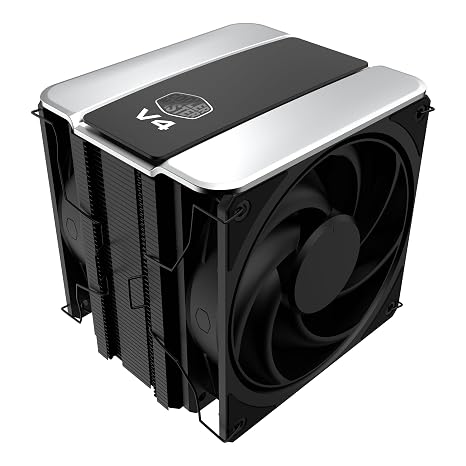
Great for those wanting solid cooling without noise, this CPU cooler stands out for its impressive airflow and quiet operation. Ideal for desktops needing reliable heat management, it’s especially strong where noise reduction matters most.
Setup involves installing the pre-installed Mobius 120mm fans in a push-pull layout, which helps airflow remain consistent and effective over long periods. Compatibility covers most major CPU sockets, making it a straightforward fit in different cases. The 4-pin power connector ensures smooth fan speed control, keeping noise low at just 2.05 dB.
Cooling performance is notably better thanks to two patented 3DHP heat pipes providing 30% more cooling power than typical designs. The build feels solid with a minimalist design that blends well inside a system. Most users praise its quietness, though some mention the maximum fan speed of 2050 rpm can be a bit limiting for extreme overclocking.
Users appreciate the cooler’s quietness combined with a notable improvement in heat management, thanks to the unique heat pipe design. The most common issue is the fan speed limit, which might not keep temperatures down under extreme loads.
Ideal for anyone needing a calm system environment without sacrificing cooling efficiency. Those pushing their CPUs to the limit might want to look for a cooler with higher fan speed capabilities for better temperature control.
Pros
- 30% better cooling with patented 3DHP heat pipes
- Quiet operation reduces fan noise significantly
- Pre-installed push-pull Mobius 120mm fans
- Wide compatibility with major CPU sockets
Cons
- Maximum fan speed could limit heavy overclocking
- Minimalist design may not suit flashy builds
| Specification | Details |
|---|---|
| Power Connector Type | 4-Pin |
| Voltage | 12 volts |
| Cooling Method | Fan |
| Noise Level | 2.05 db |
| Maximum Rotational Speed | 2050 rpm |
11. Thermalright Phantom Spirit 120 EVO CPU Cooler

Aluminum fins and a quiet 120mm fan design make the Phantom Spirit 120 EVO a solid choice for desktop builds that demand consistent airflow. Its biggest strength is maintaining low noise levels while pushing a healthy 69 cfm of air, appealing to those who want effective cooling without loud operation.
Setting up feels straightforward with a 4-pin connector that supports PWM, allowing fan speed control. The cooler stays reasonably quiet at 27 dB during everyday tasks while spinning up to 2150 rpm when needed.
Its 2.4-watt power draw keeps energy use low, making it a practical option for many builds without overheating concerns.
Performance-wise, the cooler holds its own in keeping temperatures stable under normal loads. It’s well constructed with solid materials, though the common complaint is the fan speed can ramp up noticeably during intense workloads, raising noise levels. The blend of sound control and airflow leans more toward balanced rather than silent running.
The strongest praise is for its ability to provide steady airflow quietly at normal speeds with little energy usage. A common complaint is the noticeable increase in fan noise when it reaches the maximum 2150 rpm during demanding tasks.
Those building a mid-range desktop seeking solid cooling and moderate noise should be satisfied. Users who prioritize silent operation at peak speeds or have limited space might want to look at alternatives.
Pros
- Good airflow with 69 cfm capacity
- Quiet operation at 27 dB during normal use
- PWM fan control through 4-pin connector
- Low power consumption at 2.4 watts
Cons
- Fan noise increases under heavy load
- May not be ideal for very compact cases
| Specification | Details |
|---|---|
| Power Connector Type | 4-Pin |
| Voltage | 12 |
| Wattage | 2.4 watts |
| Noise Level | 27 db |
| Maximum Rotational Speed | 2150 rpm |
| Air Flow Capacity | 69 cfm |
12. Thermalright Assassin X 120R Digital ARGB CPU Cooler

Strong airflow comes first to mind with the Thermalright Assassin X 120R Digital ARGB CPU Cooler, making it a solid choice for desktop setups needing reliable air cooling. Its 2000RPM fan speed is its biggest selling point, offering impressive cooling capacity without the need for manual adjustment.
Setting it up is straightforward with the 4-pin PWM connector, allowing the fan speed to adjust based on your motherboard’s temperature sensors automatically. The silicone corner pads on the fan help cut down rotating noise, which makes daily use quieter than expected for something spinning that fast.
The build uses industrial grade materials that give it a sturdy feel and reduce vibration.
Cooling performance is strong due to the max 2000 rpm speed and 70.84 cfm airflow, keeping CPU temperatures well under control during heavier loads. The fan’s S-FDB bearing helps minimize blade shaking, which is a frequent praise, while noise can still reach 29.8 dB, which some find a bit high. The cooler balances performance and build quality effectively.
The cooler generally receives praise for its strong cooling and stable fan operation thanks to the S-FDB bearing, though some users mention the noise level is noticeable, especially under load. The silicone pads help, but don’t eliminate all sound from fan rotation.
Ideal for builders who want powerful air cooling with automatic speed control and can tolerate some fan noise. Those seeking dead-silent operation might look at quieter, lower RPM alternatives instead.
Pros
- Adjusts fan speed automatically via PWM
- High airflow of 70.84 cfm
- Quiet silicone corner pads reduce vibration noise
- Industrial grade PBT+PC material build
Cons
- Noise reaches up to 29.8 dB at max speed
- Fan shaking can occur without proper mounting
| Specification | Details |
|---|---|
| Maximum Rotational Speed | 2000 rpm |
| Air Flow Capacity | 70.84 cfm |
| Noise Level | 29.8 db |
| Power Connector Type | 4-Pin |
| Voltage | 12 volts_of_direct_current |
Best Airflow CPU Coolers Comparison Table
| Product | Cooling Method | Noise Level | Max Rotational Speed | Air Flow Capacity |
|---|---|---|---|---|
| Thermalright Peerless Assassin | Air | 25.6 db | 1550 rpm | 66.17 cfm |
| Noctua NH-D15 chromax.Black | Air | 24.6 db | 1500 rpm | 140.2 m³/h |
| Thermalright Phantom Spirit 120SE | Air | 25.6 db | 1500 rpm | 66.17 cfm |
| Thermalright PS120SE ARGB | Air | 25.6 db | 1500 rpm | 66.17 cfm |
| Thermalright Peerless Assassin Vision MAX | Air | 27 db | 2150 rpm | 69 cfm |
| ARCTIC Liquid Freezer III Pro | Liquid | – | 3000 rpm | 77 cfm |
| be quiet! Dark Rock 5 | Air | 29.8 db | 2100 rpm | 55 cfm |
| ARCTIC Liquid Freezer III Pro | Liquid | – | 3000 rpm | 77 cfm |
| Noctua NH-D15 G2 chromax.Black | Air | 24.8 db | 1500 rpm | 155.6 m³/h |
| Cooler Master V4 Alpha | Fan | 2.05 db | 2050 rpm | – |
| Thermalright Phantom Spirit 120 EVO | Air | 27 db | 2150 rpm | 69 cfm |
| Thermalright Assassin X 120R ARGB | Air | 29.8 db | 2000 rpm | 70.84 cfm |
- Cooling MethodAir
- Noise Level25.6 db
- Max Rotational Speed1550 rpm
- Air Flow Capacity66.17 cfm
- Cooling MethodAir
- Noise Level24.6 db
- Max Rotational Speed1500 rpm
- Air Flow Capacity140.2 m³/h
- Cooling MethodAir
- Noise Level25.6 db
- Max Rotational Speed1500 rpm
- Air Flow Capacity66.17 cfm
- Cooling MethodAir
- Noise Level25.6 db
- Max Rotational Speed1500 rpm
- Air Flow Capacity66.17 cfm
- Cooling MethodAir
- Noise Level27 db
- Max Rotational Speed2150 rpm
- Air Flow Capacity69 cfm
- Cooling MethodLiquid
- Noise Level–
- Max Rotational Speed3000 rpm
- Air Flow Capacity77 cfm
- Cooling MethodAir
- Noise Level29.8 db
- Max Rotational Speed2100 rpm
- Air Flow Capacity55 cfm
- Cooling MethodLiquid
- Noise Level–
- Max Rotational Speed3000 rpm
- Air Flow Capacity77 cfm
- Cooling MethodAir
- Noise Level24.8 db
- Max Rotational Speed1500 rpm
- Air Flow Capacity155.6 m³/h
- Cooling MethodFan
- Noise Level2.05 db
- Max Rotational Speed2050 rpm
- Air Flow Capacity–
- Cooling MethodAir
- Noise Level27 db
- Max Rotational Speed2150 rpm
- Air Flow Capacity69 cfm
- Cooling MethodAir
- Noise Level29.8 db
- Max Rotational Speed2000 rpm
- Air Flow Capacity70.84 cfm
How to Choose the Best Airflow CPU Cooler
Choosing the right airflow CPU cooler involves focusing on fan size, airflow capacity, and compatibility with your case and CPU socket. Proper selection ensures efficient heat dissipation, which keeps your system stable and extends its lifespan, ultimately saving money by preventing damage and reducing noise.
Cooling Performance
Running a CPU-intensive task like gaming or video editing can quickly push temperatures up if the cooling setup isn’t up to the challenge. The key trait to watch for is how well the cooler handles continuous heat output over long periods without the CPU throttling or overheating. In daily use, inadequate heat dissipation means the system may slow down or shut off unexpectedly, which gets frustrating fast.
A cooler that moves air efficiently over the fins and heat pipes can maintain steady temperatures even under heavy loads. Look for units with multiple heat pipes made of copper or nickel-plated copper for better thermal conductivity, combined with fans rated for high airflow in cubic feet per minute (CFM).
Consistent performance often depends on the design enabling unrestricted air circulation to avoid hotspots during extended sessions.
Compatibility and Size
Setup challenges become clear when a new cooler doesn’t physically fit in the case or blocks RAM slots after purchase. Cooler height is crucial, especially on mid-tower or compact builds. Many popular designs hover around 150mm tall, which fits most cases but checking your chassis specifications saves headaches.
Clearance around memory modules matters to allow for taller RAM heat spreaders without forcing compromises.
Compatibility with various CPU socket types is another practical concern. Many coolers support a handful of sockets like Intel’s LGA 1200, 1700, or AMD’s AM4, but verifying this first is necessary. The mounting hardware included typically covers common sockets, but unusually sized boards or exotic layouts might require adapters or different models altogether.
Noise Levels
Noise from cooling fans becomes more noticeable in quiet environments. Fans running at higher speeds deliver better airflow but often create a distracting hum or whine. This noise level can fluctuate based on workload, making it a trade-off between thermal performance and a peaceful workspace or gaming setup.
Many have found that fan blade design impacts sound harshness and vibration. Look for models with PWM control to adjust fan speed dynamically and consider fans with fluid dynamic or rifle bearings, as they often run smoother and quieter. Finding balance means selecting a cooler optimized for efficient airflow without pushing noise beyond acceptable levels for your daily environment.
Build Quality and Materials
Coolers with flimsy fan blades or loosely constructed heatsinks tend to degrade faster under constant use. Good build quality often means denser fin stacks that resist bending and heat pipes that maintain contact with the base plate without warping.
Materials like nickel-plated copper for heat pipes and aluminum fins strike a balance between weight and heat conduction efficiency.
Durability also involves how the cooler handles dust buildup and wear over months or years. Some models provide protective coatings on fins or sealed fan bearings that resist dirt intrusion. These features reduce noise increases and cooling degradation, keeping performance steady without constant attention.
Ease of Installation and Maintenance
Most users wrestle with installation at least once. Coolers that come with clear mounting hardware and instructions make the process far easier, especially those using backplates to secure weight evenly.
Mounting pressure matters too; uneven contact leads to poor heat transfer right away.
Maintenance is crucial for keeping a cooler effective. Fans that can be detached or cleaned without dismantling the entire assembly simplify dust removal. Replaceable fan components extend product life, allowing upgrades for quieter or more powerful airflow without swapping the whole unit.
Practical design here prevents system downtime and keeps temperatures in check for years.
Maximizing Cooling Efficiency with Optimal Airflow Setup
Placing your airflow CPU cooler in a spot with good ventilation is crucial. The cooler works best when fresh air can flow freely through its fins and out of the case.
Position intake fans at the front or bottom of the case and exhaust fans at the rear or top. This setup creates a consistent path for air to move across the CPU cooler and exit the case efficiently.
Improving cooling performance:
- Ensure no cables block the airflow inside the case.
- Use dust filters on intake fans to reduce buildup.
- Choose balanced fan speeds for smooth air circulation.
Adjusting case fan placement and direction affects how effectively heat is expelled. The cooler’s fan should complement this airflow pattern, helping maintain lower CPU temperatures during heavy workloads.
Essential Maintenance Tips to Prolong Your Airflow CPU Cooler’s Lifespan
Consistent cleaning prevents dust from clogging the fins and reducing the cooler’s ability to dissipate heat. Use compressed air or a soft brush to clear dust deposits, especially in tight spaces between the fins.
Additional care tips:
- Check fan bearings for unusual noise or wobble, which could indicate wear.
- Verify that mounting screws remain tight to maintain proper contact with the CPU.
- Clean or replace dust filters on the case periodically.
Thermal paste should be reapplied approximately once a year, depending on usage. Keeping these practices in mind will help maintain the CPU cooler’s performance and avoid overheating problems over time.
Common Installation Mistakes and How to Avoid Them
Incorrectly seating the cooler can prevent proper heat transfer. Tighten mounting brackets firmly but avoid overtightening, which could damage the motherboard or prevent even contact with the CPU.
Watch out for these common errors:
- Applying too much or too little thermal paste, leading to poor heat conduction.
- Installing fan cables loosely, causing noisy or non-functional fans.
- Ignoring clearance issues that may affect RAM slots or other components.
Taking time to carefully align and secure the cooler ensures consistent performance and prevents future maintenance hassles.
People Also Asked
How Do I Choose the Right Size Airflow CPU Cooler?
Choose a size that fits your PC case and doesn’t block other components. Measure the space around your CPU socket and check cooler dimensions before buying. Consider clearance for RAM and GPU to avoid installation issues.
Is an Airflow Cooler Safe for My CPU Temperature?
An airflow cooler can safely keep your CPU temperature within normal limits under moderate loads. It works best with good case airflow, so make sure your intake and exhaust fans are positioned properly.
How Long Does an Airflow CPU Cooler Usually Last?
Airflow CPU coolers generally last 5 to 7 years if you keep them clean. Dust buildup on the heatsink and fan can reduce efficiency, so regular cleaning helps maintain performance.
Can I Use an Airflow Cooler with My Motherboard?
Most airflow coolers are compatible with standard motherboard sockets but double-check the mounting system. Look up your motherboard’s CPU socket type and verify the cooler’s supported sockets before purchase.
What Common Problems Occur with Airflow CPU Coolers?
Common issues include noisy fans, dust accumulation reducing cooling efficiency, and compatibility problems with RAM clearance. Routine maintenance like cleaning and ensuring proper fan speed settings can prevent most problems.
Conclusion
Good airflow CPU coolers focus on efficient heat dissipation, quiet operation, and compatibility with your case and CPU socket. Size matters since a large cooler might not fit in smaller cases or could block RAM slots.
Fan speed can affect both cooling performance and noise levels, so consider your tolerance for sound during use.
Choose a cooler that fits your available space and aligns with your budget, especially if you don’t plan to overclock heavily. For regular use, a balance between noise and cooling power is important. Check the comparison table and product details earlier in the article to see which options match your setup and preferences.

I’m Grant Mitchell, a firearms and hunting writer with years of experience at the range and in the field. I write about rifles, shotguns, handguns, optics, safe storage, cleaning, and responsible ownership, along with practical hunting tips. My goal is to share accurate, safety-first information that helps you choose the right firearm, maintain it properly, and become a more confident shooter.