Top 12 Best Air Cooler for 12700K That Will Blow You Away
Anyone running a 12700k processor knows how quickly it heats up under load. A cheap or incompatible air cooler causes the CPU to throttle, leading to lower performance and a noisy PC as fans spin at full blast. The best air cooler for 12700k manages to keep temperatures in check without resorting to high RPMs or requiring a complicated setup.
Choosing the right air cooler for a 12700k comes down to a few key factors. Thermal design power (TDP) rating should exceed the processor’s heat output, typically around 125 watts or more, to avoid overheating. The cooler’s size and socket compatibility ensure a proper fit without blocking RAM or other components.
Heat pipe count and fan quality affect how well heat transfers away from the processor and exhausts, which directly impacts cooling efficiency and noise levels.
Need a Quick Check?
| Image | Product | Price |
|---|---|---|
Our Top Picks 1  | Thermalright Peerless Assassin 120 SE | Check Price |
Our Top Picks 2  | be quiet! Pure Rock Pro | Check Price |
Our Top Picks 3  | Thermalright PS120SE | Check Price |
Our Selected Top 12 Air Cooler for 12700k Worth Your Money
This list features carefully chosen air coolers that offer reliable performance for the 12700k processor. Each review covers how well the cooler handles heat, the type of user it best fits, and highlights both its advantages and potential drawbacks.
1. Thermalright Peerless Assassin 120 SE CPU Cooler
Keeping a powerful CPU like the 12700k cool during intense workloads can be a real challenge. Designed for desktop users who want solid air cooling without fuss, the Thermalright Peerless Assassin 120 SE stands out by delivering strong cooling capacity while maintaining relatively low noise levels.
Setting up the cooler is straightforward with a secure mounting bracket that fits most desktop sockets well. The fan runs quietly at up to 1550 rpm, and the 4-pin connector allows precise speed control through your motherboard.
Daily use is smooth, as the cooler balances airflow and noise efficiently, avoiding unnecessary distractions during long work or gaming sessions.
This cooler manages heat loads of up to 265 watts effortlessly, making it ideal for high-end CPUs like the 12700k. Its build quality feels sturdy, featuring well-made fins and a durable fan. Most appreciate its quiet operation, but some note the fan speed limit can restrict maximum cooling during extreme loads.
Most praise the cooler’s quiet operation during heavy workloads while the main complaint is that the fan speed limit of 1550 rpm can hold back cooling potential in extreme scenarios. It manages heat efficiently but might struggle in overclocked or exceptionally high TDP situations.
Suitable for users looking for effective air cooling without loud noise, especially in standard-sized cases. Those needing extreme cooling or custom setups may want to look at options with higher fan speeds or larger designs.
Pros
- Quiet operation at a max of 25.6 dB
- Handles up to 265 watts of heat
- Reliable 4-pin fan connector for speed control
- Strong airflow of 66.17 cfm
Cons
- Fan speed limited to 1550 rpm may restrict max cooling
- Designed primarily for standard desktop cases, may not fit all setups
| Specification | Details |
|---|---|
| Power Connector Type | 4-Pin |
| Voltage | 12 volts |
| Wattage | 265 watts |
| Noise Level | 25.6 db |
| Maximum Rotational Speed | 1550 rpm |
| Air Flow Capacity | 66.17 cfm |
2. Be Quiet! Pure Rock Pro 3 CPU Cooler
Six nickel-plated copper heat pipes stand out for cooling power, making it a strong choice for heavy-duty Intel 12700k setups. Suited for anyone wanting reliable performance under load, it balances quiet operation with solid cooling capabilities.
Setup is straightforward, with compatibility across multiple Intel sockets including 1700 and 1200 easing installation. The fan’s 4-pin connector allows for PWM control to adjust speeds based on temperature.
The funnel-shaped air outlet boosts airflow across the fins, helping keep temps low during longer sessions.
It delivers stable cooling even when the CPU is pushed, which suits demanding workloads or moderate overclocking well. Build quality feels sturdy, with nickel plating adding durability. Common praise points to effective airflow and quietness at 34.8 dB.
Some find the maximum 2000 rpm fan speed a bit loud under full load.
The most frequent praise highlights the efficient airflow and quietness during normal use, credited to its well-designed fan and heat pipe setup. The common downside is noise at full fan speed, which some find intrusive under heavy loads.
Those running a 12700k at stock or mild overclock will appreciate its balance between cooling and noise. Users aiming for hardcore overclocking might want to explore liquid cooling or larger air coolers instead.
Pros
- Six copper heat pipes for strong heat dissipation
- Quiet operation at moderate fan speeds
- Good compatibility with most Intel sockets
- Optimized fan blades increase air pressure effectively
Cons
- Fan can get loud at max 2000 rpm speed
- Not ideal for extreme overclocking demands
| Specification | Details |
|---|---|
| Cooling Method | Air |
| Compatible Intel Sockets | 1851/1700/1200/1151/1150/1155 |
| Noise Level | 34.8 db |
| Maximum Fan Speed | 2000 rpm |
| Power Connector Type | 4-Pin |
| Wattage | 3.6 watts |
3. Thermalright PS120SE CPU Cooler
People running powerful CPUs like the Intel 12700k will appreciate the Thermalright PS120SE CPU cooler for its serious cooling capacity. It fits well in standard desktop setups and stands out because of its advanced heatpipe technology, designed to handle high thermal loads efficiently.
Installation is straightforward, thanks to its well-thought-out mounting brackets and compatible design for desktop use. The 4-pin power connector gives you precise fan speed control.
At 1650 rpm max, the fan keeps noise relatively low while providing strong airflow, making day-to-day system operation quiet and cool without fuss.
It cools CPUs rated between 105W to 280W TDP, so it handles demanding workloads easily. The build uses seven 6mm heatpipes with upgraded AGHP tech for better cooling in various orientations.
Many find the performance very efficient, with noise levels staying low at 25.6 dB. Some mention the size might be a bit bulky for smaller cases.
The cooler delivers strong thermal performance while maintaining low noise, thanks to its 7-heatpipe design and controlled fan speeds. Some find the size a bit large, requiring careful case compatibility checks before purchase.
Those who want solid cooling for a beefy CPU like the 12700k alongside quiet operation will appreciate this cooler. People with smaller cases or who want ultra-compact solutions might want to look at alternative models better suited to tight spaces.
Pros
- High cooling capacity up to 280W TDP
- Quiet operation at 25.6 dB noise level
- Compatible with multiple CPU orientations
- Effective 7x6mm heatpipe design
Cons
- May be bulky for compact PC cases
- Fan speed capped at 1650 rpm
| Specification | Details |
|---|---|
| Cooling Method | Air |
| Maximum Rotational Speed | 1650 rpm |
| Air Flow Capacity | 66.17 cfm |
| Noise Level | 25.6 db |
| TDP Range | 105W to 280W |
| Power Connector Type | 4-Pin |
4. Cooler Master Hyper 612 APEX CPU Cooler

Designed to cool demanding CPUs like the 12700k, this air cooler stands out with its six heat pipes and copper base for efficient heat transfer. Ideal for users looking to keep high-performance Intel or AMD chips under control without overcomplicating installation or design.
Installation is straightforward thanks to the redesigned brackets supporting AM5 and LGA 1851|1700, making it easy to fit into newer motherboards. Day-to-day use benefits from the Dual Mobius 120 fans, which offer a broad RPM range up to 2400 for customizable airflow and quiet operation.
The 4-Pin PWM connection helps to keep fan speeds balanced with system load.
It handles thermal performance reliably, keeping temperatures stable during intense workloads thanks to superconductor heat pipes. The build includes a minimalistic, jet-black top cover adding subtle aesthetics to the setup. Most praise hails from its strong cooling power combined with quiet operation.
Some users note noise can increase when fans hit top speed.
Excellent cooling performance combined with a quiet fan system makes it reliable during heavy use, though noise increases when fans spin at full speed. The sturdy build and design upgrades support newer CPU sockets, simplifying setup.
People upgrading or building around the 12700k will appreciate the balance of power and quiet operation here. Those wanting flashy lighting or ultra-silent passive cooling might look elsewhere for options better suited to aesthetics or silent builds.
Pros
- Strong cooling with six heat pipes and copper base
- Quiet operation even at higher RPM settings
- Simple installation on AM5 and LGA 1851|1700 platforms
- Stylish minimalistic jet-black design
Cons
- Fan noise can rise noticeably at maximum speed
- Lacks RGB or customizable lighting features
| Specification | Details |
|---|---|
| Power Connector Type | 4-Pin |
| Cooling Method | Fan |
| Noise Level | 30 db |
| Maximum Rotational Speed | 2400 rpm |
| Air Flow Capacity | 78.2 cubic_centimeters_per_minute |
5. Thermalright Assassin X90 SE V2 CPU Cooler

Thermalright Assassin X90 SE V2 is a CPU air cooler designed for desktops, ideal for managing the heat from powerful processors like the Intel 12700k. Its biggest strength lies in combining effective air cooling with quiet operation, making it a practical choice for users who want to keep noise levels low without sacrificing performance.
Setup is straightforward thanks to the 4-pin power connector, which works well with most motherboard headers for PWM control. Running at 12 volts and spinning up to 2200 rpm, it balances cooling power and noise output efficiently.
Daily use benefits from its relatively low noise level of 25 dB, which means it won’t be disruptive during gaming or heavy multitasking sessions. Cleaning is easy since the design allows good access to the fan and fins.
It cools reliably with an airflow capacity of 32.77 cfm, keeping CPU temperatures in check during demanding workloads. The build quality reflects Thermalright’s decades of experience, focusing on solid components that don’t feel flimsy.
A common compliment is its quiet fan operation, but some find that the airflow could be stronger for intense overclocking. It handles the 12700k’s heat output competently without making much noise.
The quiet operation at 25 dB stands out as the top benefit, making this cooler friendly for noise-sensitive setups. The most common critique is that it doesn’t push enough air for extreme cooling needs, especially when compared to larger or more powerful models.
Those who want reliable cooling without much fan noise will be pleased with this model. Users planning serious overclocking or very high CPU loads might prefer a cooler with stronger airflow capacity and higher maximum fan speed.
Pros
- Quiet at 25 dB noise level
- Easy installation with 4-pin connector
- Good airflow for a compact air cooler
- Solid build quality from experienced brand
Cons
- Airflow may be insufficient for heavy overclocking
- Fan speed maxes out at 2200 rpm which limits cooling power
| Specification | Details |
|---|---|
| Power Connector Type | 4-Pin |
| Voltage | 12 volts |
| Wattage | 1.2 watts |
| Noise Level | 25 db |
| Maximum Rotational Speed | 2200 rpm |
| Air Flow Capacity | 32.77 cfm |
6. Thermalright Peerless Assassin 120 Vision MAX CPU Cooler

Cooling a powerful chip like the 12700k gets a solid ally in this CPU cooler. It suits anyone wanting reliable temperature control combined with a unique feature – a built-in IPS LCD screen. The standout point here is how it brings real-time system monitoring right into view while handling serious heat loads.
Setting it up involves mounting the dual-tower design with six copper heat pipes and connecting the two fans through a 4-pin power connector. The magnetic top cover with the IPS display sticks right on top, letting you track system stats with ease. The included TRCC software allows for customization of the display, lending a personal touch to day-to-day monitoring.
Performance stays impressive with heat clearance aided by the nickel-plated copper base ensuring close CPU contact. At 2150 RPM, the fans push enough air at 69 CFM, keeping noise level controlled around 27 dB. The major praise goes to its efficient cooling and clear screen display.
Noise concerns appear occasionally, reflecting the high fan speeds when cooling demands spike.
Strong cooling with a clear display makes system monitoring intuitive and visible. Despite mostly quiet operation, fan noise rises under heavy loads, which might distract in quieter setups. The build uses premium materials like pure copper pipes and a nickel-plated base for consistent heat dissipation.
Those wanting a mix of performance and onboard monitoring will find this cooler appealing. Users with smaller cases or stricter noise limits might want to look for alternatives that better fit those priorities.
Pros
- Built-in 5-inch IPS LCD for real-time monitoring
- Dual-tower design supports strong airflow
- Six pure copper heat pipes for efficient heat transfer
- Quiet operation at moderate loads
Cons
- Fan noise increases at maximum speeds
- Size may challenge tight case fits
| Specification | Details |
|---|---|
| Power Connector Type | 4-Pin |
| Cooling Method | Air |
| Maximum Rotational Speed | 2150 rpm |
| Noise Level | 27 db |
| Air Flow Capacity | 69 cfm |
7. Thermalright Assassin X120 Refined SE CPU Cooler

A solid choice for anyone running a 12700k looking for effective air cooling without loud noise. It’s well-suited for desktop setups where balanced airflow and quiet operation matter most. Its main strength lies in keeping temperatures down while maintaining a relatively low noise level.
Setting it up is straightforward, thanks to the standard 4-pin power connector and easy mounting options. Everyday use involves quiet operation with a maximum rotational speed of 1550 rpm, which keeps noise at a comfortable 25.6 dB.
The airflow capacity of 66.17 cfm makes a real difference in moving heat away from the CPU efficiently during regular workloads.
It cools consistently well, handling the demands of a high-performance CPU like the 12700k. The build quality shows Thermalright’s experience with sturdy materials and careful design.
Strong points include an effective cooling method and quiet fan. Some users mention it could push a bit more airflow in highly overclocked systems.
Many appreciate how quietly it runs while keeping CPU temperatures in check. A common drawback is its moderate fan speed, which might not satisfy users pushing very high overclocks. It balances noise and cooling performance well for everyday desktop use.
Those who value quiet and consistent air cooling will find it fitting. Users planning to extract maximum CPU performance through heavy overclocking should look for a cooler with higher airflow capacity and fan speed.
Pros
- Quiet operation under load
- Good airflow for temperature control
- Reliable build quality and design
- Easy 4-pin connector compatibility
Cons
- May struggle with extreme overclocking
- Limited rotational speed for aggressive cooling
| Specification | Details |
|---|---|
| Power Connector Type | 4-Pin |
| Voltage | 12 volts |
| Cooling Method | Air |
| Noise Level | 25.6 db |
| Maximum Rotational Speed | 1550 rpm |
| Air Flow Capacity | 66.17 cfm |
8. Thermalright Phantom Spirit 120SE CPU Cooler

Aluminum and copper form the core of this cooler’s construction, focusing on strong heat dissipation suited for the demanding 12700k processor. It’s designed for users who want reliable air cooling with flexible mounting that handles high thermal outputs efficiently.
Installation requires some care to align the 7x6mm copper heatpipes with your CPU. The 4-Pin connector supports PWM, allowing fan speed control that keeps noise low during regular tasks.
Running at a maximum 1500 rpm, it balances airflow and quiet operation well, making day-to-day use comfortable without distracting fan noise.
Cooling performance covers a broad TDP range from 105W up to 280W, more than tackling the heat of the 12700k. The build quality feels solid, with a good mix of aluminum and copper for effective heat transfer. Fans push 66.17 cfm, maintaining steady temperatures.
The most frequent praise highlights its cooling power, while the most common complaint involves the noise level reaching up to 25.6 dB under load.
Effective at cooling even demanding CPUs, it keeps temperatures in check while generally remaining quiet. Noise becomes noticeable only when pushed to maximum fan speed, limiting complete silence in heavy-load scenarios.
Good fit for those prioritizing strong air cooling and compact design with moderate noise tolerance. Users wanting the quietest operation might prefer other solutions designed specifically for ultra-low noise.
Pros
- Handles high thermal loads up to 280W TDP
- Quiet fan speed managed through 4-Pin PWM connector
- High airflow at 66.17 cfm for efficient cooling
- Sturdy build using quality aluminum and copper materials
Cons
- Noise can reach 25.6 dB under heavy use
- Installation requires careful alignment of heatpipes
| Specification | Details |
|---|---|
| Power Connector Type | 4-Pin |
| Voltage | 12 volts_of_direct_current |
| Cooling Method | Air |
| Noise Level | 25.6 db |
| Maximum Rotational Speed | 1500 rpm |
| Air Flow Capacity | 66.17 cfm |
9. Thermalright PS120SE ARGB CPU Cooler

Strong airflow and quiet operation stand out immediately with this cooler, a solid fit for anyone running a powerful CPU like the 12700k. Its main draw is how it manages heat with the AGHP technique, making sure your system stays cool without making a racket.
Perfect for users balancing performance and noise levels.
Setting up is pretty straightforward since it supports various chassis thanks to its moderate 154mm height. The 4-pin connector allows you to control fan speed easily via your motherboard.
Daily use benefits from the 1500 rpm max rotational speed and the durable S-FDB bearings that help the fan last a long time. It stays quiet at just 25.6 db, so you won’t be distracted during work or gaming.
Heatpipe design with the latest AGHP technology keeps temperatures managed even under load. The build quality feels solid with industrial-strength PBT + PC materials making the cooler quite durable overall. Most praise focuses on its longevity and quiet cooling performance.
The commonly noted downside is that it might not push enough airflow for extreme overclocking setups.
The cooler is praised for its quiet performance and long-lasting bearings, making it reliable for everyday use. Common feedback points to airflow limits for users pushing extreme CPU loads, which might require stronger cooling solutions.
People running moderate to high loads on the 12700k will be satisfied with this cooler’s balance of noise and cooling. Those aiming for heavy overclocking or extreme performance are better off looking for options with higher airflow and fan speeds.
Pros
- Quiet operation at only 25.6 db noise level
- Long service life supported by S-FDB bearings
- Compatible with various desktop chassis types
- Good airflow at 66.17 cfm for air cooling
Cons
- May lack cooling power for high overclock setups
- Max fan speed limited to 1500 rpm
| Specification | Details |
|---|---|
| Power Connector Type | 4-Pin |
| Voltage | 12 volts_of_direct_current |
| Noise Level | 25.6 db |
| Maximum Rotational Speed | 1500 rpm |
| Air Flow Capacity | 66.17 cfm |
| Height | 154mm |
10. ID-COOLING FROZN A620 SLK CPU Cooler

Choosing a cooler that handles the heat from an Intel 12700K without crowding your case is key. This air cooler features a hybrid tower design that balances strong cooling power with a size that fits most setups, making it ideal for those wanting solid performance and space-saving compatibility.
Installation stands out for how straightforward it is, there’s no need to detach fans or wrestle with clips, so setup goes smoothly. Dual counter-rotating fans run quietly at 33.9 dB while pushing up to 79.7 cfm of air, keeping the processor cool day-to-day without adding much noise or fuss in cable management thanks to its simple 3-pin power connector.
Cooling performance remains impressive, thanks to the innovative airflow distribution that lowers turbulence and spreads cooling evenly across fins. While the design effectively manages heat, some find the fan speed of 2500 rpm a bit high, which may cause slight noise under heavy loads.
Build quality feels solid, prioritizing function over flashy looks.
The dual counter-rotating fan system effectively spreads airflow, dropping temperatures efficiently across the heatsink fins. Noise levels rise noticeably at full fan speed, which some users mention as a drawback during demanding tasks. Installation is simple, allowing you to set it up easily without removing fans or handling clips.
Those needing a cooler with great heat management but limited space will find this design appealing. When quiet operation under peak loads or advanced fan speed control matters, other models with PWM support could be better options.
Pros
- Hybrid tower fits various cases comfortably
- Dual fans reduce turbulence for better cooling
- Quick installation without fan removal
- Quiet operation under normal conditions
Cons
- Fans can get noisy at max speed
- 3-pin connector limits PWM control options
| Specification | Details |
|---|---|
| Power Connector Type | 3-Pin |
| Wattage | 3.36 watts |
| Noise Level | 33.9 db |
| Maximum Rotational Speed | 2500 rpm |
| Air Flow Capacity | 79.7 cfm |
11. Noctua NH-D15 G2 chromax.Black CPU Cooler
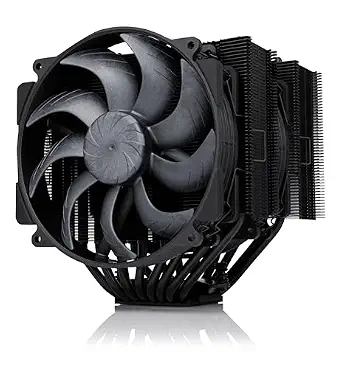
Keeping a powerful CPU like the 12700k cool under long gaming or work sessions is crucial, and the Noctua NH-D15 G2 chromax.Black is designed for exactly that. It suits anyone who needs a quiet yet strong air cooler that manages heat efficiently without making a racket.
Setting up the cooler is straightforward, with its 8 heatpipes and two NF-A14x25r G2 140mm fans offering smooth installation and quiet operation. The fans feature speed offset for fine-tuning acoustics along with PWM for automatic speed adjustment depending on your CPU load. At idle, you get near silence thanks to the included low-noise adaptors, making daily use comfortable even during light tasks.
Performance-wise, this cooler handles heat very well thanks to 20% more surface area compared to its predecessor. The all-black version fits nicely with modern builds and feels solidly constructed. Reviews often praise its quietness and cooling ability under load, although some mention it’s quite large, which might be tricky in smaller cases.
The cooler gets high marks for quiet performance while efficiently cooling high-end CPUs. The size is the main drawback mentioned often, especially where space inside the case is tight. It balances airflow and noise well but isn’t the smallest solution out there.
Those with roomy mid or full towers who want quiet and powerful air cooling will find it a great match. People building compact or minimalist PCs might want to consider smaller coolers due to its bulk. It suits anyone aiming for serious cooling without the noise.
Pros
- Quiet operation even at higher speeds
- Strong cooling with 8 heatpipes
- All-black design fits modern setups
- Automatic fan speed control via PWM
Cons
- Large size may not fit smaller cases
- Runs at 1500 rpm max, limiting peak airflow
| Specification | Details |
|---|---|
| Cooling Method | Air |
| Noise Level | 24.8 db |
| Maximum Rotational Speed | 1500 rpm |
| Air Flow Capacity | 155.6 cubic meter per hour |
| Voltage | 12 volts |
| Wattage | 2.28 watts |
12. Thermalright Peerless Assassin 120 Digital ARGB CPU Cooler

Cooling power stands out with a high-speed 1850RPM dual fan setup, making it a solid choice for anyone running an Intel 12700K who needs reliable heat dissipation. The dual-tower design paired with six pure copper heat pipes and a copper base keeps temperatures in check during heavy workloads.
Setup requires some clearance given its 162mm height, but fits most mid to full towers without hassle. The dual 120mm fans use S-FDB bearings for durability and a quiet operation at 25.6 dB, which is noticeable but not intrusive. RGB lighting adds a visual flair without complicating the build, powered by a simple 4-pin PWM connection for easy speed adjustments.
The primary role of keeping the CPU cool is handled efficiently through strong airflow of 88.89 CFM and solid wind pressure at 2.21mm H2O. The cooler is built with durability in mind, using pure copper elements for better thermal contact. People appreciate the low noise and effective cooling, but some mention it can be a tight fit in smaller cases.
High praise goes to its effective heat dissipation thanks to a solid copper base and high airflow fans. The main drawback comes from its size, which requires checking case clearance to avoid installation issues.
Those with roomy mid-tower or larger cases who want efficient cooling and quiet fans will find this cooler suitable. Users with compact builds should explore more low-profile options to avoid compatibility problems.
Pros
- Strong heat dissipation with six copper heat pipes
- Quiet operation at or below 25.6 dB
- Durable S-FDB bearing fans
- Attractive ARGB lighting included
Cons
- Physical height may not fit small cases
- Noise is noticeable under full load
| Specification | Details |
|---|---|
| Fan Speed | 1850 RPM +10% |
| Noise Level | ≤25.6 DB(A) |
| Air Flow Capacity | 88.89 CFM |
| Wind Pressure | 2.21 mm H2O |
| Fan Size | 120x120x28 mm |
| Power Connector Type | 4-Pin PWM |
Best Air Coolers for 12700k Compared Side by Side
| Product | Power Connector Type | Noise Level | Maximum Rotational Speed | Air Flow Capacity |
|---|---|---|---|---|
| Thermalright Peerless Assassin 120 SE | 4-Pin | 25.6 db | 1550 rpm | 66.17 cfm |
| be quiet! Pure Rock Pro | 4-Pin | 34.8 db | 2000 rpm | – |
| Thermalright PS120SE | 4-Pin | 25.6 db | 1650 rpm | 66.17 cfm |
| Cooler Master Hyper 612 APEX | 4-Pin | 30 db | 2400 rpm | 78.2 cfm |
| Thermalright Assassin X90 SE V2 | 4-Pin | 25 db | 2200 rpm | 32.77 cfm |
| Thermalright Peerless Assassin Vision MAX | 4-Pin | 27 db | 2150 rpm | 69 cfm |
| Thermalright Assassin X120 Refined SE | 4-Pin | 25.6 db | 1550 rpm | 66.17 cfm |
| Thermalright Phantom Spirit 120SE | 4-Pin | 25.6 db | 1500 rpm | 66.17 cfm |
| Thermalright PS120SE ARGB | 4-Pin | 25.6 db | 1500 rpm | 66.17 cfm |
| ID-COOLING FROZN A620 SLK | 3-Pin | 33.9 db | 2500 rpm | 79.7 cfm |
| Noctua NH-D15 G2 chromax.Black | 4-Pin | 24.8 db | 1500 rpm | 155.6 cfm |
| Thermalright Peerless Assassin 120 Digital | 4-Pin | 25.6 db | 1850 rpm | 88.89 cfm |
- Power Connector Type4-Pin
- Noise Level25.6 db
- Maximum Rotational Speed1550 rpm
- Air Flow Capacity66.17 cfm
- Power Connector Type4-Pin
- Noise Level34.8 db
- Maximum Rotational Speed2000 rpm
- Air Flow Capacity–
- Power Connector Type4-Pin
- Noise Level25.6 db
- Maximum Rotational Speed1650 rpm
- Air Flow Capacity66.17 cfm
- Power Connector Type4-Pin
- Noise Level30 db
- Maximum Rotational Speed2400 rpm
- Air Flow Capacity78.2 cfm
- Power Connector Type4-Pin
- Noise Level25 db
- Maximum Rotational Speed2200 rpm
- Air Flow Capacity32.77 cfm
- Power Connector Type4-Pin
- Noise Level27 db
- Maximum Rotational Speed2150 rpm
- Air Flow Capacity69 cfm
- Power Connector Type4-Pin
- Noise Level25.6 db
- Maximum Rotational Speed1550 rpm
- Air Flow Capacity66.17 cfm
- Power Connector Type4-Pin
- Noise Level25.6 db
- Maximum Rotational Speed1500 rpm
- Air Flow Capacity66.17 cfm
- Power Connector Type4-Pin
- Noise Level25.6 db
- Maximum Rotational Speed1500 rpm
- Air Flow Capacity66.17 cfm
- Power Connector Type3-Pin
- Noise Level33.9 db
- Maximum Rotational Speed2500 rpm
- Air Flow Capacity79.7 cfm
- Power Connector Type4-Pin
- Noise Level24.8 db
- Maximum Rotational Speed1500 rpm
- Air Flow Capacity155.6 cfm
- Power Connector Type4-Pin
- Noise Level25.6 db
- Maximum Rotational Speed1850 rpm
- Air Flow Capacity88.89 cfm
How to Choose the Right Air Cooler
Choosing the right air cooler for a 12700k involves considering cooling performance, compatibility with the CPU socket, and noise levels. Prioritizing these factors ensures efficient heat management and quiet operation, which helps prevent overheating and extends your system’s lifespan, ultimately saving money and hassle.
Compatibility and Socket Support
Many coolers built before the Intel LGA 1700 socket appeared don’t fit properly on this newer platform. That leads to poor contact with the CPU heat spreader and inadequate cooling, raising temperatures quickly.
Beyond just fitting the socket, the cooler’s size must clear nearby components like tall RAM modules or VRM heatsinks on the motherboard.
Check the dimensions of the air cooler against your motherboard layout and the inside of your PC case. Some large coolers block tall RAM slots or restrict airflow by being too close to case panels. A cooler with adjustable mounting brackets designed for the LGA 1700 socket ensures a secure fit without interference.
Also verify case height clearance since CPU coolers can easily exceed 150mm, which won’t fit in smaller cases.
Cooling Performance and Thermal Design
The 12700k runs hot under load, so the cooler needs to manage its thermal design power (TDP), usually around 125W or more. A cooler rated well below that can’t keep temperatures in check, leading to thermal throttling and reduced performance. Heat pipes and aluminum fins should be arranged to balance airflow and heat dissipation efficiently.
Look for multiple copper heat pipes that make firm contact with the CPU base. Fin density affects how much heat they can shed; too dense restricts airflow, too sparse reduces cooling. Fans with PWM (pulse width modulation) support let the motherboard adjust speeds according to load, providing quieter operation during light use and faster spinning when needed.
Noise Levels
Fan noise can become a problem, especially under heavy CPU loads when fans ramp up to maximum speeds. Coolers without noise-dampening features often produce a noticeable drone or whine that adds up over long gaming or work sessions. Models with fluid dynamic bearings or antivibration rubber mounts reduce this noise by smoothing fan movements and isolating vibrations from the case.
Expect a range from 20 to 35 decibels during normal operation on a standard air cooler. Choosing a cooler that balances airflow and RPM with low noise is critical if you use your PC in a quiet environment or near your desk. Some fans deliver good cooling with speeds topping out around 1500 to 2000 RPM without excessive sound.
Build Quality and Materials
Durability varies between coolers depending on material quality. Aluminum fins are standard but look for those firmly soldered to copper heat pipes rather than just pressed in place. Copper offers better heat conduction, so heat pipes made of pure copper improve cooling.
Poor build quality often leads to bent fins after installation or during cleaning, reducing effectiveness.
The fan frame and bearings deserve attention too. Bearings like sleeve or fluid dynamic bearings last longer and produce less noise over time compared to basic ball bearings. Mounting brackets that feel sturdy and screw in firmly make installation more reliable and prevent loosening over time due to vibrations.
Ease of Installation and Maintenance
Complicated mounting systems can turn installing a cooler into a frustrating task that risks damaging the motherboard or CPU. Clear instructions and all necessary hardware components simplify assembly and reduce time. Some coolers include backplates or brackets specifically designed for the Intel socket to avoid guesswork.
Dust accumulation quickly hampers cooling efficiency. Coolers that allow easy fan and fin access without total disassembly make regular maintenance less of a chore. Consider whether fans can be removed and replaced easily if they fail, and check if spare parts are commonly available.
This helps extend the cooler’s useful life, saving cost and effort.
Optimizing Airflow Setup for Maximum Cooling Efficiency
Positioning the air cooler to create a direct airflow path over the 12700k processor is key for effective cooling. Keep the cooler’s intake clear of obstructions such as cables or other components to maintain strong air circulation.
Using additional case fans to direct hot air away from the CPU socket can prevent heat buildup around the cooler.
Configuring the fan speed curve according to CPU temperature helps balance noise and cooling performance. On higher loads, the fan should ramp up quickly to dissipate heat efficiently. Also, the orientation of the cooler’s heat sink fins should align with the airflow direction inside the case, which reduces air resistance and keeps the processor cooler under stress.
- Ensure intake vents are clean and unobstructed
- Use case fans to guide hot air away from the CPU
- Adjust fan curves for response based on temperature
- Align heat sink fins with airflow to reduce resistance
Essential Maintenance Practices to Prolong Air Cooler Lifespan
Regular cleaning of the cooler’s fins and fan blades prevents dust build-up that reduces cooling efficiency. Accumulated dust can cause higher operating temperatures and increased fan noise.
Use compressed air to blow out dust at least once every two months if the environment is dusty.
Check thermal paste between the CPU and cooler; replace it periodically to maintain good heat transfer. Over time, thermal paste can dry out and lose effectiveness. Make sure screws and mounting points remain tight, as loose fittings can create poor contact and reduce cooling performance.
Avoid letting liquid coolant tanks run dry in water-cooled units.
- Clean dust off fins and fan blades regularly
- Reapply thermal paste every year or as needed
- Tighten mounting screws to ensure secure fit
- Monitor coolant levels in water-cooling setups
Common Installation Mistakes to Avoid with the 12700k
One common mistake is over-tightening the mounting bracket. Applying too much pressure can warp the CPU or motherboard, harming performance or damaging components. Use a moderate, even force and tighten screws in a cross pattern for balanced mounting.
Incorrect orientation of the cooler limits airflow effectiveness; ensure the fan pushes air toward the rear or top case exhaust. Installing the cooler backward or upside down reduces heat dissipation and causes higher CPU temperatures. Don’t forget to remove any protective films from the heat sink base.
- Avoid over-tightening mounting screws
- Follow recommended mounting patterns for even pressure
- Install cooler so fan airflow aligns with case exhaust
- Remove all protective covers on the heat sink surface before installation
People Also Asked
How Do I Install an Air Cooler on My 12700k CPU?
Secure the mounting bracket to the motherboard first, then place the thermal paste on the CPU before attaching the air cooler. Align the cooler carefully and tighten screws evenly to avoid uneven pressure. Make sure to connect the fan cable to the CPU fan header to ensure it runs.
What Size Air Cooler Is Compatible with Intel 12700k?
Most mid-tower air coolers up to 160mm in height fit well with the Intel 12700k. Always check your case specifications to avoid clearance issues. Also, consider coolers with a base size compatible with the CPU socket LGA1700 for proper mounting.
How Long Does a Typical Air Cooler Last on a 12700k?
An air cooler can last around 5 to 10 years with proper maintenance. Fans may need replacement earlier due to wear or noise. Regular cleaning significantly extends the cooler’s lifespan and helps maintain consistent performance.
What Are Common Problems Using an Air Cooler with 12700k?
Overheating is common if the cooler is undersized or has poor thermal paste application. Noise can increase if the fan speed ramps up under load. Dust accumulation also reduces airflow, which can cause temperature spikes.
How Do I Maintain and Clean an Air Cooler for 12700k?
Unplug the system and remove the cooler gently. Use compressed air to blow out dust from fins and fan blades. Reapply thermal paste every year or two to maintain good heat transfer. Avoid using water directly, and clean with a soft brush for delicate parts.
Conclusion
Choosing the right air cooler for the 12700k mostly depends on how well it manages heat, fits inside your case, and stays quiet under load. Pay close attention to the cooler’s size and TDP rating to ensure it can handle the processor’s heat output without being too large or noisy. Also, check that it is compatible with the motherboard socket to avoid any installation issues.
Consider the size of your PC case and how much noise you can tolerate for everyday use before picking a cooler. Sticking to your budget matters too, since cooling options vary widely in price. Use the comparison table and the detailed points above to find a good match that balances cooling performance, size, and cost for your setup.

I’m Grant Mitchell, a firearms and hunting writer with years of experience at the range and in the field. I write about rifles, shotguns, handguns, optics, safe storage, cleaning, and responsible ownership, along with practical hunting tips. My goal is to share accurate, safety-first information that helps you choose the right firearm, maintain it properly, and become a more confident shooter.