Top 12 Best 14900k Cooler That Will Boost Your PC Now
Using a subpar CPU cooler with a 14900k processor often leads to overheating and unexpected throttling, dragging down performance during intense tasks. The best 14900k cooler prevents thermal spikes that can cause system instability or shorten your processor’s lifespan.
Without proper cooling, fans ramp up to noisy levels, making stress-heavy workloads unpleasant and distracting.
A quality 14900k cooler relies on efficient heat dissipation, usually through copper or nickel-plated copper heat pipes and a solid base plate. Size and fan power matter too; a larger radiator with fans that move at least 50 CFM can keep temperatures in check without blasting noise.
Good coolers also fit securely on the socket, maintaining contact pressure without overtightening. Easy maintenance like detachable fans or simple fin cleaning helps keep performance steady over time.
Need a Quick Check?
| Image | Product | Price |
|---|---|---|
Our Top Picks 1  | ARCTIC Liquid Freezer III Pro | Check Price |
Our Top Picks 2  | Cooler Master 360 Atmos | Check Price |
Our Top Picks 3  | Noctua NH-D15 G2 chromax.Black | Check Price |
Our Selected Top 12 14900k Cooler for Every Budget
This list features a variety of coolers designed for efficient performance with the 14900k processor, covering different budgets and needs. Each review highlights how well the cooler performs, who it is best suited for, and outlines its main advantages and disadvantages.
1. ARCTIC Liquid Freezer III Pro 360
People building a high-performance desktop with an Intel 14900K will appreciate this liquid cooler’s ability to manage heat effectively. It suits gamers and professionals needing strong cooling without loud fans. Its standout feature is the integrated VRM fan, which keeps crucial motherboard components cool for better reliability.
Setting up involves careful mounting thanks to the native offset design that aligns perfectly with the CPU hotspot. The P12 PRO fans run quieter than similar models, especially when not pushed to maximum speed. You’ll notice lower noise levels during everyday tasks, and the PWM control makes fan speed adjustments respond smoothly to temperature changes.
Heat is handled efficiently thanks to the liquid cooling combined with optimized contact pressure for the LGA1851 and LGA1700 sockets. The build feels solid, using quality materials that contribute to durability. Reviewers often praise the quiet operation and strong cooling, but some mention the size can make installation tricky in smaller cases.
The VRM fan is widely praised for improving motherboard reliability, while the main complaint relates to the cooler’s large size which can complicate fitting it in some cases. The fans maintain a good balance between power and quiet operation across different speeds.
Those wanting a reliable cooling solution that actively cools VRMs will be satisfied. Those with limited space or who prefer ultra-compact builds might consider other options with smaller footprints or more straightforward installation.
Pros
- Integrated VRM fan lowers voltage converter temperatures
- P12 PRO fans are quieter, especially at low speeds
- Optimized contact pressure extends CPU life
- Shifts cold plate to CPU hotspot for better cooling
Cons
- Large size may cause installation challenges
- Maximum fan speed of 3000 rpm can be noisy under full load
| Specification | Details |
|---|---|
| Power Connector Type | 4-Pin |
| Voltage | 12 volts |
| Wattage | 3.96 watts |
| Cooling Method | Liquid |
| Maximum Rotational Speed | 3000 rpm |
| Air Flow Capacity | 77 cfm |
2. Cooler Master 360 Atmos Liquid Cooler
Patented dual chamber and fine-tuned microchannel fins make this liquid cooler a solid choice for anyone running an Intel i9 or AMD R9 processor. It stands out by focusing intense cooling right at the CPU hotspot, which helps with high-end builds that run hot during heavy workloads.
Installation is less fussy thanks to redesigned brackets for AM5 and LGA 1851|1700 sockets. The pre-installed SickleFlow 120 Edge fans deliver good airflow with PWM control, so noise and speed adjust automatically.
The pump features customizable ARGB lighting, letting you add a personal touch directly on the pump top cover. Day-to-day, it runs quietly at about 25 dB, making it unobtrusive during gaming or work sessions.
Cooling performance feels reliable and targeted, helping keep the 14900K within safe temperature limits. The ultra-thin spade fins optimize heat transfer well, though the maximum fan speed of 2500 rpm might cause noticeable sound during peak loads.
The build quality comes across as sturdy with well-thought-out water flow design. A common complaint centers on the noise level when fans ramp up, while praise often highlights its strong cooling focus right where it’s needed most.
Strongest praise focuses on how the cooler targets heat directly at the CPU hotspot, keeping temperatures well-managed even during intense tasks. The most frequent downside mentioned is that the fans can become noisy when running at top speed, which might distract in quiet environments.
This cooler suits enthusiasts who want aggressive cooling for demanding chips and enjoy customization features. Users prioritizing silent operation or those not comfortable with more complex installs could consider quieter or simpler alternatives.
Pros
- Highly targeted CPU hotspot cooling
- Customizable ARGB pump cover
- Quiet operation at low fan speeds
- Easy installation on new AMD and Intel sockets
Cons
- Fans can get loud at maximum speed
- Complex design might intimidate beginners
| Specification | Details |
|---|---|
| Cooling Method | Water |
| Power Connector Type | 4-Pin |
| Noise Level | 25 dB |
| Maximum Rotational Speed | 2500 rpm |
| Air Flow Capacity | 70.7 cfm |
3. Noctua NH-D15 G2 chromax.Black
Noctua NH-D15 G2 chromax.Black stands out as a powerful air cooler for Intel Core 14900K users who want strong, quiet performance without RGB fuss.
It suits those prioritizing effective heat dissipation and minimal noise, making it perfect for desktop setups that demand high cooling efficiency.
Setting up the NH-D15 G2 involves installing its dual NF-A14x25r 140mm fans, which use PWM for automatic speed control. The fans come with speed-offset features and Low-Noise Adaptors, letting you dial down noise during light use. Its all-black chromax design fits well in most builds, especially with side panels where looks matter.
Maintenance mainly involves dusting the large heat sink fins and fans to keep airflow clear.
Performance shines with eight heatpipes and 20% more surface area compared to its predecessor, keeping temperatures low under intense CPU loads. The build is solid and durable, with near-silent operation at idle due to the carefully tuned fans. Positive reviews highlight quiet cooling as its greatest benefit, while some note its bulky size can challenge RAM clearance or small cases.
Highly praised for silent operation and strong cooling, the cooler excels during heavy CPU use. Commonly mentioned drawback involves its size causing clearance issues in smaller cases or with tall RAM modules.
Ideal for users with spacious cases who prioritize quiet and efficient cooling on high-end CPUs. People with compact builds or low-profile RAM might consider smaller or more compact cooling options.
Pros
- Excellent quiet cooling with 8 heatpipes
- Dual advanced 140mm NF-A14x25r fans
- 20% larger surface area than original NH-D15
- All-black design fits many builds
Cons
- Large size may block some RAM slots
- Bulky shape challenges small cases
| Specification | Details |
|---|---|
| Cooling Method | Air |
| Power Connector Type | 4-Pin |
| Voltage | 12 volts |
| Wattage | 2.28 watts |
| Noise Level | 24.8 dB |
| Maximum Rotational Speed | 1500 rpm |
| Air Flow Capacity | 155.6 m³/h |
4. Noctua NH-D15 chromax.Black

Running quiet and cool feels natural with the NH-D15 chromax.Black, fitting well in setups where silence and strong cooling matter most.
Ideal for overclockers and those who hate noisy PCs, its single biggest strength lies in delivering powerful air cooling on par with many liquid options.
Installation can be a bit involved due to the extra-wide dual-tower design, but once in place, the automatic speed control with PWM manages fan speeds perfectly. The two 140mm NF-A15 fans keep noise levels down at idle yet spin up to handle heavy loads.
Its all-black look blends easily with many color schemes, making it a neat addition to desktops.
Heat transfer and silent operation go hand in hand thanks to six heatpipes and premium build quality. It’s proven enough to earn over 300 awards globally. Many praise how quiet it stays when idle, although the size can be a challenge in smaller cases.
Cleaning doesn’t feel too troublesome despite its weight and size.
The most common praise highlights how quietly the fans run at idle while providing excellent cooling under load. On the downside, its large footprint means it won’t fit in every desktop case, and setup is a little fiddly. Regular cleaning is necessary but manageable.
Those wanting strong air cooling for an overclocked CPU or a silent build will find this cooler well-suited. Anyone with a compact case or looking for an easy install may want to consider alternatives with smaller profiles.
Pros
- Very quiet operation especially at idle
- Powerful cooling rivaling many water coolers
- Automatic fan speed control with PWM
- All-black design complements many builds
Cons
- Large size can limit case compatibility
- Installation is somewhat complex due to size
| Specification | Details |
|---|---|
| Cooling Method | Air |
| Power Connector Type | 4-Pin |
| Voltage | 12 volts |
| Noise Level | 24.6 db |
| Maximum Rotational Speed | 1500 rpm |
| Air Flow Capacity | 140.2 cubic meter per hour |
5. ARCTIC Liquid Freezer III Pro 360 A-RGB

Quiet and powerful cooling designed for Intel 14900k processors, the ARCTIC Liquid Freezer III Pro 360 A-RGB suits those wanting low noise without compromising thermal management. Its standout feature is the integrated VRM fan that keeps voltage regulators cool alongside the CPU, ensuring stable performance in demanding tasks.
Setting up involves mounting with an offset cold plate specifically aimed at the CPU hotspot, which helps improve heat transfer. Installation fits both Intel LGA1851 and LGA1700 sockets, providing stable contact pressure.
Running daily, the powerful P12 PRO fans adjust speed to balance noise and airflow, working quietly most of the time while ramping up only under heavy loads.
It consistently keeps temperatures in check thanks to the liquid cooling method and strong 77 cfm airflow capacity. The build quality feels solid, with focused engineering on longevity and thermal efficiency.
Users often praise how quiet it stays during regular use, but a common complaint is the maximum fan speed hitting 3000 rpm, which can be louder during intense workloads.
The quiet operation during normal use and the VRM cooling fan are highly praised for maintaining stable CPU performance. The increase in noise when fans hit their top speed is commonly pointed out as a drawback under peak load conditions.
Anyone seeking strong cooling with minimal noise for daily tasks will appreciate this cooler. Those sensitive to noise at full system load or requiring quieter performance under intense processing might look for alternatives.
Pros
- Integrated VRM fan improves voltage regulator heat management
- Quiet operation at low to medium speeds
- Offset cold plate targets the CPU hotspot efficiently
- Compatible with Intel LGA1851 and LGA1700 sockets
Cons
- Fan noise increases noticeably at maximum speed
- Higher rotational speed may be distracting during heavy loads
| Specification | Details |
|---|---|
| Power Connector Type | 4-Pin |
| Voltage | 12 volts |
| Wattage | 3.96 watts |
| Maximum Rotational Speed | 3000 rpm |
| Air Flow Capacity | 77 cfm |
| Cooling Method | Liquid |
6. CORSAIR NAUTILUS 360 RS

Water cooling with wide CPU compatibility defines this model, ideal for anyone running powerful Intel or AMD processors, especially the latest sockets. Its biggest strength lies in combining strong airflow with reduced clutter through daisy-chained fans, making it practical and efficient for high-performance builds.
Installation goes smoothly thanks to the one-cable connection from the daisy-chained RS120 fans, which also cut down on cable mess inside your case. The included fans run quietly with the Magnetic Dome bearing, meaning noise stays low even at higher speeds up to 2100 rpm. Maintenance is straightforward, with water cooling that keeps temperatures well managed during intense use.
Performance centers on delivering effective cooling with good static pressure, aided by the CORSAIR AirGuide technology in the fans. Build quality feels solid, with a focus on durability, and it fits a broad range of sockets including AMD AM5/AM4 and Intel LGA 1851/LGA 1700. Praise often highlights the quiet operation, while the most common complaint concerns the somewhat higher speed noise at max RPM.
Quiet operation is frequently appreciated, especially at most speeds, but the fans do get noticeably louder when pushed to their maximum 2100 rpm. Setup is praised for its clean cable management due to the daisy-chained fan design making the interior look tidier than typical AIO coolers.
Gamers and content creators running high-power Intel or AMD CPUs will find this cooler meets their needs well. Those looking for extremely silent operation at peak performance or compatibility beyond desktop platforms may want to explore other cooling options.
Pros
- Strong airflow with high static pressure fans
- Supports latest AMD and Intel CPU sockets
- Daisy-chained fans reduce cable clutter
- Quiet operation thanks to Magnetic Dome bearing
Cons
- Fans can be noisy at maximum speed
- Limited to desktop devices only
| Specification | Details |
|---|---|
| Power Connector Type | 4-Pin |
| Cooling Method | Water |
| Compatible Devices | Desktop |
| Maximum Rotational Speed | 2100 rpm |
7. Thermalright Assassin X120 Refined SE

Quiet operation stands out as one of the first things you’ll notice about the Thermalright Assassin X120 Refined SE, a cooler designed for desktop users who want strong cooling without loud fans. It suits those running a powerful Intel Core i9-14900K looking for reliable air cooling that won’t interrupt daily use.
Setting it up involves attaching the heat pipes and fan assembly carefully since it’s not the lightest cooler around. Its 4-pin power connector gives you PWM control, so the fan speed adjusts based on temperature. At 25.6 dB during normal use, it stays quiet, making it easy to ignore while working or gaming.
Cleaning is straightforward thanks to an accessible design around the fan and heat pipes.
Cooling is solid thanks to the heat pipe and fan combo that pushes 66.17 cfm of airflow up to 1550 rpm. The construction feels durable with quality materials handling the high voltage well. Reviews often mention it keeps temps in check quietly, but some note the size and weight can make installation trickier and might require extra caution on smaller motherboards.
Consistently quiet operation combined with effective cooling is the product’s strongest point. The most common complaint revolves around its weight and size, making installation more challenging, especially in compact cases. Handling with care during setup is essential to avoid mounting issues.
Those running high-performance desktop CPUs who prioritize low noise and strong cooling will find this cooler reliable. People with smaller or tighter PC builds might want to consider a more compact alternative to avoid fitting difficulties and easier installation.
Pros
- Low noise level at only 25.6 dB
- Strong airflow capacity of 66.17 cfm
- Adjustable fan speed with 4-pin connector
- Durable build quality and materials
Cons
- Heavier and larger size complicates installation
- May not fit well on smaller motherboards
| Specification | Details |
|---|---|
| Cooling Method | Heat pipe and fan-based |
| Power Connector Type | 4-Pin |
| Voltage | 12 volts_of_direct_current |
| Noise Level | 25.6 db |
| Maximum Rotational Speed | 1550 rpm |
| Air Flow Capacity | 66.17 cfm |
8. Thermalright Phantom Spirit 120SE

Choosing a cooler for the 14900k means balancing strong heat management with moderate noise, and the Thermalright Phantom Spirit 120SE really shines in its cooling power. It suits anyone wanting solid air cooling without pushing into louder territory, thanks to advanced heatpipe tech and a well-tuned fan.
Installation is straightforward, supported by a reliable mounting system. Using the 4-pin power connector, the fan runs quietly at a maximum 1500 rpm, producing just 25.6 dB.
The decent airflow of 66.17 cfm keeps the CPU temperatures stable day to day, even under varied orientation thanks to its AGHP tech, making it easy to live with in most desktop setups.
Performance-wise, the Phantom Spirit handles CPUs up to 280W TDP comfortably, a big deal for high-performance chips like the 14900k. It’s solidly built, with seven 6mm heatpipes that stand out for their upgraded AGHP 4th generation technology. The most common praise focuses on its effective cooling, while some note the noise level could be lower for quiet environments.
Effective cooling with the 7 heatpipes handles demanding CPUs well, making heat less of a worry. Fans produce a moderate noise level that some find a bit loud under heavy load. Setup is generally smooth but fitting it in smaller cases might take a bit of planning.
People looking for strong air cooling at a reasonable noise will find it a solid choice. Those prioritizing ultra-quiet performance or working with very compact builds might want to consider alternatives better suited to their needs.
Pros
- Strong cooling up to 280W TDP
- Advanced 7x6mm heatpipe AGHP technology
- Quiet operation at 25.6 dB
- Compatible with varied orientations
Cons
- Noise noticeable at max fan speed
- May require careful case compatibility checks
| Specification | Details |
|---|---|
| Power Connector Type | 4-Pin |
| Voltage | 12 volts of direct current |
| Cooling Method | Air |
| Noise Level | 25.6 dB |
| Maximum Rotational Speed | 1500 rpm |
| Air Flow Capacity | 66.17 cfm |
9. Thermaltake Gravity i3 Intel LGA 1700

Cooling down a 14900k processor in a compact space can be tricky, especially when height is limited. Perfect for desktop builds needing a low profile cooler, it delivers solid airflow while staying quiet, making it best suited for those who want effective cooling without bulky hardware.
Setting it up is straightforward thanks to the quick and easy installation design, fitting Intel 1851/1700 sockets without hassle. The 7-bladed fan runs at a max of 1500 rpm, offering a steady airflow of 31.34 CFM that keeps temperatures in check without overwhelming noise at just 21.3 decibels. Its 2.58 inch height keeps it from crowding other components.
Performance is focused on providing reliable air cooling with 95 watts of power, enough to manage the heat from a high-end CPU without needing a big cooler. The construction feels solid and compact, built specifically for low profile needs.
Many appreciate the quiet fan; the main complaint lies with limited cooling capacity compared to larger coolers.
The fan stands out for its quiet operation during everyday use, delivering reasonable airflow without much noise. Users commonly note that while it keeps temps low for most tasks, it struggles under very heavy loads because of its limited cooling power.
Builders with small cases or low clearance will appreciate the compact size and straightforward setup. Those needing aggressive cooling for heavy workloads should consider a larger or more powerful cooler instead.
Pros
- Compact low profile design fits tight spaces
- Quiet 7-bladed fan operation
- Easy installation on Intel LGA 1700 socket
- Balanced airflow with moderate noise
Cons
- Limited cooling for very high TDP CPUs
- Fan speed capped at 1500 rpm
| Specification | Details |
|---|---|
| Compatible Socket | Intel 1851/1700 |
| Cooling Method | Air |
| Noise Level | 21.3 db |
| Max Fan Speed | 1500 rpm |
| Air Flow | 31.34 cfm |
| Height | 2.58 inches |
10. Noctua NH-U12A chromax.Black

Delivering impressive cooling performance in a compact 120mm design, the NH-U12A chromax.Black suits anyone looking for powerful, quiet air cooling for a high-demand 14900k processor.
Its size balances excellent compatibility in most tower cases without blocking RAM or PCIe slots, making installation straightforward in typical ATX or Micro-ATX setups.
Setup involves mounting the heatsink carefully across the CPU socket to fit within the 158mm height limit. The dual NF-A12x25 fans provide PWM control, so speed adjusts automatically according to workload, keeping noise low when idle.
The low-noise adaptors further quiet down fan operation, making day-to-day use near silent while delivering strong airflow when the CPU ramps up.
Designed with premium materials, the cooler handles heat dissipation efficiently while preserving compatibility with most boards by avoiding RAM or PCIe obstruction. Reviews highlight excellent heat management under load as the biggest benefit, with the only notable complaint focusing on the relatively high rotational speed that some might find slightly noisy at maximum RPM.
The cooler performs admirably under load with efficient heat dissipation and low noise during idle. The most common downside noted is some noise when the fans reach their top rotational speed, which may be noticeable in very quiet environments.
Those seeking a balance between powerful cooling and case compatibility will appreciate this model’s size and quiet idle operation. Anyone highly sensitive to fan noise at peak speeds might want to consider alternatives or additional noise dampening solutions.
Pros
- Fits most tower cases with 158mm height
- Does not block RAM or PCIe slots
- Dual fans with automatic speed control
- Quiet operation during idle periods
Cons
- Fan speed can be noisy at full 2000 rpm
- Only compatible with desktop devices
| Specification | Details |
|---|---|
| Power Connector Type | 4-Pin |
| Voltage | 12 volts |
| Cooling Method | Air |
| Noise Level | 22.6 db |
| Maximum Rotational Speed | 2000 rpm |
| Air Flow Capacity | 102.1 cfm |
11. ARCTIC Liquid Freezer III Pro 240 A-RGB
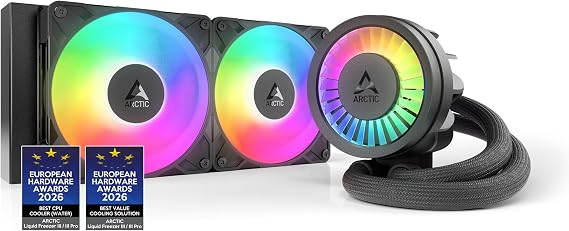
People running Intel 14900K processors looking for efficient cooling under heavy loads will find this water cooler well suited to their needs. It stands out mainly for its well-thought-out cooling design focusing on the CPU hotspot and VRM temperatures, making it a solid choice for maintaining system stability and longevity.
Setting up the cooler is straightforward thanks to the native offset mounting tailored specifically for Intel sockets, including LGA1851 and LGA1700. The integrated VRM fan quietly keeps voltage converters cool, while the ARCTIC P12 PRO fans provide powerful airflow even at low speeds. This design helps in keeping noise levels low during daily tasks without compromising cooling performance during gaming or workloads.
Performance-wise, the water cooling method dissipates heat efficiently from the CPU, aided by optimized contact pressure for better heat transfer and longer CPU life. Build quality feels sturdy with an emphasis on effective thermal management. Most praise comes from its quiet operation combined with solid cooling output, though some mention the maximum rotational speed specification as a possible bottleneck for extreme overclocking needs.
Strongest praise highlights the ARCTIC Liquid Freezer III Pro 240 A-RGB’s quiet yet powerful cooling performance, especially due to the P12 PRO fans and integrated VRM fan keeping system temperatures in check. Common complaints focus on the rotational speed cap which could limit its effectiveness for users pushing their 14900K heavily beyond stock speeds.
Those who want reliable, relatively quiet cooling with emphasis on VRM stability will appreciate this cooler. Users aiming for extreme overclocking or minimal upkeep might prefer an alternative cooler with higher fan speed capacity or simpler maintenance requirements.
Pros
- Optimized contact pressure for heat dissipation and CPU longevity
- Quiet and powerful P12 PRO fans, especially at low speeds
- Integrated VRM fan helps maintain voltage converter temperatures
- Native offset mounting centers on CPU hotspot for efficiency
Cons
- Maximum rotational speed limited to 1 rpm may restrict extreme overclock cooling
- Water cooling requires more maintenance than air coolers
| Specification | Details |
|---|---|
| Power Connector Type | 4-Pin |
| Voltage | 12 volts |
| Wattage | 3.96 watts |
| Cooling Method | Water |
| Maximum Rotational Speed | 1 rpm |
| Air Flow Capacity | 77 cfm |
12. Noctua NH-D15 G2

Known for its quiet but powerful cooling, the NH-D15 G2 is perfect for anyone running a high-end Intel or AMD desktop, especially those with a Core Ultra 14900k. Its standout feature is the combination of a large cooling surface paired with advanced fans designed for low noise and effective heat dissipation.
Installation fits well on AMD AM5 sockets with included mounting and can adapt to Intel LGA1851 or LGA1700 using extra washers. The two 140mm fans operate at variable speeds, keeping noise levels low during normal use while ramping up silently when the CPU is under load.
The design keeps daily operation cool and quiet, letting you focus on tasks without annoying fan noise.
It cools efficiently thanks to eight heatpipes and a 20% larger surface area compared to its predecessors. Build quality feels solid, using materials aimed at long-lasting reliability.
Fans are smooth and quiet but the height and size could block some RAM slots or create clearance issues in smaller cases. Common praise regards near-silent operation at idle, while the biggest drawback is the cooler’s large footprint.
Quiet operation during idle and load is praised across reviews, with users noting how the upgraded fans make it less noisy than previous versions. Some find it tricky fitting the cooler in smaller PC cases or with high-profile RAM, which is its most frequent complaint.
Enthusiasts with enough case space and compatibility needs for Intel or AMD CPUs will appreciate its balanced power and noise profile. Smaller builds or those concerned about clearance might want to consider more compact alternatives.
Pros
- Very quiet operation at low speeds
- Strong cooling with eight heatpipes
- Compatible with multiple CPU sockets
- Automatic fan speed control via PWM
Cons
- Large size can block RAM slots
- May require extra washers for Intel LGA1700
| Specification | Details |
|---|---|
| Cooling Method | Air |
| Power Connector Type | 4-Pin |
| Maximum Rotational Speed | 1500 rpm |
| Air Flow Capacity | 155.6 cubic meter per hour |
| Voltage | 12 volts |
| Noise Level | 24.8 db |
Best 14900k Coolers Side by Side Comparison
| Product | Cooling Method | Max Rotational Speed | Noise Level | Air Flow Capacity |
|---|---|---|---|---|
| ARCTIC Liquid Freezer III Pro | Liquid | 3000 rpm | – | 77 cfm |
| Cooler Master 360 Atmos | Water | 2500 rpm | 25 db | 70.7 cfm |
| Noctua NH-D15 G2 chromax.Black | Air | 1500 rpm | 24.8 db | 155.6 m³/h |
| Noctua NH-D15 chromax.Black | Air | 1500 rpm | 24.6 db | 140.2 m³/h |
| ARCTIC Liquid Freezer III Pro | Liquid | 3000 rpm | – | 77 cfm |
| CORSAIR NAUTILUS 360 RS | Water | 2100 rpm | – | – |
| Thermalright Assassin X120 SE | Heat pipe & fan | 1550 rpm | 25.6 db | 66.17 cfm |
| Thermalright Phantom Spirit 120SE | Air | 1500 rpm | 25.6 db | 66.17 cfm |
| Thermaltake Gravity i3 LGA1700 | Air | 1500 rpm | 21.3 db | 31.34 cfm |
| Noctua NH-U12A chromax.Black | Air | 2000 rpm | 22.6 db | 102.1 cfm |
| ARCTIC Liquid Freezer III Pro | Water | 1 rpm | – | 77 cfm |
| Noctua NH-D15 G2 | Air | 1500 rpm | 24.8 db | 155.6 m³/h |
- Cooling MethodLiquid
- Max Rotational Speed3000 rpm
- Noise Level–
- Air Flow Capacity77 cfm
- Cooling MethodWater
- Max Rotational Speed2500 rpm
- Noise Level25 db
- Air Flow Capacity70.7 cfm
- Cooling MethodAir
- Max Rotational Speed1500 rpm
- Noise Level24.8 db
- Air Flow Capacity155.6 m³/h
- Cooling MethodAir
- Max Rotational Speed1500 rpm
- Noise Level24.6 db
- Air Flow Capacity140.2 m³/h
- Cooling MethodLiquid
- Max Rotational Speed3000 rpm
- Noise Level–
- Air Flow Capacity77 cfm
- Cooling MethodWater
- Max Rotational Speed2100 rpm
- Noise Level–
- Air Flow Capacity–
- Cooling MethodHeat pipe & fan
- Max Rotational Speed1550 rpm
- Noise Level25.6 db
- Air Flow Capacity66.17 cfm
- Cooling MethodAir
- Max Rotational Speed1500 rpm
- Noise Level25.6 db
- Air Flow Capacity66.17 cfm
- Cooling MethodAir
- Max Rotational Speed1500 rpm
- Noise Level21.3 db
- Air Flow Capacity31.34 cfm
- Cooling MethodAir
- Max Rotational Speed2000 rpm
- Noise Level22.6 db
- Air Flow Capacity102.1 cfm
- Cooling MethodWater
- Max Rotational Speed1 rpm
- Noise Level–
- Air Flow Capacity77 cfm
- Cooling MethodAir
- Max Rotational Speed1500 rpm
- Noise Level24.8 db
- Air Flow Capacity155.6 m³/h
How to Choose the Best 14900k Cooler
Selecting the right cooler for the 14900k depends on factors like cooling efficiency, compatibility with your PC case, and noise levels. Prioritizing these ensures stable performance and prevents overheating, which helps avoid costly repairs and keeps your system running smoothly over time.
Cooling Performance
CPUs like the 14900k generate a lot of heat, measured by thermal design power (TDP). Using a cooler rated for the processor’s TDP or higher ensures that it can efficiently dissipate heat during intensive tasks.
A cooler that falls short allows temperatures to spike, causing throttling or system instability. Fan speed and airflow directly affect how quickly heat is moved away from the CPU. Fans spinning between 1200 to 2500 RPM strike a balance between cooling and noise, depending on the cooler’s design.
High airflow, measured in cubic feet per minute (CFM), is critical to push hot air out of the case effectively.
Air coolers rely on metal fins and fans to dissipate heat, which can handle most loads well but might struggle under sustained heavy use. Liquid cooling systems have an edge here, circulating coolant through a radiator to manage temperatures more consistently, especially with high core counts. Daily use shows air cooling is quieter and easier, but liquid cooling often maintains better temps under long gaming or rendering sessions.
Compatibility and Size
Ensuring a cooler fits with the 14900k requires checking for LGA 1700 socket compatibility first. Many recent coolers include mounting kits for this socket, but older models might not, causing installation headaches.
Size matters just as much. Tower coolers can be tall, over 150mm, and may not clear the side panel of some cases or the tall RAM modules nearby. Double-check clearance specs, especially if the build uses high-profile memory or compact cases.
Motherboard layout also influences the cooler choice. Some coolers with offset designs avoid memory interference, while others might block access to DIMM slots. Measuring the space around the CPU socket before buying saves frustration.
A cooler that fits properly avoids awkward installs and interference with other components, which can lead to thermal or mechanical issues.
Noise Levels
Cooling solutions show a wide range of noise levels. Stock air coolers often run between 25 to 40 dBA under load, where 25 dBA is whisper-quiet and 40 is clearly noticeable.
Custom fans with better bearings and blade designs reduce noise by running more efficiently at lower speeds. PWM fan control helps adjust speed dynamically, dialing down noise during light tasks.
Users in quiet environments like home offices or studios prioritize low noise. Fans that maintain solid cooling performance below 30 dBA make a noticeable difference in comfort during prolonged use.
On the other hand, gaming setups might accept louder fans if temperatures stay low. Testing with a decibel meter can clarify real-world operation beyond product specs.
Build Quality and Materials
High-quality coolers use copper heat pipes because copper transfers heat much better than aluminum alone. Aluminum fins spread that heat over a larger area and allow air to cool it effectively. Coolers built with dense fin stacks and multiple heat pipes improve thermal conductivity and keep temperatures down for longer sessions.
Durability depends heavily on build quality. Sturdy frames resist warping under heavy mounting pressure, preventing uneven contact with the CPU.
The mounting system should be solid and easy to tighten but not overly complex. Loose or cheap mounting brackets can loosen over time, reducing cooling effectiveness and risking damage to the CPU.
Ease of Installation and Maintenance
Installations go smoothly when coolers include user-friendly mounting systems designed for the LGA 1700 socket. Clear instructions and labeled parts reduce mistakes and installation time.
Some coolers use backplates and screws that require flipping the motherboard, which can complicate things for beginners.
Access to fans and fins matters for cleaning, especially after months of dust buildup. Removable fans or easy-to-reach surfaces make maintenance less of a chore.
Compatibility with standard thermal paste application means users can spread and replace paste without special tools. Routine paste replacement improves heat transfer as old paste dries out and degrades performance.
Optimal Installation Techniques for the 14900K Cooler
Proper thermal paste application is crucial for efficient heat transfer between the CPU and cooler. Spread a pea-sized amount evenly over the CPU surface before mounting the 14900K cooler. Align the cooler squarely with the mounting brackets to ensure uniform pressure on all sides.
Use the included screws or clips and tighten them diagonally in small increments, avoiding uneven tension which can cause poor contact and hotspots.
Ensure that the cooler’s fans are oriented to push air through the case’s airflow path, typically front-to-back or bottom-to-top, to maximize cooling efficiency. Cable management plays a practical role too; keep fan and power cables clear of the blades to avoid obstruction and noise.
Confirm that the cooler clears RAM modules and other motherboard components to prevent installation issues or damage.
- Use isopropyl alcohol to clean old thermal paste before applying new compound.
- Check that the cooler’s mounting system matches the socket type of the 14900K processor.
- Verify BIOS settings for fan speed control after installation for optimal cooling response.
Maintenance and Cleaning Tips to Prolong Cooler Lifespan
Dust accumulation is the primary cause of reduced cooler performance over time. Regularly inspect fans and heatsinks for dust buildup and clean with compressed air or a soft brush. Avoid vacuum cleaners as they can generate static electricity harmful to components.
Remove the cooler from the motherboard for thorough cleaning once or twice a year depending on environmental dust levels.
Reapplying thermal paste every couple of years helps maintain good thermal conductivity since paste can dry out and lose effectiveness. While the cooler is off, check fan bearings for noise or wobbling and replace fans if they show signs of wear. Lubricating fan bearings is not usually recommended as it may void warranties.
- Disconnect power before cleaning to prevent short circuits.
- Keep vents and filters around the PC clean to reduce dust intake.
- Monitor fan speeds and temperatures using system tools to detect early cooling issues.
Comparing Air Cooling vs Liquid Cooling for the 14900K
Air coolers rely on heatsinks and fans to dissipate heat by moving air through metal fins. They tend to be simpler to install, require less maintenance, and have fewer points of failure.
High-end air coolers can handle the heat output of a 14900K, especially with good case airflow. However, their size can limit RAM or case clearance, and noise levels sometimes increase under load.
Liquid cooling uses a pump to circulate coolant through a radiator and block, often allowing for smaller CPU blocks and improved heat transfer. Radiators can be positioned to optimize airflow and aesthetics.
These systems typically provide lower temperatures under heavy loads, benefiting overclocking or sustained intensive tasks. They require more careful mounting and occasional maintenance to monitor fluid levels or potential leaks.
- Air coolers usually cost less and have longer service life without intervention.
- Liquid coolers might better maintain lower temps in small or restrictive cases.
- Consider case compatibility and noise preferences when choosing between the two.
People Also Asked
How Do I Install a Cooler on the 14900k CPU?
You need to securely attach the cooler’s mounting brackets to the motherboard around the CPU socket and apply thermal paste between the CPU and cooler base. Make sure the cooler’s fan is oriented to blow air towards your case exhaust for better airflow.
Is This Cooler Compatible with All 14900k Motherboard Sockets?
Most coolers designed for the 14900k support LGA 1700 sockets, but always check the manufacturer’s compatibility list to confirm. Sometimes older coolers need a mounting kit to fit new sockets properly.
How Long Does a Typical 14900k Cooler Last Before Replacement?
A good CPU cooler can last several years if properly maintained, often 3 to 5 years or more. Fans might wear out sooner and need replacing to keep noise and cooling performance steady.
What Are Common Problems with 14900k CPU Coolers to Watch For?
Common issues include poor contact between the cooler base and CPU, leading to high temperatures, and fan bearing wear causing noise. Loose mounting can also reduce cooling effectiveness.
How Do I Clean and Maintain My 14900k Cooler Properly?
Remove dust regularly from fan blades and heatsink fins using compressed air or a soft brush to maintain airflow. Reapplying thermal paste every couple of years helps keep thermal conductivity optimal.
Conclusion
Cooling performance, noise level, and compatibility with your PC case are the main factors to consider for a 14900k cooler. The processor generates a lot of heat, so the cooler needs to keep temperatures controlled without being too loud.
At the same time, size matters because some coolers won’t fit smaller cases or might block RAM slots.
Think about your budget and how often you expect to push the CPU hard. Pick a cooler that fits your case dimensions and cooling needs.
The comparison table above can help you weigh these trade-offs and find the right balance between price, size, and cooling capability.

I’m Grant Mitchell, a firearms and hunting writer with years of experience at the range and in the field. I write about rifles, shotguns, handguns, optics, safe storage, cleaning, and responsible ownership, along with practical hunting tips. My goal is to share accurate, safety-first information that helps you choose the right firearm, maintain it properly, and become a more confident shooter.


