Top 12 Best 120mm Fan for CPU Cooler You Can’t Miss!
Overheating or loud buzzing sounds from a PC are common signs that you don’t have the best 120mm fan for cpu cooler installed. A poorly chosen or cheap fan often struggles to maintain steady airflow or causes excess noise, which affects performance and focus during work or gaming sessions.
The key to a solid 120mm CPU cooler fan lies in balance between airflow, noise level, and build quality. Look for fans that spin between 1000 to 2000 RPM, pushing around 40 to 70 CFM of air to keep temperatures in check without being obtrusive. Durable bearings and a frame that fits securely without rattling also make a noticeable difference in both performance and lifespan.
Need a Quick Check?
| Image | Product | Price |
|---|---|---|
Our Top Picks 1  | Noctua NF-P12 Redux | Check Price |
Our Top Picks 2  | ARCTIC P12 Pro | Check Price |
Our Top Picks 3  | Cooler Master MF120 Lite | Check Price |
Our Selected Top 12 120mm Fan for Cpu Cooler Picks for Every Need
This list features carefully reviewed 120mm fans designed for CPU coolers, highlighting their performance, noise levels, and compatibility. Each review covers the strengths and limitations of the fans, helping readers identify which models best suit different cooling needs and system setups.
1. Noctua NF-P12 redux-1700 PWM Fan 120mm
A fan known for quiet but powerful airflow, perfect for anyone needing efficient cooling in a compact 120mm size. Its biggest strength lies in balancing strong static pressure with low noise, suited for CPU coolers and radiators where efficient air movement matters most.
Setup is straightforward with a 4-pin PWM connector that lets your motherboard control the fan speed automatically. You get strong airflow at high loads and near silence when idle, meaning it adapts to what your system needs without fuss. Measuring 120x120x25 mm, it fits most standard mounts easily, making maintenance and cleaning simple too.
Performance reflects its high-end design with pressure-optimised blades that push a solid 120.2 cubic meters of air per hour at up to 1700 RPM. Built to last more than 150,000 hours mean time to failure, it stands up to long-term use.
Reviews praise its quiet operation and reliable build, though some mention the 25.1 dB noise level isn’t the absolute quietest possible.
The fan’s quietness paired with a strong airflow is often highlighted as its best feature, delivering a good balance without sounding harsh. Many find the noise level acceptable for everyday use, though some wish it would run more silently at full speed.
People wanting dependable, versatile cooling with smart speed control will like this fan. Those who need completely silent operation above all else might look for quieter options.
Pros
- High static pressure for CPU cooler efficiency
- Quiet operation despite strong airflow
- Durable design with long MTTF
- Automatic speed control via motherboard PWM
Cons
- Noise level not the lowest in ultra-quiet setups
- Power draw slightly higher than some competitors
| Specification | Details |
|---|---|
| Voltage | 12 volts |
| Maximum Rotational Speed | 1700 rpm |
| Noise Level | 25.1 dB |
| Air Flow Capacity | 120.2 cubic meters per hour |
| Power Connector Type | 4-Pin PWM |
| Dimensions | 120 x 120 x 25 mm |
2. ARCTIC P12 Pro PWM Fan 120mm
ARCTIC P12 Pro PWM Fan 120mm is a powerful cooling solution designed for users who want efficient airflow through dense radiators and restricted spaces. Its standout feature is the high static pressure, making it perfect for CPU coolers where air needs to be pushed through tight fins or mesh panels.
Installation is straightforward thanks to the 4-pin PWM connector, allowing you to precisely control the fan speed up to 3000 rpm. Daily operation is quiet due to the automatic balancing and precision manufacturing, which also minimizes vibration.
The fan can completely stop when idle, reducing noise when full cooling isn’t needed.
It moves air at 77 cfm, providing strong cooling performance even under load. The build quality is solid, with minimal gaps that improve smooth operation and durability. The main praise centers on its quiet yet powerful airflow, while some mention it gets quite loud when running at maximum speed.
The fan is praised for delivering quiet, powerful airflow thanks to its precise build and effective vibration reduction. Noise can become noticeable at the highest speed settings, matching its 3000 rpm capability.
Those needing strong cooling through tight spaces and wanting quiet operation at lower speeds will appreciate this fan. Users sensitive to noise under full load might prefer a quieter, lower rpm model.
Pros
- High static pressure for dense radiator cooling
- PWM control with wide speed range
- Quiet at low speeds with minimal vibration
- Stops completely under 5% PWM
Cons
- Loud noise potential at maximum 3000 rpm
- Consumes close to 4 watts of power
| Specification | Details |
|---|---|
| Power Connector Type | 4-Pin |
| Voltage | 12 volts |
| Wattage | 3.96 watts |
| Maximum Rotational Speed | 3000 rpm |
| Air Flow Capacity | 77 cfm |
3. Cooler Master MF120 Lite PWM Fan 120mm
Running quietly with solid airflow, this 120mm fan suits those upgrading or replacing their CPU cooler. Its biggest strength lies in balancing noise and cooling by adjusting speeds between 650 and 1,750 RPM through PWM control, keeping things cool without much distraction.
Installation feels straightforward thanks to the redesigned hybrid frame and simpler setup process. The curved blade design helps maintain steady airflow, which makes daily use pleasant as it adapts soundlessly to different thermal loads. Its minimalist black look fits easily in any PC build without standing out or clashing.
The fan performs well in maintaining stable temperatures under load, thanks to the optimized PWM blades. It’s well built with an emphasis on steady airflow and quiet operation. Praise often highlights the smooth operation and effectiveness, while some notices relate to noise levels creeping up to 30 dB when running near maximum speed.
Cooling efficiency and quietness at varied speeds stand out as major advantages in everyday use. However, the noise level tends to rise noticeably when the fan hits its upper RPM, which can be distracting in very quiet environments.
Users seeking a reliable, easy-to-install fan for standard air or liquid coolers will find this fan suitable. Those needing maximum airflow or ultra-low noise under heavy load might look for options with higher capacity or quieter operation at top speed.
Pros
- Adjustable fan speed from 650 to 1750 RPM
- Quiet operation at lower speeds
- Simple installation with redesigned frame
- The black finish looks great with any PC build
Cons
- Noise can reach 30 dB at full speed
- Airflow rating on the lower end for high-demand setups
| Specification | Details |
|---|---|
| Power Connector Type | 4-Pin |
| Voltage | 12 volts |
| Maximum Rotational Speed | 1750 rpm |
| Noise Level | 30 db |
| Air Flow Capacity | 70.5 cubic_centimeters_per_minute |
4. Thermalright TL-C12C X3 PWM CPU Fan 120mm

Great for anyone needing dependable CPU cooling with quiet operation, it suits desktop builds that prioritize noise control and efficiency. Its biggest strength lies in the smart PWM speed control adapting fan speed dynamically according to temperature.
Setup is straightforward with a 4-pin PWM connector allowing your motherboard to control fan speed automatically. A 55cm cable gives some flexibility in placement without clutter. You won’t have to worry about manual adjustments, and the fan quietly adjusts its speed based on heat, which is perfect during both heavy gaming and idle times.
Performance-wise, it moves a solid 66.17 CFM of air at a max speed of 1550 RPM, keeping your CPU cool without overwhelming noise. The S-FDB bearings keep vibrations and wobbling down, making the fan one of the quieter options around at 25.6 dB noise level.
Some users mention the 3-watt power draw as a minor downside for power-conscious builds.
The fan gets praised highly for quiet operation combined with effective airflow from its quality S-FDB bearings that reduce wobbling and noise. The most common complaint revolves around its modest maximum speed and power consumption relative to some high-efficiency fans.
Anyone wanting reliable, quiet CPU cooling with motherboard-regulated fan speed will appreciate this fan. Those requiring ultra-high airflow or ultra-low power use might look toward other options better suited for those specific needs.
Pros
- Automatic speed control via PWM
- Quiet operation at 25.6 dB noise level
- Long 55cm cable for flexible installation
- S-FDB bearings reduce vibrations and extend lifespan
Cons
- Max speed capped at 1550 RPM
- 3 watts power draw may be high for some setups
| Specification | Details |
|---|---|
| Maximum Rotational Speed | 1550 rpm |
| Noise Level | 25.6 db |
| Air Flow Capacity | 66.17 cfm |
| Voltage | 12 volts |
| Power | 3 watts |
| Power Connector Type | 4-Pin |
5. CORSAIR RS120 PWM Fan 120mm
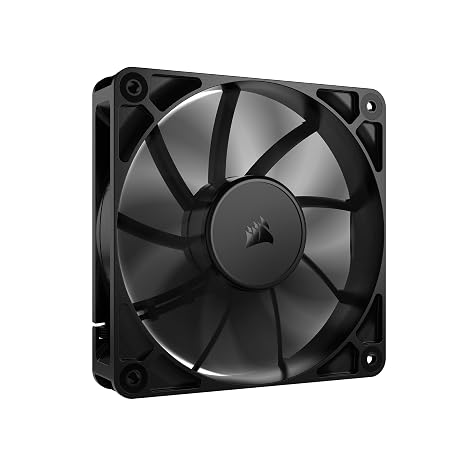
Durable plastic and aerodynamic design set this 120mm fan apart, aimed at those who want focused cooling for CPU radiators. Its biggest strength lies in the ability to daisy-chain multiple fans, reducing cable clutter and simplifying control via a single 4-pin PWM connector.
Setting up involves connecting to a 4-pin PWM header, then linking additional fans easily thanks to its daisy-chain feature. Day-to-day operation lets you control fan speeds precisely up to 2,100 RPM, adjusting airflow based on CPU temperature. The anti-vortex vanes direct airflow efficiently to the hottest areas, making it practical for intensive cooling needs without complex wiring.
Designed for high static pressure at 4.15mm-H2O, it pushes air effectively through radiators and heatsinks. The build quality feels solid with sturdy blades and frame to ensure longevity. Reviews highlight strong performance in maintaining cool temperatures, but some note a moderate noise level around 36 dB as a drawback during peak operation.
The fan is praised for its strong and focused airflow thanks to anti-vortex vanes and high static pressure, making it effective on radiators. The main downside mentioned is the relatively high noise level at full speed, which might be noticeable in quiet setups.
Those looking for powerful CPU cooling and easier fan cable management will appreciate this fan. People wanting a whisper-quiet system may want to consider quieter alternatives, as noise can be an issue during heavy load.
Pros
- Daisy-chains reduce cable clutter
- High airflow at 72.8 CFM
- Precise PWM speed control
- Effective anti-vortex vanes
Cons
- Noisy at maximum speed
- Uses 5.4 watts, higher power draw
| Specification | Details |
|---|---|
| Power Connector Type | 4-Pin |
| Voltage | 12 volts |
| Wattage | 5.4 watts |
| Maximum Rotational Speed | 2100 rpm |
| Air Flow Capacity | 72.8 cfm |
| Noise Level | 36 db |
6. Thermalright Peerless Assassin 120 SE CPU Cooler

Quiet performance stands out immediately with this CPU cooler. Designed for desktop setups, it fits well in most builds and excels at maintaining low noise levels during operation. It suits anyone prioritizing a balance between airflow and sound, making it ideal for those wanting solid cooling without loud fans.
Installation is straightforward with a 4-pin power connector that supports PWM control for adjusting fan speed as needed. Running at a maximum of 1550 rpm, it pushes 66.17 cfm of air efficiently without becoming disruptive.
The 25.6 dB noise level means it stays pretty discreet even under load, contributing to an easy daily runtime without worrying about distracting noise.
Its main job of air cooling is handled well, managing 265 watts of heat through a solid build. The design from a long-established brand focuses on durability and effective thermal management.
While praise often highlights the quiet and reliable cooling performance, some point out that the cooler may be slightly bulky for certain smaller cases or setups with tight clearance.
Its quiet operation combined with solid cooling power is praised most often, making it a dependable choice for managing heat without much noise. A common complaint involves its size, which can be problematic in compact builds that don’t have enough clearance.
People looking for strong airflow and low noise will find it a great fit. Those with smaller cases or requiring extremely high fan speeds might want to explore other options that better match limited space or higher thermal demands.
Pros
- Quiet operation at 25.6 dB
- Strong airflow capacity at 66.17 cfm
- Supports 4-pin PWM for speed control
- Effective heat dissipation for 265 watts
Cons
- May be bulky in smaller PC cases
- Fan speed capped at 1550 rpm limits maximum cooling
| Specification | Details |
|---|---|
| Power Connector Type | 4-Pin |
| Voltage | 12 volts |
| Wattage | 265 watts |
| Noise Level | 25.6 db |
| Maximum Rotational Speed | 1550 rpm |
| Air Flow Capacity | 66.17 cfm |
7. Thermalright TL-C12C X5 PWM CPU Fan 120mm

Perfect for anyone serious about quiet yet effective cooling, the Thermalright TL-C12C X5 PWM 120mm fan shines in adjusting speed based on your CPU temperature. It’s ideal for users wanting a controlled airflow experience without loud noise, making it a clear step up from budget fans.
Setup is straightforward thanks to the 4-pin PWM connector that links directly to the motherboard, allowing the fan to auto-adjust between 0 and 1550 RPM depending on temperature. You get a long 55cm cable, making it easy to fit in tight cases or on CPU coolers.
The fan runs quietly and won’t need constant manual tweaking.
Cooling up to 66.17 cubic feet per minute keeps things running cool, especially during intense workloads. The S-FDB bearing design means minimal shaking or wobbling, so noise stays at a low 25.6 dB without sacrificing airflow. Most praise mentions how quiet it remains even under load, while some note it might not push enough air for extreme overclocking setups.
The fan is widely praised for its quiet operation thanks to quality bearings and effective speed control adjusting to temperature changes automatically. Common frustrations include the limited maximum speed, which may not satisfy those pushing their systems to the limit with heavy cooling demands.
Ideal for anyone prioritizing silent cooling on a mid-range CPU setup. Avoid if you need maximum airflow for hardcore overclocking or massive heat dissipation, as it might not keep temperatures down under very heavy loads.
Pros
- Automatic speed control via PWM chipset
- Low noise level at 25.6 dB
- S-FDB bearing reduces fan blade shaking
- Generous 55cm cable length
Cons
- Max speed capped at 1550 RPM
- May lack airflow for extreme overclocking
| Specification | Details |
|---|---|
| Maximum Rotational Speed | 1550 rpm |
| Air Flow Capacity | 66.17 cfm |
| Noise Level | 25.6 db |
| Voltage | 12 volts |
| Power Connector Type | 4-Pin |
8. Noctua NF-A12x25 PWM Fan 120mm

Keeping your CPU cool without the noise turning up is a common challenge, especially with smaller 120mm fans. A quiet cooler fan with solid airflow suits anyone looking for a balance between silence and power.
Its biggest strength lies in combining high static pressure with low noise, making it great for tight spaces and dense radiators.
Setting it up takes no special effort, thanks to the standard 4-pin PWM connector that lets you control fan speed automatically from your motherboard. The maximum 2000 RPM spin rate gives you plenty of cooling when needed, while the included Low-Noise Adaptor drops speeds to 1700 RPM for quieter days. Cleaning is straightforward due to its durable build and sealed design.
Performance hits a sweet spot with airflow rated at 102.1 cubic meters per hour and a noise level capped at 22.6 dB(A), which stays unobtrusive during heavy loads. The Sterrox LCP material construction and metal-reinforced hub offer reliability expected from premium fans.
Positive notes from users mention quiet operation and excellent airflow, while some find the 2000 RPM max speed not quite enough for extreme overclocking.
The combination of solid airflow and quiet running is well appreciated during normal use, but the 2000 RPM maximum places a limit on cooling power for the most demanding setups. Many find the fan performs flawlessly as a CPU cooler without making much noise, but it might not satisfy extreme performance needs.
This fan suits users wanting a reliable, quiet 120mm option for standard to moderately stressful cooling jobs. Anyone pushing CPUs to their limits may need a fan capable of higher RPM or a larger size for better airflow.
Pros
- Quiet operation even at high speeds
- High static pressure suitable for radiators
- Durable Sterrox LCP material build
- Automatic speed control via PWM
Cons
- Max speed may limit extreme overclocking cooling
- Noise level still noticeable under full load
| Specification | Details |
|---|---|
| Maximum Rotational Speed | 2000 rpm |
| Noise Level | 22.6 dB(A) |
| Power Connector Type | 4-Pin PWM |
| Air Flow Capacity | 102.1 cubic meter per hour |
| Dimensions | 120 x 120 x 25 mm |
| Voltage | 12 volts |
9. Thermalright TL-C12C-S ARGB PWM CPU Fan 120mm

Running up to 1550 RPM, this fan suits anyone looking for a CPU cooler that adjusts its speed with the motherboard’s temperature. Its automatic control and solid airflow capacity stand out for keeping things cool without constant manual tweaking.
Setup is straightforward thanks to the 4-pin PWM connection, allowing the motherboard to handle fan speed dynamically. The long 55cm cable offers plenty of room inside most cases, making installation flexible. Noise stays low due to specially designed bearings that steady the blades even at higher speeds, so daily operation remains quiet without sacrificing cooling power.
Performance hits the mark with a good airflow of 66.17 CFM while peaking at 1550 RPM. The fan’s S-FDB bearings contribute to its quieter running and longer life expectancy.
Most praises highlight how silent it stays, though some note the 3.6-watt power draw might be a bit high compared to quieter models.
Many find the quietness from the S-FDB bearings a major plus, especially when the fan ramps up cooling without loud noise. The common drawback mentioned relates to power consumption, which is on the higher side for a fan this size.
This fan fits well with users who prioritize quiet, temperature-responsive cooling in their CPU setup. Those needing ultra-low power or extremely high RPM might want to explore other options better suited to those specific needs.
Pros
- Adjusts speed automatically via 4PIN PWM cable
- Quiet operation thanks to S-FDB bearings
- Long 55cm cable for easy placement
- Strong airflow of 66.17 CFM
Cons
- Consumes 3.6 watts, higher than some rivals
- Maximum speed capped at 1550 RPM
| Specification | Details |
|---|---|
| Maximum Rotational Speed | 1550 rpm |
| Air Flow Capacity | 66.17 cfm |
| Noise Level | 25.6 db |
| Power Connector Type | 4-Pin |
| Voltage | 12 volts, 5 volts |
| Wattage | 3.6 watts |
10. Be Quiet! Pure Wings 3 PWM Fan 120mm
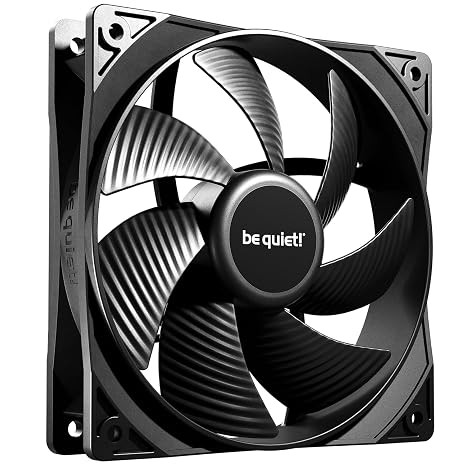
People looking for a quiet but effective 120mm fan to cool their CPU will find the be quiet! Pure Wings 3 PWM Fan 120mm especially fitting. Its biggest strength lies in maintaining good airflow while running very quietly, making it excellent for noise-sensitive setups.
Installing the fan is straightforward thanks to the standard 4-pin power connector, which allows precise control over its speed. The fan’s optimized frame and seven blades work together to deliver steady airflow without adding much noise. You’ll notice it can spin at a very low minimum rpm, keeping things peaceful during regular usage.
Low power consumption at just 2.4 watts keeps it energy-friendly as well.
Performance-wise, it moves up to 49.9 cfm of air at a maximum speed of 1600 rpm, enough to cool demanding configurations effectively. Built with long-life rifle bearings, its lifespan of 80,000 hours suggests solid durability.
Customers frequently commend how quiet it operates, though some note that the maximum speed might not satisfy the highest cooling demands.
Quiet performance stands out in daily use, with the fan delivering smooth airflow and minimal noise for most tasks. The most common concern is that it might struggle at higher speeds when maximum cooling is needed.
Users valuing silent operation and reliable lifespan will appreciate this fan. Those who require very high cooling power might prefer options with higher airflow and speed capabilities.
Pros
- Very quiet operation at low rpm
- Long-lasting rifle bearing
- Optimized for radiator cooling
- Low power consumption
Cons
- May not be powerful enough for extreme cooling needs
- Noise level rises at maximum speed
| Specification | Details |
|---|---|
| Power Connector Type | 4-Pin |
| Voltage | 12 volts |
| Wattage | 2.4 watts |
| Noise Level | 25.5 db |
| Maximum Rotational Speed | 1600 rpm |
| Air Flow Capacity | 49.9 cfm |
11. ARCTIC P12 Pro PST 5 Pack PWM Fans 120mm

Known for handling dense radiators and restrictive panels with ease, the ARCTIC P12 Pro PST 5 Pack PWM Fans suit anyone needing strong static pressure in a compact 120mm size. Their ability to maintain airflow even when facing resistance makes them stand out for CPU cooling setups.
Setting these fans up is straightforward thanks to the 4-pin PWM connection, allowing speed adjustments up to 3000 rpm. Fans remain silent at low speeds and even stop entirely below 5% PWM, which means no noise when the system is idle or under light loads.
The pack of five offers flexibility, whether swapping out existing fans or outfitting multiple points in a build.
These fans manage airflow efficiently, pushing up to 77 cfm to keep components cool under pressure. They run smoothly with minimal vibrations thanks to precise manufacturing and automatic balancing. Users praise their quiet operation while some note that the higher speed can be louder.
The build quality supports long-term use without sacrificing performance or noise control.
The fans deliver solid airflow with minimal vibrations and quiet performance, highly appreciated during everyday use. The main drawback mentioned is the noise when running at maximum speeds, which could be distracting in quiet environments.
Those who need reliable cooling for complex radiator setups will find these fans an excellent match. Users looking for silent operation under all conditions might want to consider lower rpm options or fans designed for near-silent airflow.
Pros
- Strong static pressure for dense radiators
- Wide speed range up to 3000 rpm
- Stops completely under low PWM signal
- Quiet and smooth operation
Cons
- Higher speeds can become noisy
- May be overkill for simple air cooling
| Specification | Details |
|---|---|
| Maximum Rotational Speed | 3000 rpm |
| Air Flow Capacity | 77 cfm |
| Voltage | 12 volts |
| Power Connector Type | 4-Pin |
| Wattage | 3.96 watts |
12. ARCTIC P12 Slim PWM PST Fan 120mm

ARCTIC P12 Slim PWM PST Fan 120mm excels at delivering strong static pressure cooling, making it ideal for use on CPU coolers and radiators where airflow resistance is higher. It suits anyone needing effective heat dissipation in a compact 120mm size without loud noise.
Installation is straightforward with the 4-pin PWM connector allowing precise speed control from 300 to 2100 RPM. This ensures quieter operation at low loads and more airflow when temperatures rise.
Its slim design fits tight spaces on heat sinks comfortably, while maintaining stable airflow even where other fans might struggle.
The fan provides reliable airflow of up to 42.1 cubic meters per hour while keeping noise low at 0.3 sones when running quietly. Build quality is solid, with a focus on durability in the upgraded motor and blade design.
Most common praise highlights its cooling efficiency, while some users mention the upper RPM noise as the main drawback.
Highly efficient cooling with firm static pressure is praised regularly, but noise at top speeds tends to draw criticism. The fan maintains balance between quiet operation and power but leans slightly toward performance noise under load.
Strong candidates for this fan are PC builders needing effective cooling on tight heatsinks or radiators who want adjustable speed control. Those prioritizing absolute silence might want to explore quieter alternatives.
Pros
- Strong static pressure for cooling dense fins
- Wide speed range via PWM for noise control
- Slim profile fits tight CPU cooler spaces
- Efficient airflow of 42.1 m³/h
Cons
- Noise can increase noticeably near 2100 rpm
- Not the quietest at maximum speed
| Specification | Details |
|---|---|
| Maximum Rotational Speed | 2100 rpm |
| Air Flow Capacity | 42.1 cubic meter per hour |
| Noise Level | 0.3 sones |
| Power Connector Type | 4-Pin |
| Voltage | 12 volts |
| Wattage | 1.44 watts |
Best 120mm CPU Cooler Fans Comparison Table
| Product | Max RPM | Noise Level | Air Flow | Wattage |
|---|---|---|---|---|
| Noctua NF-P12 Redux | 1700 rpm | 25.1 db | 120.2 m³/h | 1.08 W |
| ARCTIC P12 Pro | 3000 rpm | – | 77 cfm | 3.96 W |
| Cooler Master MF120 Lite | 1750 rpm | 30 db | 70.5 cm³/min | – |
| Thermalright TL-C12C X3 | 1550 rpm | 25.6 db | 66.17 cfm | 3 W |
| CORSAIR RS120 PWM | 2100 rpm | 36 db | 72.8 cfm | 5.4 W |
| Thermalright Peerless Assassin SE | 1550 rpm | 25.6 db | 66.17 cfm | 265 W |
| Thermalright TL-C12C X5 | 1550 rpm | 25.6 db | 66.17 cfm | 2.4 W |
| Noctua NF-A12x25 | 2000 rpm | 22.6 db | 102.1 m³/h | – |
| Thermalright TL-C12C-S ARGB | 1550 rpm | 25.6 db | 66.17 cfm | 3.6 W |
| be quiet! Pure Wings 3 | 1600 rpm | 25.5 db | 49.9 cfm | 2.4 W |
| ARCTIC P12 Pro 5 Pack | 3000 rpm | – | 77 cfm | 3.96 W |
| ARCTIC P12 Slim | 2100 rpm | 0.3 sones | 42.1 m³/h | 1.44 W |
- Max RPM1700 rpm
- Noise Level25.1 db
- Air Flow120.2 m³/h
- Wattage1.08 W
- Max RPM3000 rpm
- Noise Level–
- Air Flow77 cfm
- Wattage3.96 W
- Max RPM1750 rpm
- Noise Level30 db
- Air Flow70.5 cm³/min
- Wattage–
- Max RPM1550 rpm
- Noise Level25.6 db
- Air Flow66.17 cfm
- Wattage3 W
- Max RPM2100 rpm
- Noise Level36 db
- Air Flow72.8 cfm
- Wattage5.4 W
- Max RPM1550 rpm
- Noise Level25.6 db
- Air Flow66.17 cfm
- Wattage265 W
- Max RPM1550 rpm
- Noise Level25.6 db
- Air Flow66.17 cfm
- Wattage2.4 W
- Max RPM2000 rpm
- Noise Level22.6 db
- Air Flow102.1 m³/h
- Wattage–
- Max RPM1550 rpm
- Noise Level25.6 db
- Air Flow66.17 cfm
- Wattage3.6 W
- Max RPM1600 rpm
- Noise Level25.5 db
- Air Flow49.9 cfm
- Wattage2.4 W
- Max RPM3000 rpm
- Noise Level–
- Air Flow77 cfm
- Wattage3.96 W
- Max RPM2100 rpm
- Noise Level0.3 sones
- Air Flow42.1 m³/h
- Wattage1.44 W
How to Choose the Best 120mm CPU Fan
Choosing the right 120mm CPU fan depends mainly on airflow, noise level, and durability. Prioritizing these factors ensures efficient cooling and quieter operation, preventing overheating and reducing the need for early replacements, which saves both money and hassle over time.
Airflow and Static Pressure
Fans with high static pressure are essential for pushing air through the dense fins of CPU coolers. A fan might move a lot of air in open spaces, but it struggles when airflow is obstructed by narrow fin gaps.
This reduces the cooler’s ability to dissipate heat effectively. Fans rated around 2 to 3 mmH2O for static pressure tend to perform better on tightly packed heat sinks. Airflow is measured in CFM (cubic feet per minute), which indicates how much air the fan can move in free space.
High CFM is useful, but static pressure is what really matters for dense coolers; strong pressure overcomes the resistance from fins and keeps air flowing steadily.
Using a fan with low static pressure typically results in higher CPU temperatures and can cause the system to throttle during heavy loads. A fan balancing both airflow and static pressure, usually with speeds around 1000 to 2000 RPM, delivers consistent cooling without excessive noise or wasted energy.
Noise Level and Rpm Control
PC noise is a big factor for those working or gaming in quiet rooms. Fans spinning above 1500 RPM often produce noticeable noise, sometimes exceeding 30 to 40 decibels. Selecting fans with quieter operation in the 20-30 dBA range makes a clear difference during everyday use.
Fans that have PWM (pulse-width modulation) control allow the motherboard to adjust speed based on CPU temperature, keeping the fan quiet during light tasks and more active only when needed.
Higher RPM means better cooling but also louder noise. Fans with PWM control avoid running at full speed all the time, preserving quietness. Too fast fans can be distracting, while silent fans that spin too slowly might let the CPU run hotter.
Finding a balance with a fan featuring smooth speed adjustments helps maintain thermal performance without a noisy environment.
Compatibility and Size Fit
Most CPU coolers accept standard 120mm fans, but thickness varies from 25mm to 38mm or more. Thinner fans fit better in cramped cases or on radiators where clearance is tight.
Fans that are too thick might block cables or nearby slots, complicating builds. Checking the exact size ensures the fan doesn’t interfere with other components or the case side panel.
Connector compatibility also matters. The majority use a 3-pin or 4-pin PWM header.
Fans with 4-pin connectors offer better speed control. Some come with Molex or adapters, but these usually lose PWM features. Ensuring the fan can plug directly into your motherboard or fan controller simplifies setup and avoids compatibility frustrations.
Build Quality and Bearing Type
Blades and frame made of decent plastic help avoid warping or cracking over time. More importantly, the bearing type greatly impacts longevity and smoothness. Sleeve bearings are cheaper but wear out faster and can become noisy.
Ball bearings last longer and handle heat better. Fluid dynamic bearings offer the best balance, running quietly and lasting many years even under continuous operation.
Fans with high-quality bearings maintain stable speeds without wobbling or increased vibration. This reduces noise and prevents early failure of the fan motor. Poor build quality or low-grade bearings often lead to early failure or annoying rattling sounds after months of use.
Ease of Installation and Maintenance
Mounting fans straightforwardly speeds up the build process and reduces frustration. Fans with clearly aligned screw holes and included mounting hardware avoid the need to hunt for extra parts.
Some models have rubber pads or grommets on the holes to reduce vibration transferred to the case. Also, flat cables with flexible sleeving help with cable routing, preventing airflow blockages caused by tangled wires.
Cleaning access is another practical concern. Fans with easily removable grills or open blade designs allow quick dust removal. Dust clogged on blades reduces airflow and forces the fan to work harder, increasing noise and lowering cooling efficiency.
Regular cleaning extends the fan’s life and keeps your PC running cool without extra effort.
Optimizing CPU Cooler Performance with 120mm Fans
Choosing the right 120mm fan can significantly impact CPU cooling efficiency. These fans typically strike a good balance between airflow and noise levels, which is essential for maintaining optimal CPU temperatures without excessive sound.
It’s important to match the fan’s airflow rating, measured in cubic feet per minute (CFM), with the cooler’s design to ensure proper heat dissipation.
Static pressure is another factor to consider. Fans with higher static pressure are better at pushing air through dense heatsink fins, which improves cooling performance.
- Look for fans with a PWM (Pulse Width Modulation) feature for precise speed control.
- Check bearing types; fluid dynamic bearings tend to offer longer life and quieter operation.
- Fan blade design affects airflow and noise; well-designed blades reduce turbulence.
Matching these elements will help optimize your CPU cooler without unnecessary noise or power consumption.
Proper Maintenance and Cleaning for Longevity of 120mm CPU Fans
Regular cleaning can prevent dust buildup that restricts airflow and causes higher CPU temperatures. Use compressed air or a soft brush to remove dust from the fan blades and heatsink surface.
Occasionally lubricate the fan’s bearing if it becomes noisy, but many modern fans have sealed bearings that do not require this step. Check the manufacturer’s recommendations to avoid damaging the fan.
- Disconnect the fan from power before cleaning to avoid accidents.
- Clean the surrounding case areas to reduce the amount of dust entering the fan.
- Inspect the fan blades for any cracks or damage, which can affect balance and cause noise.
Perform maintenance every few months depending on your environment, especially if your computer is in a dusty room or near pet hair.
Common Installation Mistakes to Avoid with 120mm CPU Cooler Fans
Installing a 120mm fan incorrectly can reduce its cooling efficiency and increase noise levels. One common mistake is mounting the fan backward, which reverses the airflow and hinders heat dissipation.
Make sure to check the airflow direction arrows usually found on the fan’s frame. Align the fan so it pushes hot air away from the CPU and out of the case if it’s an exhaust fan, or pulls fresh air in if it’s an intake fan.
- Avoid loose mounting screws, which can cause vibration noise.
- Ensure the fan cables do not interfere with the blades or block airflow.
- Don’t stack fans too close together; they need space to properly move air.
Correct installation will keep your CPU cooler running as intended and can prevent unnecessary repairs or replacements.
People Also Asked
How Do I Know If a 120mm Fan Fits My CPU Cooler?
Measure the space on your CPU cooler or check its specifications for compatibility with 120mm fans. Make sure the screw holes match and that the fan thickness fits without pressing against other components inside your case. A quick look at user forums or manuals often helps confirm fitment.
What Is the Average Lifespan of a 120mm CPU Cooler Fan?
A well-made 120mm CPU fan typically runs reliably for 40,000 to 70,000 hours under average conditions. Dust buildup and high humidity can shorten this lifespan, so keeping your PC in a clean environment supports longevity. Fans are mechanical parts, so expect replacement eventually based on usage intensity.
Can a 120mm Fan Cause Overheating If Installed Incorrectly?
Installing a 120mm fan backward can reduce airflow and cause your CPU to run hotter than intended. Fans should blow air toward the heatsink or case exhaust, following the direction indicated on the fan frame. Double-check arrows printed on the fan to ensure proper airflow direction.
How Do I Clean and Maintain a 120mm CPU Cooler Fan?
Clean a 120mm CPU cooler fan by gently blowing out dust with compressed air or using a soft brush. Avoid using liquids directly on the fan motor or blades. Regular cleaning every few months helps maintain good airflow and prevents overheating.
What Common Problems Should I Watch for with 120mm CPU Fans?
Common problems with 120mm CPU fans include noisy bearings, slow RPM due to dust, and loose mounting causing vibrations. Listen for changes in sound, and check that screws remain tight. Dust accumulation often causes more issues than mechanical failure, so cleaning regularly is key.
Conclusion
Choosing a 120mm fan for a CPU cooler mainly depends on airflow, noise level, and durability. Good airflow keeps the CPU cool under load, while a quiet fan avoids distracting background noise.
Durable construction means the fan will last through extended use without issues.
Make sure to pick a fan that fits your case and cooler setup, and consider how much you’re willing to spend. Fans used daily may justify a bit more cost for reliability. Check the comparison table and product details above to find options that suit your needs best.

I’m Grant Mitchell, a firearms and hunting writer with years of experience at the range and in the field. I write about rifles, shotguns, handguns, optics, safe storage, cleaning, and responsible ownership, along with practical hunting tips. My goal is to share accurate, safety-first information that helps you choose the right firearm, maintain it properly, and become a more confident shooter.


