Top 12 Best 1150 CPU Cooler That Will Boost Your PC Now
Heat buildup from a poorly chosen or cheap cooler can cripple a CPU in minutes, causing throttling and crashes that ruin productivity or gaming sessions. Finding the best 1150 cpu cooler means avoiding overheating on an Intel LGA 1150 socket board. These coolers must fit precisely into a compact socket area and deliver efficient cooling to maintain stable performance under load.
The main factors making a 1150 cooler effective include a solid base material like copper or nickel-plated copper to transfer heat quickly, and enough fan speed to move ample air without excessive noise, usually fans spinning between 1000-2000 RPM work well. Size matters too, since coolers must clear memory modules and other components, and mounting systems need to be secure yet straightforward to minimize potential damage during installation. Easy cleaning options help keep airflow unobstructed over time.
Need a Quick Check?
| Image | Product | Price |
|---|---|---|
Our Top Picks 1  | Cooler Master i30 | Check Price |
Our Top Picks 2  | be quiet! Pure Rock 3 | Check Price |
Our Top Picks 3  | Thermalright PS120SE | Check Price |
Our Selected Top 12 1150 Cpu Cooler You Can Trust
These top 12 CPU coolers are carefully chosen for their compatibility with 1150 sockets, offering a range of performance levels and designs. Each review highlights how effectively the cooler manages heat, who it is best suited for, and its main advantages and drawbacks.
1. Cooler Master i30 CPU Cooler
Cooler Master i30 CPU Cooler offers reliable air cooling specifically designed for Intel 1150 sockets. It suits people needing a compact and quiet cooling option without fuss.
Its biggest strength lies in balancing low noise levels with effective heat dissipation in a small package.
Installation is straightforward thanks to the included backplate and clear English manual. The fan connects via a standard 3-pin, making it compatible with most desktops. Everyday use is quiet at about 22dBA and the pre-applied thermal compound saves time during setup.
It stays compact enough to fit in cases with limited space while maintaining steady airflow.
Cooling performance is consistent, managing Intel 1150 CPUs well without overheating. The build quality feels solid with an alloy bearing fan and a sturdy heatsink. Its quietness receives praise, though some users notice it runs at 2200 RPM, which might not be the lowest.
Common frustration involves limited power for more demanding setups.
The unit stands out for being quiet during normal use, making it a solid choice for noise-sensitive builds. Some find the fan speed of 2200 RPM a bit high, which may not suit all preferences. Users appreciate the pre-applied thermal compound and easy installation process.
Those with standard Intel 1150 CPUs and smaller cases will find this cooler meets their needs well. Performance enthusiasts or setups demanding higher cooling capability would benefit from a more powerful alternative.
Pros
- Quiet operation at 22 dBA noise level
- Compact size fits smaller cases easily
- Pre-applied thermal compound included
- Sturdy alloy bearing fan
Cons
- Limited cooling power for high-TDP CPUs
- 3-pin connection limits fan speed control
| Specification | Details |
|---|---|
| Noise Level | 22 dBA |
| Fan Speed | 2200 RPM ±10% |
| Power Connector | 3-Pin |
| Voltage | 12 V |
| Wattage | 1.56 watts |
| Fan Size | 95 x 25mm |
2. Be Quiet! Pure Rock 3 Black CPU Cooler
Cool feeling under pressure makes this air cooler a solid choice for anyone running a gaming or multimedia PC on an LGA 1150 socket. Its biggest strength lies in handling up to 190W TDP while maintaining moderate noise levels, making it a reliable pick for both performance and quiet operation.
Installation goes smoothly thanks to the standard 4-pin power connector and compatibility with several Intel and AMD sockets. The 120mm PWM fan adjusts speed automatically, balancing airflow and sound based on the CPU load. Its all-black design fits neatly inside most cases without drawing too much attention, while the straightforward maintenance keeps dust buildup in check.
Heat pipes play a key role, transporting heat efficiently with minimal bends. The cooling fins stay cool under gaming sessions, and the fan’s maximum speed helps keep temperatures steady. Build quality is solid with matching black components for a uniform look.
Most praise comes from its strong cooling at this price point. Some find the 34.8 dB noise a little louder than expected during heavy loads.
Strong cooling performance stands out, making it reliable for demanding tasks. Noise at higher speeds is often noticed but remains within a tolerable range for most setups.
People needing quiet, capable cooling for gaming or multimedia on an LGA 1150 system will appreciate this cooler. Those prioritizing near-silent operation at maximum loads or with tight case space may want to look for alternatives.
Pros
- Effective heat pipes with minimal bends
- Quiet operation under normal use
- Compatible with various Intel and AMD sockets
- Stylish all-black finish
Cons
- Fan noise can reach 34.8 dB at max speed
- May be large for very compact cases
| Specification | Details |
|---|---|
| Power Connector Type | 4-Pin |
| Voltage | 12 volts |
| Wattage | 190 watts |
| Cooling Method | Air |
| Compatible Devices | Intel sockets: 1851/1700/1200/1151/1150/1155 |
| Noise Level | 34.8 db |
3. Thermalright PS120SE CPU Cooler
Great for anyone who needs solid cooling power on an LGA 1150 setup, the Thermalright PS120SE stands out with its strong cooling performance unexpectedly quiet operation. It’s built to handle CPUs with a TDP ranging from 105W to 280W, making it a reliable choice for a variety of desktop processors.
Installation is straightforward thanks to well-designed mounting brackets that fit well on the socket. The fan runs quietly at 25.6 dB, which means day-to-day use stays calm without distracting noise.
The 4-pin power connector allows easy PWM control for balancing cooling and sound. The air-cooling method keeps temperatures manageable without extra fuss or liquid maintenance.
The cooler excels in heat dissipation thanks to the 7x6mm heatpipes with fourth-generation AGHP technology, which improves heat transfer regardless of mounting orientation. It holds up well under sustained loads, though a few found the fan’s maximum speed of 1650 rpm slightly limiting for extreme overclocking setups. The build feels sturdy with quality materials, but occasional users mentioned its larger size needs enough case clearance.
Strong heat dissipation and quiet fan noise stand out, but the fan speed top end can hold back extreme cooling needs. Its size might not fit well in smaller cases without checking dimensions first.
Those looking for quiet, reliable cooling within standard desktop builds will appreciate the PS120SE. Users needing ultra-high performance or very compact solutions might want to look elsewhere.
Pros
- Handles up to 280W TDP efficiently
- Quiet operation at 25.6 dB noise level
- Compatible with vertical/horizontal mounting
- Solid airflow at 66.17 cfm
Cons
- Fan speed cap at 1650 rpm limits overclocking
- Larger size requires ample case clearance
| Specification | Details |
|---|---|
| Power Connector Type | 4-Pin |
| Voltage | 12 volts |
| Wattage | 280 watts |
| Noise Level | 25.6 db |
| Maximum Rotational Speed | 1650 rpm |
| Air Flow Capacity | 66.17 cfm |
4. Thermalright Assassin X 120R CPU Cooler

Aluminum and copper combine in a design that fits most cases while still offering solid cooling power. Ideal for desktop users wanting a mid-sized cooler with strong heat dissipation, it stands out thanks to its 151mm height and a stylish top cover featuring a digital display.
Installation is straightforward due to the standard 4-pin power connector and compact form factor. The digital screen on top adds some flair, making it look good inside your build. Running quietly at 29.8 dB, the fan can spin up to 2000 rpm, moving plenty of air without being intrusive on a daily basis.
Handling heat effectively comes from four 6mm heat pipes with AGHP 4th generation technology, which helps maintain cooling performance regardless of mounting position. Build quality feels solid, with a neat balance between noise and airflow. Highest praise goes to its dependable cooling, while the most common complaint points to the fan speed sometimes being louder during heavy loads.
Heat dissipation maintains consistency even when mounted in different orientations, thanks to AGHP technology. Fan noise stays low most of the time but can rise close to 30 dB when pushed to full speed during intensive workloads.
People looking for reliable air cooling with a balance of quiet operation and good airflow will appreciate this cooler. Those with very small cases or who prioritize the absolute quietest fans could consider alternate options better suited to ultra-compact builds or silence-focused setups.
Pros
- Compatible with most cases up to 151mm height
- Quiet operation at 29.8 dB during normal use
- 4x6mm heat pipes with AGHP 4th generation tech
- Good airflow capacity of 70.84 cfm
Cons
- Fan can get noticeably loud at maximum speed
- Fit might be tight in compact builds
| Specification | Details |
|---|---|
| Power Connector Type | 4-Pin |
| Cooling Method | Air |
| Noise Level | 29.8 dB |
| Maximum Rotational Speed | 2000 rpm |
| Air Flow Capacity | 70.84 cfm |
| Heat Dissipation Height | 151mm |
5. Thermalright Assassin X120 Refined SE CPU Cooler

Quiet operation stands out with this CPU cooler, making it ideal for anyone wanting effective cooling without noise disruption. Its well-balanced airflow and moderate RPM are perfect for standard desktop setups.
The biggest strength lies in maintaining a low noise level while delivering reliable air cooling performance.
Setting it up involves a straightforward process thanks to its common socket support and 4-pin power connector. Daily use is smooth with its consistent airflow of 66.17 cfm, helping keep temperatures stable without drawing too much attention acoustically.
The cooler runs at a maximum of 1550 rpm, creating a good balance between cooling efficiency and quiet operation.
Heat management is solid, with this cooler handling typical desktop CPU temperatures effectively. Quality materials and a design refined for durability make it a dependable choice. Positive feedback often mentions how quiet it runs.
Some users note the airflow could be stronger for heavier workloads, but it tends to meet everyday cooling needs well.
The strongest praise is centered around its quiet operation, making it suitable for users sensitive to noise. Many note the cooler effectively manages heat under typical desktop loads. A common drawback mentioned concerns the airflow, which some feel isn’t strong enough for more demanding processors.
Those with regular desktop needs and a preference for low noise will find it satisfactory. Users pushing their CPUs with heavy workloads may want to consider options with higher airflow and fan speed to avoid thermal issues.
Pros
- Low noise level at 25.6 db
- Good airflow capacity of 66.17 cfm
- Compatible with standard desktop sockets
- Durable design with quality materials
Cons
- Airflow may be insufficient for high-end CPUs
- Maximum fan speed capped at 1550 rpm
| Specification | Details |
|---|---|
| Power Connector Type | 4-Pin |
| Voltage | 12 volts |
| Noise Level | 25.6 db |
| Maximum Rotational Speed | 1550 rpm |
| Air Flow Capacity | 66.17 cfm |
| Cooling Method | Air |
6. Thermalright AXP90 X36 Low Profile CPU Cooler

Compact and designed specifically for low-profile setups, this CPU cooler fits perfectly in tight spaces without sacrificing cooling ability. Ideal for users wanting solid cooling performance with minimal height, it’s especially good for those building small form-factor PCs. Its biggest strength lies in balancing size and effective heat dissipation.
Installation is straightforward thanks to the all-metal platform and back plate fastener, which ensure a secure fit on Intel 115X/1200 and AMD AM4/AM5 sockets. The 4-pin power connector keeps noise to a minimum at just 22.4 dBA, making it quiet during everyday operation. Low voltage and current consumption mean it runs efficiently, while the nickel plating protects against corrosion, helping maintain reliability over time.
Cooling relies on four 6mm heatpipes working in tandem with air flow of 42.58 cfm to keep temperatures stable under typical loads. The build quality comes through in its corrosion resistance and sturdy metal design.
Reviewers often praise its compact size and quiet operation but occasionally mention that its low profile limits cooling under heavy workloads compared to bulkier coolers.
Users often highlight the cooler’s quiet and compact design as its major benefit, fitting easily into small cases without adding much noise. Common concerns center on cooling capacity, especially during demanding tasks, where it may not perform as well as larger coolers.
Those building compact or low-profile systems will find this cooler quite suitable for maintaining safe CPU temperatures quietly. People using high-power processors or overclocking need larger or more durable cooling solutions to maintain better temperatures.
Pros
- Extremely low height at 36mm
- Quiet operation below 22.4 dBA
- Corrosion-resistant nickel plating
- Compatible with Intel 115X/1200 and AMD AM4/AM5 sockets
Cons
- Limited cooling for high-power CPUs
- Fan speed capped at 2700 rpm
| Specification | Details |
|---|---|
| Maximum Rotational Speed | 2700 rpm |
| Noise Level | 22.4 dBA |
| Voltage | 12 volts |
| Air Flow Capacity | 42.58 cfm |
| Cooling Method | Air |
7. Thermalright Aqua Elite 120 V3 AIO Cooler

Keeping a CPU cool under heavy loads without too much noise or complicated setup is tricky, and the Thermalright Aqua Elite 120 V3 AIO Cooler helps with exactly that. Designed for desktop users needing reliable water cooling on an Intel 1150 socket, it stands out for quiet operation combined with good heat dissipation.
Installation involves hooking up a 120mm ARGB fan and connecting the fourth generation pump head with its black aluminum fin heat sink plate. The mesh water pipe adds protection while maintaining flexibility. The ARGB lighting syncs with the motherboard’s 5V 3-pin connection, making setup on compatible systems straightforward.
Daily operation remains quiet at 25.6 dB, and the fan speed maxes out at 1500 rpm, balancing airflow with noise control.
Cooling performance is solid for its size, thanks to a water-based system that keeps temperatures consistently low. Its build quality is durable, particularly the pump and heat sink.
Reviews often mention the excellent light effects as a plus, but some note that the wattage and airflow (7.2 watts, 66.17 cfm) might not satisfy extreme overclocking demands.
The cooler’s strongest point lies in quiet, efficient cooling matched with visually appealing ARGB lighting that stays in sync with common motherboard headers. Most users find the water cooling system low vibration and reliable. The common downside is that its 7.2-watt power and airflow of 66.17 cfm don’t quite cover high-end overclocking scenarios.
Those looking for quiet, mid-range CPU cooling with added lighting effects will feel at home with this unit. Demanding overclockers might want to explore options with higher airflow and wattage to handle increased heat output more aggressively.
Pros
- Quiet operation at 25.6 dB
- ARGB sync with standard 5V 3-pin motherboard header
- Protected mesh water pipe for durability
- Good cooling with a low vibration pump
Cons
- Wattage and airflow may limit heavy overclocking
- ARGB requires compatible motherboard for full effects
| Specification | Details |
|---|---|
| Power Connector Type | 4-Pin |
| Voltage | 12 volts |
| Wattage | 7.2 watts |
| Cooling Method | Water |
| Noise Level | 25.6 dB |
| Maximum Rotational Speed | 1500 rpm |
8. Thermalright Assassin X 90 SE V2 CPU Cooler

Cooling performance peaks at a 2200 rpm fan speed, making it ideal for desktop users needing extra airflow without too much noise. The Thermalright Assassin X 90 SE V2 stands out for its balance between airflow and sound, suitable for anyone aiming to keep a 1150 CPU at a stable temperature.
Setup involves attaching the cooler to compatible desktop CPUs with a 4-pin power connector. Its 25 dB noise level keeps things relatively quiet during daily use. The air cooling method relies on a steady airflow capacity of 32.77 cfm to push heat away effectively.
The cooler’s compact design helps it fit comfortably in most desktop cases without being bulky.
Built to function reliably with a voltage of 12 volts and consuming just 1.2 watts, it offers consistent cooling without drawing too much power. The material and construction seem sturdy from the model’s reputation.
Most praise centers around its solid airflow and quiet operation, while common complaints mention it might not be powerful enough for extreme overclocking.
The fan provides good airflow with minimal noise, keeping temperatures stable without drawing much power. A common downside is that it may not cool as effectively under intense workloads or overclocking.
Desktop users wanting a quiet, reliable cooler for moderate CPU loads will find it suitable. Those planning extreme overclocking or requiring maximum cooling should consider stronger alternatives.
Pros
- Quiet at 25 db during typical operation
- High fan speed up to 2200 rpm
- Compact size fits standard desktop cases
- Low power consumption at 1.2 watts
Cons
- Not ideal for heavy overclocking demands
- Cooling capacity limited for high-end CPUs
| Specification | Details |
|---|---|
| Power Connector Type | 4-Pin |
| Voltage | 12 volts |
| Noise Level | 25 db |
| Maximum Rotational Speed | 2200 rpm |
| Air Flow Capacity | 32.77 cfm |
| Wattage | 1.2 watts |
9. Thermalright Assassin X 120R Digital ARGB CPU Cooler

People building a desktop who want a reliable 1150 CPU cooler with quiet operation and adjustable fan speeds will like the Thermalright Assassin X 120R Digital ARGB. It fits well in most cases and delivers solid cooling while keeping noise to a minimum thanks to its PWM fan control.
Setting it up is straightforward with a standard 4-pin power connector that lets the fan adjust its speed automatically based on motherboard temperature. The fan runs up to 2000RPM and includes silicone corner pads that help reduce vibration noise. Its build quality includes industrial-grade materials and a special bearing to keep the fan stable even in vertical mounting.
Cooling performance is dependable, keeping CPUs cool without being too loud at a noise level of 29.8 dB. The heatsink and fan feel sturdy and well-made, although some users mention the fan can get a bit noisy when pushing toward its maximum speed.
It handles the heat well without sacrificing quiet operation.
Many appreciate how the fan smoothly adjusts speed according to temperature, keeping noise low most of the time. However, the fan noise increases noticeably when running at full 2000 RPM, which some find distracting during intense workloads.
Those looking for a balance of strong cooling and quiet operation will find this cooler fitting well. Users who need an ultra-quiet setup under heavy load or have limited clearance inside their case might consider other options.
Pros
- Automatic fan speed adjustment with PWM control
- Quiet operation with silicone corner pads
- High airflow of 70.84 cfm
- Durable industrial-grade materials
Cons
- Fan can become noisy at maximum speed
- May require space considerations due to size
| Specification | Details |
|---|---|
| Power Connector Type | 4-Pin |
| Voltage | 12 volts_of_direct_current |
| Cooling Method | Air |
| Maximum Rotational Speed | 2000 rpm |
| Noise Level | 29.8 db |
| Air Flow Capacity | 70.84 cfm |
10. Thermaltake UX150 ARGB CPU Cooler

Compact height and compatibility make the Thermaltake UX150 ARGB CPU Cooler a solid pick for small form factor and full-sized Intel builds. Its standout feature is an infinity mirror that adds unique lighting effects, perfectly blending performance with style for those requiring space-saving solutions.
Installation is straightforward, especially in tighter cases, thanks to its 72mm height and non-interference design that avoids memory clearance issues. The 3-pin fan connector runs smoothly at 5 volts, and the cooler fits Intel sockets like LGA 1150 without fuss.
Daily use involves quiet operation and consistent airflow, with ARGB lighting adding visual appeal without extra hassle.
Performance holds up well under typical loads, delivering up to 130 watts of cooling power through a fan spinning at 2400 rpm. The build feels solid and thoughtfully designed, especially with attention to avoiding memory overlaps.
While the lighting effect is eye-catching, some find the maximum fan speed could get a bit loud during heavy use.
Users appreciate the cooler’s compact size and non-interference design, making it easy to install, especially in small builds. The infinity mirror lighting receives praise for style, but the fan noise at full speed is a recurring complaint. Cooling performance meets expectations for its wattage rating without significant issues.
Those building compact PCs or needing a low-profile option for Intel 1150 sockets will find this cooler suitable. Situations requiring very quiet operation or advanced fan speed control might justify looking for alternatives with 4-pin PWM connectors and quieter fans.
Pros
- Compact 72mm height fits tight spaces easily
- Non-interference design prevents RAM clearance issues
- Infinity mirror adds striking ARGB lighting effect
- Compatible with a wide range of Intel sockets
Cons
- Fan can get noisy at maximum 2400 rpm speed
- 3-pin connector limits fan speed control options
| Specification | Details |
|---|---|
| Compatible Sockets | Intel LGA 1851/1700/1200/1156/1155/1151/1150 |
| Height | 72mm |
| Power Connector Type | 3-Pin |
| Voltage | 5 volts_of_direct_current |
| Maximum Rotational Speed | 2400 rpm |
| Cooling Capacity | 130 watts |
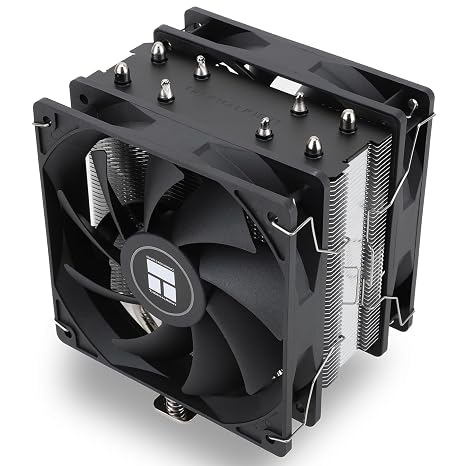
11. Thermalright Peerless Assassin 120 SE CPU Cooler

Thermalright Peerless Assassin 120 SE is a dual tower CPU cooler that excels at keeping CPUs cool on Intel 1150 sockets. It suits anyone aiming for solid heat dissipation without a loud or bulky setup.
Its best feature is the combination of two PWM fans and six heat pipes driving efficient airflow.
Installation is straightforward for a cooler of this size, with a well-machined copper base making tight contact with the CPU. The 120mm fans run at 1850 RPM with a PWM interface to adjust speed according to temperature, keeping noise below 30 dB. Its dimensions require enough case clearance, so measuring your build beforehand helps avoid fit issues.
The heat sink handles high heat loads well, thanks to aluminum fins, six fully electroplated heat pipes, and a black anodized top plate that aids longevity. Most users find it quiet given its airflow capacity of 82 CFM. One common drawback mentioned is its height, which can interfere with tall RAM modules or smaller cases.
Thermalright Peerless Assassin 120 SE keeps CPU temperatures low thanks to its dual tower design paired with two PWM fans. The six copper heat pipes and finely carved base provide solid heat transfer, making the cooler effective for heavy loads. Noise stays below 30dB at max speed, but the size can cause tight fits in smaller cases.
People running mid-range to high-end CPUs with enough clearance inside their cases will find this cooler effective and quiet. Those with compact builds or limited space should consider a lower profile cooler, as the Peerless Assassin 120 SE is bulky and may not fit well in tighter setups.
Pros
- Strong heat dissipation with dual tower design
- Quiet operation under load
- Solid build with copper base and anodized top
- Adjustable PWM fans for temperature-based speed
Cons
- Height may block tall RAM or small cases
- Fans can spin up to 1850 RPM, noticeable under load
| Specification | Details |
|---|---|
| Power Connector Type | 4-Pin |
| Wattage | 3.36 watts |
| Fan Speed | 1850 rpm +10% |
| Air Flow Capacity | 82 cfm |
| Operating Noise | ≤ 29.6 dB (A) |
12. Thermalright Assassin X 120R SE Plus CPU Cooler
Quiet and effective cooling in a medium-sized case makes this a solid choice for 1150 CPUs. It suits those who want a reliable air cooler that balances noise with airflow. The standout feature is the pair of dual PWM fans delivering cool air without sounding like a jet engine.
Installation comes with metal fasteners supporting both Intel and AMD platforms, making mounting straightforward. The cooler fits comfortably inside average tower cases, thanks to its 148mm height.
The dual 120mm fans run on a 4-pin PWM connector, which lets your system control the fan speed according to temperature, keeping things quiet when the CPU isn’t working too hard.
It cools well thanks to its aluminum heatsink and dual fans spinning up to 1550 RPM, moving a decent amount of air up to 66.17 CFM. Build quality feels solid with well-made metal fasteners.
Praise often centers around its quiet operation and efficient cooling, while the common complaint tends to be the size, as it won’t fit in smaller cases.
Dual PWM fans strike a good balance between cooling and noise, keeping the system quiet during everyday use. The height of 148mm can cause compatibility issues in smaller setups, which is the most frequent drawback mentioned.
Suitable for those with mid-sized cases wanting a quieter, reliable cooler without going all out on size or price. Users with compact PCs should consider smaller alternatives better suited to tight spaces.
Pros
- Dual PWM fans for effective airflow
- Quiet operation under load
- Compatible with Intel & AMD sockets
- Fits medium-sized cases comfortably
Cons
- Height may not suit smaller cases
- Aluminum heatsink not as premium as copper
| Specification | Details |
|---|---|
| Cooling Method | Air |
| CPU Cooler Dimensions | 125 x 96 x 148 mm (LxWxH) |
| Fan Size | 120 x 120 x 25 mm |
| Maximum Fan Speed | 1550 rpm ±10% |
| Air Flow Capacity | 58 – 66.17 CFM |
| Noise Level | ≤ 25.6 dB(A) |
Best 1150 CPU Coolers Comparison Table
| Product | Cooling Method | Noise Level | Max RPM | Air Flow Capacity |
|---|---|---|---|---|
| Cooler Master i30 | Air | 22 db | 2200 rpm | – |
| be quiet! Pure Rock 3 | Air | 34.8 db | 2000 rpm | – |
| Thermalright PS120SE | Air | 25.6 db | 1650 rpm | 66.17 cfm |
| Thermalright Assassin X 120R | Air | 29.8 db | 2000 rpm | 70.84 cfm |
| Thermalright Assassin X120 Refined SE | Air | 25.6 db | 1550 rpm | 66.17 cfm |
| Thermalright AXP90 X36 Low Profile | Air | 22.4 db | 2700 rpm | 42.58 cfm |
| Thermalright Aqua Elite 120 V3 | Water | 25.6 db | 1500 rpm | 66.17 cfm |
| Thermalright Assassin X 90 SE | Air | 25 db | 2200 rpm | 32.77 cfm |
| Thermalright Assassin X 120R Digital | Air | 29.8 db | 2000 rpm | 70.84 cfm |
| Thermaltake UX150 ARGB | Fan | – | 2400 rpm | – |
| Thermalright Peerless Assassin 120 SE | Air | 29.6 db | 1850 rpm | 82 cfm |
| Thermalright Assassin X 120R SE | Air | 15 db | 1550 rpm | 58 cfm |
- Cooling MethodAir
- Noise Level22 db
- Max RPM2200 rpm
- Air Flow Capacity–
- Cooling MethodAir
- Noise Level34.8 db
- Max RPM2000 rpm
- Air Flow Capacity–
- Cooling MethodAir
- Noise Level25.6 db
- Max RPM1650 rpm
- Air Flow Capacity66.17 cfm
- Cooling MethodAir
- Noise Level29.8 db
- Max RPM2000 rpm
- Air Flow Capacity70.84 cfm
- Cooling MethodAir
- Noise Level25.6 db
- Max RPM1550 rpm
- Air Flow Capacity66.17 cfm
- Cooling MethodAir
- Noise Level22.4 db
- Max RPM2700 rpm
- Air Flow Capacity42.58 cfm
- Cooling MethodWater
- Noise Level25.6 db
- Max RPM1500 rpm
- Air Flow Capacity66.17 cfm
- Cooling MethodAir
- Noise Level25 db
- Max RPM2200 rpm
- Air Flow Capacity32.77 cfm
- Cooling MethodAir
- Noise Level29.8 db
- Max RPM2000 rpm
- Air Flow Capacity70.84 cfm
- Cooling MethodFan
- Noise Level–
- Max RPM2400 rpm
- Air Flow Capacity–
- Cooling MethodAir
- Noise Level29.6 db
- Max RPM1850 rpm
- Air Flow Capacity82 cfm
- Cooling MethodAir
- Noise Level15 db
- Max RPM1550 rpm
- Air Flow Capacity58 cfm
How to Choose the Right 1150 CPU Cooler
Selecting the right 1150 CPU cooler involves considering factors like cooling efficiency, noise levels, and compatibility with your case and motherboard. Getting these aspects right ensures your system runs smoothly and prevents overheating issues, saving money on repairs and reducing the need for frequent replacements.
Compatibility with Socket 1150
Not all coolers fit on an Intel LGA 1150 socket even if they appear compatible at first glance. The mounting brackets must align precisely to avoid installation issues. Beyond that, large coolers can block nearby RAM slots or interfere with a graphics card’s clearance, forcing you to choose lower-profile memory or a smaller GPU.
Cases also vary, and a bulky cooler might limit airflow or simply not fit inside smaller cases.
Useful specs to check include the cooler’s exact socket compatibility, its height (often under 160mm for standard mid-towers), and its width to ensure it doesn’t obstruct adjacent slots. Confirming these dimensions alongside your motherboard layout and case internal space avoids pain points later and keeps system airflow balanced and effective.
Cooling Performance
The CPU cooler’s ability to handle your processor’s heat output dictates stable performance under load. Match the cooler’s TDP rating to your CPU’s thermal design power; an insufficient cooler will cause throttling or overheating.
Larger fans moving more air at slower speeds often provide better, quieter cooling.
Look for fan diameter around 120mm or higher, with airflow values (measured in CFM) suitable for your CPU’s heat output. Heat pipes, either copper or vapor chambers, are critical for transferring heat quickly from the CPU to the fins.
More pipes generally mean better heat distribution, but their efficiency and placement matter more than sheer number.
Noise Levels
Fans running at high speeds can be disruptive during quiet activities like office work or streaming. Many coolers have variable fan speeds controlled by PWM, which adjusts RPM based on CPU temperature, limiting noise during light use.
Excessive noise at full load can become tiring over time.
Look for noise levels below 30 dB in idle mode for quiet environments, escalating only under heavy load. Keeping RPM ranges moderate often balances noise and cooling. Models with quality bearings tend to hum less and stay consistent over the long term, avoiding annoying rattles or buzzing sounds.
Build Quality and Materials
Durability directly affects the longevity and effectiveness of a cooler. Copper heat pipes conduct heat better than aluminum alone and tend to last longer without corrosion. Aluminum fins, while lighter, should be densely packed for maximum surface area yet spaced enough for airflow.
Fan bearings influence noise and lifespan; fluid dynamic or rifle bearings generally outperform cheaper sleeve types.
Thermal paste application impacts the initial cooling efficiency. Some coolers come with pre-applied paste, which can be informative as they usually use quality compounds for optimal thermal transfer.
Others require manual application, which offers a chance to apply your preferred high-performance paste but needs care to avoid air gaps.
Ease of Installation and Maintenance
Mounting systems vary widely. Screw-based or clip-on mechanisms that fit the LGA 1150 socket simplify the installation process. Some coolers require removing the motherboard, complicating upgrades.
Accessibility matters for long-term maintenance; being able to clean dust from fins and fans without full teardown keeps the cooler effective without too much hassle.
Check whether spare fans or mounting brackets are available from the manufacturer. Replacement parts can save money and extend cooler life.
Ease of maintenance is often overlooked but can determine how well a cooler performs months or years down the road.
Optimizing CPU Cooler Performance with Proper Installation Techniques
Correct installation plays a crucial role in how well a CPU cooler performs. Many users overlook the importance of applying thermal paste evenly; this material fills microscopic gaps between the CPU surface and cooler base, improving heat transfer. Too much paste can create air pockets, while too little won’t cover the entire surface. Tighten mounting brackets with even pressure to avoid uneven contact which can cause hotspots.
Alignment matters too. The cooler should sit flush without tilting or lifting at any corner.
For the 1150 socket, following the manufacturer’s torque specifications helps prevent damage and ensures optimal cooling. Checking clearance against RAM modules and cases before finalizing installation avoids later adjustments.
- Clean the CPU surface thoroughly before applying paste
- Use a small, pea-sized amount of thermal paste
- Secure the cooler evenly and avoid overtightening
- Ensure fan cables do not obstruct airflow or get caught in the fan blades
Taking these steps improves the cooler’s ability to maintain low and stable CPU temperatures.
Maintaining Your 1150 CPU Cooler for Long-Term Efficiency
Regular maintenance keeps a 1150 CPU cooler working at its best over time. Dust accumulation on the heatsink fins and fan blades reduces airflow, causing temperatures to rise. Blowing compressed air through these areas every few months helps prevent heat buildup.
Inspect fan bearings and cables regularly to catch any signs of wear or damage that could lead to noisy operation or failure. Lubricating fans is generally not necessary unless they have removable caps for access.
Make sure the cooler remains securely mounted, as vibrations can loosen screws during extended use.
- Power down the PC and unplug before cleaning
- Use a soft brush or compressed air to remove dust
- Reapply thermal paste every couple of years or if temperatures increase noticeably
- Check fan rotation and replace faulty fans promptly
Maintaining these simple habits prolongs the cooler’s lifespan and prevents thermal throttling.
Comparing Air Cooling and Liquid Cooling Options for 1150 Sockets
Choosing between air and liquid cooling depends on several practical factors for 1150 socket CPUs. Air coolers tend to be simpler to install and maintain with fewer points of failure. They rely on a heatsink and one or more fans to move heat away from the CPU, working well in most standard builds.
Liquid coolers use a pump and radiator system to transfer heat more efficiently, often allowing for quieter operation and better performance in overclocking scenarios. However, they require space for the radiator and added caution during installation to avoid leaks.
- Air cooling is typically less expensive and quieter for everyday use
- Liquid cooling offers lower temperatures under heavy loads but may need more case compatibility
- Air coolers can be bulkier but avoid pump noise and potential leaks
- Both options support 1150 socket CPUs well, so consider case size and budget
Balancing noise levels, cooling needs, and installation complexity helps determine the best fit for your setup.
People Also Asked
Will This 1150 CPU Cooler Fit My Motherboard Socket?
This 1150 CPU cooler is designed specifically for Intel LGA 1150 sockets, so it should fit your motherboard as long as the socket matches. Check for any clearance issues around your RAM or other components before installation to avoid tight spaces.
How Do I Properly Install a 1150 CPU Cooler?
To install a 1150 CPU cooler, align the mounting brackets with the motherboard holes, apply a small amount of thermal paste on the CPU, and secure the cooler firmly but gently. Don’t overtighten the screws to prevent damaging the motherboard.
How Long Does an Average 1150 CPU Cooler Last?
An average 1150 CPU cooler can last several years, often five or more, if maintained properly. Make sure to clean dust buildup regularly and keep fan bearings lubricated or replaced if noisy.
What Are Common Problems with 1150 CPU Coolers?
Common problems with 1150 CPU coolers include fan noise from worn bearings, insufficient cooling due to dust buildup, and improper mounting leading to high CPU temperatures. Regular cleaning and careful installation can help avoid these issues.
Is It Safe to Clean a 1150 CPU Cooler with Water?
It is not safe to clean a 1150 CPU cooler with water while it is installed or powered on. Remove the cooler, then use compressed air or a brush; if washing is needed, clean and dry it thoroughly before reinstalling to prevent electrical damage.
Conclusion
Choosing a 1150 CPU cooler mainly comes down to how much heat it can handle, how quiet it runs, and whether it fits your case size. Cooling capacity matters because the CPU can get hot quickly, especially under load. Noise level is important if you prefer a quieter setup, and size can limit your choices depending on your case and motherboard layout.
Keeping these factors balanced will help you find a cooler that works in your system without causing other issues.
Think about your case clearance and budget before making a decision. A more expensive cooler might offer better performance but isn’t always necessary if you don’t push your CPU hard.
Check the comparison table and the detailed picks above for options that fit different needs and spaces. Matching the cooler to your setup ensures you avoid compatibility problems and keep your build running smoothly.

I’m Grant Mitchell, a firearms and hunting writer with years of experience at the range and in the field. I write about rifles, shotguns, handguns, optics, safe storage, cleaning, and responsible ownership, along with practical hunting tips. My goal is to share accurate, safety-first information that helps you choose the right firearm, maintain it properly, and become a more confident shooter.


