Top 12 Best Handheld Radio for Hiking You Can’t Miss
Carrying the best handheld radio for hiking makes a big difference when the usual trail signals fade or emergencies arise. A cheap model often struggles with poor reception and a short battery life, which can leave you isolated.
Having a radio that maintains a solid connection across rough terrain is crucial for safety and communication.
Durability is key in these devices, with rugged, water-resistant cases rated to at least IPX4 to handle rain and sweat. Battery life typically falls between 8 to 12 hours on a full charge, with rechargeable options preferred to avoid carrying extra batteries.
Compact size and lightweight design also matter, allowing easy storage without adding bulk to your pack.
Need a Quick Check?
| Image | Product | Price |
|---|---|---|
Our Top Picks 1  | Baofeng UV-5R Radio | Check Price |
Our Top Picks 2  | Midland GXT1000AZ Radio | Check Price |
Our Top Picks 3  | TIDRADIO TD-H9 GPS Radio | Check Price |
Our Selected Top 12 Handheld Radio for Hiking for Every Budget
This list features a variety of handheld radios designed for hiking, covering different budgets and needs. Each review explains how the radios perform in outdoor conditions, who they are best suited for, and highlights their main advantages and disadvantages for practical use.
1. Baofeng UV-5R Dual Band Handheld Radio
Feels reliable in hand and offers a clear way to stay connected on trails. Great for hikers who want a radio that covers both VHF and UHF bands with a range up to 5 kilometers. The biggest strength lies in handling multiple channels and tones easily, which helps in coordinating with different groups or teams.
Setting up involves scanning through 128 channels and picking the ones you need, with options to lock out busy channels so you don’t get interference. The dual-band display shows two frequencies at once, and you can switch between high and low power depending on how far you need to reach.
The keypad lock prevents accidental changes once your settings are set, which is handy when you’re moving around a lot.
It performs well with clear audio most of the time within its 5 km range. The build feels solid but it is not water-resistant, so extra care is needed in wet conditions. People often praise the long battery life of up to 72 hours, but the lack of water resistance is a common downside, especially for outdoor use.
Buttons can be a bit small for quick adjustments.
The long battery life keeps communication going for days, which many appreciate on long hikes. The main complaint highlights its lack of water resistance, making it less ideal in wet environments without extra gear. Audio is generally clear within the given range, but handling in rain or damp conditions requires care.
This radio suits hikers who value multiple channels and extended battery life and can keep it dry. Those expecting to use it in rainy or very damp conditions might want to look for a water-resistant model instead.
Pros
- Dual-band with 128 channels for flexibility
- Long battery life up to 72 hours
- Keypad lock prevents accidental changes
- Selectable high/low transmission power
Cons
- Not water resistant, needs protection from rain
- Buttons can be small and tricky to use quickly
| Specification | Details |
|---|---|
| Number of Channels | 128 |
| Frequency Range | VHF/UHF 144-148 MHz / 420-450 MHz |
| Talking Range Maximum | 5 kilometer |
| Battery Average Life | 72 hours |
| Number of Batteries | 1 Lithium Metal battery (included) |
2. Midland GXT1000AZ GMRS Two Way Radio
A great pick for hikers needing reliable communication away from phone signals, the Midland GXT1000AZ offers extensive channel options and solid battery life. Its biggest strength is the mix of fast charging with the flexibility of AA battery backup, perfect for all-day adventures in varied terrain.
Setting up the radio is pretty straightforward thanks to its keypad lock and clearly marked controls. Daily use is convenient since it can switch between rechargeable power and four AA batteries, so you’re not left stranded if you run out of juice. The 50 channels plus 142 privacy codes help keep conversations private on crowded trails or ranches.
Communication range stays solid across open terrain, reaching up to 36 miles, which is impressive in this class. It’s weather resistant, so a bit of rain or dust won’t stop it. Praised for alerting users to dangerous weather via the NOAA monitoring, the radio occasionally receives feedback on its size, which some find a bit bulky for light pack loads.
The unit’s ability to switch between rechargeable power and AA batteries stands out as a major convenience, while many find its size a bit large for extended hiking trips. The built-in weather alerts are very useful, though some users mention the bulk as a minor drawback.
Ideal for hikers wanting reliable, long-range communication and weather updates with flexible power options. Those looking for something ultra-compact or lightweight might want to consider smaller models better suited to minimalist packing.
Pros
- Long talk range up to 36 miles
- Dual power mode with rechargeable and AA batteries
- NOAA weather alerts built-in
- Plenty of channels and privacy codes
Cons
- Relatively bulky compared to smaller radios
- Requires 4 AA batteries, adding weight when not using recharge
| Specification | Details |
|---|---|
| Number of Channels | 50 |
| Talking Range Maximum | 36 mile |
| Battery Average Life | 10 hours |
| Number of Batteries | 4 AA batteries required (included) |
| Water Resistance Level | Water Resistant |
| Frequency Range | 462.5500 – 467.7125 MHz |
3. TIDRADIO TD-H9 GMRS GPS Handheld Radio
Constructed with a rugged IP54-rated design, the TIDRADIO TD-H9 GMRS GPS handheld radio suits hikers who prioritize reliable communication and accurate GPS tracking on trails. Its biggest strength lies in combining extensive radio features with GPS location sharing, making it a solid companion for multi-day hikes or group adventures in challenging environments.
Setting up involves straightforward Bluetooth and USB-C programming options, allowing quick personalized configurations. Day-to-day use benefits from the dual PTT buttons for easy channel switching, clear 1.8-inch color display with three viewing modes, and quick access to NOAA weather alerts. The 199 channels and customizable side key let you tailor communication to specific networks or groups, while SMS texting adds another layer to staying in touch during hikes.
Performance delivers consistent transmission up to 10 kilometers in open terrain, with effective noise reduction improving call clarity. The build feels solid and water resistant enough for typical outdoor conditions. High praise commonly highlights the GPS location sharing feature as reliable.
The most frequent complaint points to the reliance on a single 9V battery, which may require replacements on extended trips despite a 72-hour average battery life.
The GPS location sharing earns consistent praise for helping with group coordination on hikes. Many find the 9V battery can be a drawback, as it may need changing sooner than expected during longer excursions despite decent battery life.
Hikers looking for rich features including GPS and multiple channels will appreciate this model. Those requiring longer battery endurance or deeper water protection might want to explore alternatives better suited to those priorities.
Pros
- Dual PTT buttons for customizable communication
- GPS location sharing and APRS tracking
- Supports Bluetooth headphones and speakers
- 18 menu colors and three display modes
Cons
- Uses single 9V battery which may run out
- Not fully waterproof beyond IP54 rating
| Specification | Details |
|---|---|
| Number of Channels | 199 |
| Water Resistance Level | Water Resistant (IP54) |
| Battery Average Life | 72 hours |
| Talking Range Maximum | 10 kilometer |
| Batteries Required | 1 9V battery (included) |
4. TIDRADIO TD-H3 GMRS Handheld Radio 2 Pack

Noticing its notably long 15.15-inch antenna right away, this handheld radio suits hikers who value strong, reliable communication over several kilometers. Its key advantage lies in the multi-mode function that easily switches between GMRS, Ham, and normal channels, perfect for adapting to different communication needs on the trail.
Setting up the radio involves straightforward Bluetooth programming via an app or web, making customization simple for daily use. The radio operates across 8 frequency bands and covers FM, AM-air (aviation band), and GMRS channels. Day-to-day operation benefits from up to 48 hours of battery life, so it stays powered through long hiking trips without hassle.
Performance-wise, the radio handles transmitting up to 5 km well with a frequency range of 462-467MHz, meeting expectations for reliable communication at a reasonable distance. Its water-resistant build ensures it stands up to outdoor conditions. Common praise highlights the extended range due to the long antenna.
A frequent complaint is its bulkier antenna size, which may not suit everyone’s preference for a compact device.
The radio’s strongest point is its extended communication range enabled by the long high-gain GMRS antenna. Users appreciate the ability to switch modes easily and benefit from long battery life. The most common drawback mentioned is the antenna’s size, which makes the radio less compact than some alternatives.
People needing reliable long-range communication on hikes who don’t mind a larger antenna will find this radio a solid fit. Those prioritizing compact design or lighter weight might want to consider smaller radios instead.
Pros
- Supports 3 modes: GMRS, Ham, normal
- Long 15.15-inch antenna extends communication range
- Bluetooth programming via app or web
- Up to 48 hours battery life per charge
Cons
- Long antenna may feel bulky for some users
- Requires two lithium polymer batteries to operate
| Specification | Details |
|---|---|
| Number of Channels | 199 |
| Frequency Range | 462-467MHz |
| Talking Range Maximum | 5 km |
| Battery Average Life | 48 hours |
| Water Resistance Level | Water Resistant |
| Connectivity Protocol | Bluetooth |
5. Midland GXT1000VP4 GMRS Two Way Radios 2 Pack

Midland GXT1000VP4 radios offer a long range suitable for serious outdoor adventures like hiking and camping where cell signals fade. They stand out thanks to their 50 channels and 142 privacy codes, enabling clear group communication even miles apart. These radios prioritize reliable connection, making them a solid choice for people needing dependable two-way communication off-grid.
Setup involves charging the two units using the desktop charger included, and they arrive ready to use. The hands-free EVOX voice activation allows you to stay in touch without taking your hands off gear or steering.
Dual power mode means switching easily to AA batteries when the rechargeable packs run low. On the trail, scanning NOAA weather alerts keeps users updated on severe conditions.
Range can reach up to 36 miles under ideal conditions, supporting plenty of room for groups spread out in the wilderness. The radios feel sturdy and have water resistance, helping them withstand outdoor use.
Reviews mention the clarity of communication as a big plus. Some users find the number of batteries needed a bit much for longer trips, requiring extra weight in supplies.
Many appreciate the clear communication and reliable range that help groups stay connected well beyond phone signals. The radios come charged and ready, but battery weight and consumption are common concerns for extended trips away from power sources.
People who value long-distance communication and weather alerts in their hikes will find these radios well suited for their needs. Those wanting something lighter or waterproof might want to explore other options better matched to minimalist or wet environment use.
Pros
- Long 36-mile communication range
- Includes NOAA weather alert scanning
- Hands-free voice activation
- Two units with charger in the box
Cons
- Requires 8 AA batteries, adds weight
- Water resistant but not waterproof
| Specification | Details |
|---|---|
| Number of Channels | 50 |
| Talking Range Maximum | 36 mile |
| Battery Average Life | 10 hours |
| Number of Batteries | 8 AA batteries required (included) |
| Water Resistance Level | Water Resistant |
6. Cobra HH50WXST Handheld CB Radio

Staying connected on hiking trails can be challenging, especially when you want reliable communication without bulky gear. Designed for outdoor adventurers, this handheld CB radio shines with its noise-filtering feature, making conversations clearer over longer distances.
Getting it ready is straightforward, just load it up with 9 AA batteries and you’re set. Daily use benefits from the Soundtracker System, which cuts through background noise so messages come through clean.
Its Dual Watch feature lets you keep an eye on two channels at once, which is handy when tracking weather alerts alongside your group’s talk channel.
It performs well with a talking range up to 20 miles in good conditions, and it handles weather changes with built-in NOAA weather updates. The radio feels sturdy and water-resistant, able to stand up to a bit of rain or sweat. The most praised feature is the noise reduction during transmissions, while some mention the need to carry multiple AA batteries as a drawback.
The radio’s standout feature is its noise reduction system, which greatly improves transmission clarity on cluttered airwaves. Most feedback highlights this as a major plus. On the downside, carrying nine AA batteries can be cumbersome, making extended trips a bit more challenging without spares.
People who appreciate solid communication for long-distance hiking and want weather updates will find this radio suits their needs well. Those looking for a lighter device with rechargeable options might want to consider alternatives better tailored for minimalist backpacking.
Pros
- Soundtracker System cuts through 90% of noise
- Dual Watch monitors two channels at once
- Built-in NOAA Weather Radio for alerts
- Water resistant design for outdoor use
Cons
- Requires nine AA batteries, heavy to carry
- Limited to CB radio range and channels
| Specification | Details |
|---|---|
| Number of Channels | 40 |
| Talking Range Maximum | 20 mile |
| Water Resistance Level | Water Resistant |
| Number of Batteries | 9 AA batteries required |
| Voltage | 12 volts |
7. Retevis RB48PLUS GMRS Waterproof Walkie Talkies
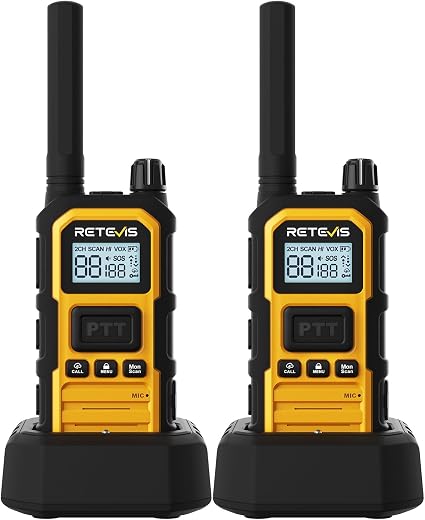
Lasting 18 hours on a single charge, these walkie talkies suit hikers who need reliable communication far from cell service. Their waterproof design keeps them working through rain or damp conditions, making them ideal for outdoor adventures where staying connected is crucial.
Setting up involves charging the pair’s lithium-ion batteries and tuning into one of the 30 GMRS channels. The 11 NOAA weather channels keep you updated on conditions, which can be vital when plans change quickly.
A remote emergency alarm sends a distress signal to anyone on the same channel, offering extra security on remote trails.
Communication reaches up to 3 miles, which covers most hiking routes in mountainous or convoy scenarios. They feel solid with a heavy-duty build, and the IP67 waterproof rating holds up well in wet environments.
Strong praise goes to the battery life, while some users mention the weight as a drawback for extended carry.
Batteries lasting 18 hours on a charge earn strong approval for extended trips without recharging. The waterproof rating suits wet conditions well but weight is noted as heavier than preferred by some carrying them all day. Emergency features add a layer of security.
Those who hike in groups, need weather updates, and want dependable battery life will find these radios well suited. People seeking a lightweight option with longer range might want to explore alternatives better matching those needs.
Pros
- Long 18-hour battery life for all-day use
- Waterproof IP67 rating handles rain and splashes
- Includes 11 NOAA weather channels for updates
- Remote emergency alarm for safety alerts
Cons
- Maximum range limited to 3 miles
- Heavier than some lightweight models
| Specification | Details |
|---|---|
| Battery Average Life | 18 hours |
| Water Resistance Level | Waterproof (IP67) |
| Number of Channels | 30 |
| Talking Range Maximum | 3 mile |
| Frequency Range | GMRS |
8. Long Range Rechargeable Walkie Talkies 4 Pack

Great for hikers who need reliable communication across varied terrains, these walkie talkies excel in long-range use, especially in open areas like rural and seaside locations. Their biggest strength lies in the impressive 2-mile maximum talking range, making them perfect for staying connected during outdoor adventures.
Setting up is straightforward thanks to the rotating knob that lets you pick from 16 preset channels easily. VOX voice control and scanning features come in handy for hands-free and quick searches for active channels.
The night flashlight and low battery alarm add practical value for longer trips, and the included rechargeable lithium-ion batteries keep you powered up for days without fuss.
They handle their main job well, delivering clear communication up to two miles where the signal is unobstructed. Built with water resistance, they stand up to outdoor conditions pretty well.
Most praise focuses on the long battery life, around 96 hours. Some find range limits frustrating in urban environments with more obstacles around.
Clear communication up to two miles and long battery life get the most appreciation. The main complaint revolves around the reduced range in urban settings where obstacles interfere with signals.
Those who spend time hiking in rural or open areas will appreciate these walkie talkies. Users often in dense cities or heavily obstructed regions may want to consider alternatives with stronger urban range capabilities.
Pros
- Long battery life of 96 hours
- Water-resistant for outdoor use
- Voice-activated communication (VOX)
- Includes night flashlight feature
Cons
- Limited range in cities with buildings
- Requires four lithium-ion batteries per unit
| Specification | Details |
|---|---|
| Number of Channels | 16 |
| Talking Range Maximum | 2 mile |
| Battery Average Life | 96 hours |
| Voltage | 3.7 volts |
| Water Resistance Level | Water Resistant |
9. Midland T51X3VP3 X-Talker FRS Walkie Talkies 3 Pack

Midland’s T51X3VP3 walkie talkies stand out in a three-pack design perfect for hiking groups that need reliable communication. Their biggest strength is the 28-mile range, which lets you stay connected across wide, open areas without carrying multiple devices. They also cover basic safety needs with NOAA weather alerts.
Setup involves inserting nine AAA batteries that come included, which means no extra preparation before heading out. Daily use benefits from 22 FRS channels plus 38 privacy codes that help keep your conversations clear of interference. The eVOX hands-free feature offers adjustable sensitivity levels, making it easier to communicate without holding the radio.
Channel scan is handy for finding a free frequency quickly.
Performance is solid for standard Family Radio Service needs, especially across open landscapes where the 28-mile maximum range really works. The radios have a straightforward, plastic build that’s lightweight but not water-resistant, so extra care is needed in wet conditions.
Most praise highlights clear sound and long range, while the lack of water resistance draws the most complaints.
Praised for offering clear communication up to 28 miles and multiple privacy codes to avoid interference, the radios attract users needing reliable contact in open outdoor spaces. The most common complaint involves the lack of water resistance, making the units vulnerable during wet hikes or unexpected rain.
Ideal for hiking groups who stay in dry conditions and want straightforward communication with long range. Those frequently hiking in wet or rugged environments may want to look for water-resistant alternatives with fewer battery demands.
Pros
- Three radios in one pack for group use
- 28-mile range in open areas
- Includes NOAA weather alerts
- Hands-free eVOX with adjustable sensitivity
Cons
- Not water resistant, needs careful handling
- Requires a total of 9 AAA batteries
| Specification | Details |
|---|---|
| Number of Channels | 22 |
| Talking Range Maximum | 28 miles |
| Number of Batteries | 9 AAA batteries required (included) |
| Voltage | 3.6 volts |
| Water Resistance Level | Not Water Resistant |
| Connectivity Protocol | Family Radio Service (FRS) |
10. Retevis RT22 Rechargeable Walkie Talkies

Retevis RT22 Rechargeable Walkie Talkies deliver clear communication packed into a slim, lightweight design. Perfect for hikers who need a compact, pocket-friendly radio without compromising on sound quality or range. The biggest strength lies in how easily these radios fit into your daily outdoor gear without adding weight.
Setting up the radios is straightforward, thanks to rechargeable lithium-ion batteries included with the package. Day-to-day use involves adjusting from 0 to 9 volume levels depending on your environment, ideal for noisy trails or quiet woods.
The device’s noise reduction feature cuts background sounds significantly, keeping conversations clear even in bustling areas or around campfires. Its 16 channel options give flexibility when connecting with other compatible units.
Communication comes through sharp and rich, with no surprising drops within a reasonable 3 km range. Build quality supports everyday outdoor use, but the radios lack water resistance, so keeping them dry is essential.
Positive feedback centers on the weight and sound clarity, while frequent remarks point to the absence of water resistance as a notable limitation during wet hikes.
Clear sound quality and portability are the strongest features praised by users, while the lack of water resistance stands out as a common drawback when used outdoors in damp environments. The adjustable volume and noise reduction perform well to maintain communication clarity in various settings.
Ideal for hikers who prioritize lightweight gear and straightforward communication without needing waterproofing. Those expecting radio use in wet or extreme weather should look for models with water-resistant designs to avoid damage during their adventures.
Pros
- Ultra-lightweight at only 3.8oz (108g)
- Rechargeable batteries included
- Clear, rich sound with noise reduction
- Compact size fits easily in pockets or on belts
Cons
- Not water resistant, needs protection in wet conditions
- Maximum range limited to 3 km
| Specification | Details |
|---|---|
| Number of Channels | 16 |
| Frequency Range | FRS |
| Talking Range Maximum | 3 km |
| Voltage | 3.7 volts |
| Water Resistance Level | Not Water Resistant |
| Number of Batteries | 4 Lithium Ion batteries required (included) |
11. TIDRADIO TD-H9 GMRS GPS Handheld Radio

Using a handheld radio that keeps you reliably connected and informed is crucial when hiking, and the TD-H9 fits that need well. Best for hikers who want detailed location sharing and solid weather updates, its biggest strength is the integrated GPS location sharing combined with a rugged and water-resistant design.
Getting started is straightforward with USB-C programming and Bluetooth connectivity options, making configuration flexible. Daily use benefits from features like APRS tracking to share exact positions and NOAA weather alerts to keep you prepared. The dual PTT buttons and customizable side key add convenience, while the SMS messaging lets you send quick texts when needed on trails.
Performance-wise, the radio offers a talking range up to 15 miles and operates on 199 channels, covering various communication needs. The IP54 rating confirms good water resistance and dust protection.
Praised for its solid build and comprehensive functionality, the most frequent complaint involves the need for dual nonstandard batteries that can be less convenient than standard options.
Strong points include its comprehensive feature set like GPS location sharing, APRS tracking, and Bluetooth connectivity for headphones or programming. The rechargeable radio supports FM and NOAA weather alerts, useful for outdoor scenarios. A common complaint revolves around its complexity; the many functions and menu options can be overwhelming without thorough reading of the manual.
People who hike frequently in remote areas or travel with groups benefit from the reliable communication and GPS tracking. Those needing straightforward, basic two-way radio communication might find this model too complicated and bulky compared to simpler alternatives. It suits users who want a multi-functional device and are willing to spend time learning to operate it fully.
Pros
- GPS location sharing with APRS tracking
- Bluetooth programming and audio options
- Water resistant with rugged IP54 rating
- NOAA weather alerts and emergency alarms
Cons
- Requires two nonstandard batteries
- Complex menu system can be overwhelming
| Specification | Details |
|---|---|
| Number of Channels | 199 |
| Talking Range Maximum | 15 mile |
| Water Resistance Level | Water Resistant |
| Voltage | 7.4 volts_of_direct_current |
| Additional Features | NOAA, Emergency Alarm, Bluetooth Connectivity, SOS |
| Number of Batteries | 2 Nonstandard Battery batteries required (included) |
12. Bluetooth AM FM Shortwave Portable Radio

Great for hikers craving reliable radio reception in the wild, this portable shortwave AM FM radio focuses on clear signal reception. Its biggest strength lies in capturing a wide range of frequencies, including NOAA weather alerts, which keeps you informed during outdoor adventures.
Setting it up is straightforward, pop in the included LR44 batteries and turn it on. Bluetooth connectivity lets you pair headphones easily, while the built-in digital tuner simplifies finding stations across AM, FM, SW, and WB bands. The added flashlight comes in handy during night hikes or emergencies, making it a practical companion day to day.
Signal clarity is impressive thanks to its advanced DSP chip, delivering strong audio even on faint channels. The build feels compact and durable enough for outdoor use. Positive feedback frequently highlights how dependable the NOAA weather alerts are, while some mention the need for frequent battery replacements as a downside.
The radio receives faint signals clearly thanks to the advanced DSP chip, while the NOAA weather alerts add a vital safety layer. Some find the battery life a drawback, as it requires two LR44 batteries that can run out faster with frequent use.
Ideal for hikers who need broad radio band options and emergency alerts, especially in remote areas. Those wanting longer battery life or a larger display might look for alternatives better suited to those needs.
Pros
- Supports four bands for wide radio coverage
- Real-time NOAA weather alerts included
- Bluetooth connectivity for headphone use
- Built-in flashlight aids low-light visibility
Cons
- Relies on LR44 batteries that may need frequent replacement
- Digital display can be small to read in bright light
| Specification | Details |
|---|---|
| Radio Bands Supported | 4-Band (FM, AM, SW, WB) |
| Frequency | 87.5 MHz |
| Additional Features | NOAA Weather Alert, Rechargeable, Built-In Flashlight, Bluetooth |
| Number of Batteries | 2 LR44 batteries required (included) |
| Audio Output Mode | Stereo |
Best Handheld Radios for Hiking Comparison Table
| Product | Channels | Talking Range | Water Resistance | Battery Type |
|---|---|---|---|---|
| Baofeng UV-5R Radio | 128 | 5 km | Not Water Resistant | 1 Lithium Metal |
| Midland GXT1000AZ Radio | 50 | 36 mile | Water Resistant | 4 AA |
| TIDRADIO TD-H9 GPS Radio | 199 | 10 km | IP54 rated | – |
| TIDRADIO TD-H3 2 Pack | 199 | 5 km | – | – |
| Midland GXT1000VP4 2 Pack | 50 | 36 mile | Water Resistant | 8 AA |
| Cobra HH50WXST CB Radio | 40 | 20 mile | Water Resistant | 9 AA |
| Retevis RB48PLUS Waterproof | 30 | 3 mile | Waterproof IP67 | – |
| Long Range 4-Pack Radios | 16 | 2 mile | Water Resistant | 4 Lithium Ion |
| Midland T51X3VP3 3 Pack | 22 | 28 miles | Not Water Resistant | 9 AAA |
| Retevis RT22 Radio | 16 | 3 km | Not Water Resistant | 4 Lithium Ion |
| TIDRADIO TD-H9 GPS Radio | 199 | 15 mile | IP54 rated | – |
| Bluetooth AM/FM Radio | – | – | – | Rechargeable |
- Channels128
- Talking Range5 km
- Water ResistanceNot Water Resistant
- Battery Type1 Lithium Metal
- Channels50
- Talking Range36 mile
- Water ResistanceWater Resistant
- Battery Type4 AA
- Channels199
- Talking Range10 km
- Water ResistanceIP54 rated
- Battery Type–
- Channels199
- Talking Range5 km
- Water Resistance–
- Battery Type–
- Channels50
- Talking Range36 mile
- Water ResistanceWater Resistant
- Battery Type8 AA
- Channels40
- Talking Range20 mile
- Water ResistanceWater Resistant
- Battery Type9 AA
- Channels30
- Talking Range3 mile
- Water ResistanceWaterproof IP67
- Battery Type–
- Channels16
- Talking Range2 mile
- Water ResistanceWater Resistant
- Battery Type4 Lithium Ion
- Channels22
- Talking Range28 miles
- Water ResistanceNot Water Resistant
- Battery Type9 AAA
- Channels16
- Talking Range3 km
- Water ResistanceNot Water Resistant
- Battery Type4 Lithium Ion
- Channels199
- Talking Range15 mile
- Water ResistanceIP54 rated
- Battery Type–
- Channels–
- Talking Range–
- Water Resistance–
- Battery TypeRechargeable
How to Choose the Right Handheld Radio for Hiking
Choosing a handheld radio for hiking involves considering range, durability, battery life, and ease of use, as these factors affect communication reliability and convenience on the trail. Selecting the right features prevents costly replacements and frustration during outdoor adventures.
Range and Signal Strength
On a densely wooded trail or a hilly mountain path, the signal from a handheld device can drop suddenly. Trees and hills block radio waves, cutting communication range much shorter than the advertised maximum.
Hikers repeatedly find themselves frustrated by radios that claim long distances but fail in complex terrain.
Choosing a device with higher transmission power and a quality antenna affects how well signals pass obstacles. Typical power ranges between 1 to 5 watts, with more powerful units offering better coverage but usually using more battery.
Some antennas are extendable or designed to improve reception in forests and canyons. Knowing the terrain you’ll encounter guides picking suitable specs rather than just focusing on maximum range numbers.
Battery Life and Power Options
A two-day trip requires a radio that keeps running longer than a casual afternoon call. Battery life varies widely, with some models stretching beyond 12 hours of active use while others drop off much sooner. Experience shows rechargeables are convenient but require access to power sources for full benefit, whereas replaceable batteries offer flexibility on extended hikes.
Features like power-saving modes help conserve charge by reducing transmit power during idle periods. Clear battery indicators prevent unexpected shutdowns by letting you know when to recharge or swap batteries. Both options should align with your typical trip length and access to recharging opportunities.
Durability and Weather Resistance
Falling on rocky ground or being caught in sudden rain are common outdoor risks. Radios made with sturdy plastic or rubberized exteriors survive drops better than cheap lightweight models. Dust and water resistance ratings such as IP54 or higher are essential if you want reliable operation through mud, drizzle, or dusty trails.
Materials that resist scratches and impacts extend the device’s life during long hikes. Seals on buttons and cover ports prevent water damage.
Radios not designed for rough conditions often fail after a short period outdoors, so paying attention to durability specifications directly affects how well the unit performs in adverse weather.
Size and Portability
A large radio can be bulky in a small pack or awkward clipped to gear. Compact models fit easily in a jacket pocket or hooked to a belt without adding much weight.
Over the course of a long trek, even a small difference in weight or size impacts comfort and convenience.
Look for radios weighing less than 10 ounces with slim profiles that don’t snag on branches. Attachment points such as clips or loops for carabiners make carrying simpler and more secure. In practice, a lightweight, easily stowed device quickly becomes a favored companion over heavier, clumsier options.
User Interface and Ease of Use
Operating a radio while hiking usually means using it with numb fingers, gloves, or in changing light conditions. Large, tactile buttons prevent fumbling, while a straightforward interface speeds channel changes or volume adjustments.
Complex menus slow you down in these moments and can be frustrating.
Displays that remain readable under bright sunlight or at night reduce guessing errors. Features like channel scanning that automatically check active frequencies and privacy codes that reduce interference improve usability without adding complexity. Radios that combine simple controls with useful functions make communication less of a hassle in the field.
Maximizing Range and Signal Strength in Various Terrains
Terrain has a major impact on how far your handheld radio can transmit. Dense forests, mountains, and urban environments block or weaken signals, while open plains and hilltops provide clearer transmission. Choosing a radio with a higher power output, like the common 5-watt models, can help extend communication range, but topography still plays a critical role.
Antenna length and quality also matter, longer, adjustable antennas typically pick up signals better than short, fixed ones.
For hikers navigating valleys or ridges, setting up relay points with fellow hikers can extend reach beyond the radio’s limit. Frequencies in the UHF range work well in wooded or urban areas due to their ability to penetrate obstacles better than VHF.
Carrying extra batteries ensures your device remains powered during extended trips where reaching out is crucial.
- Use higher wattage radios for greater transmission range
- Opt for radios with removable, longer antennas when possible
- Pay attention to terrain and plan communication points accordingly
Essential Maintenance Tips for Prolonging Your Handheld Radio’s Lifespan
Keeping a handheld radio functional over time means looking after it beyond basic use. Store it in a dry, dust-free place to prevent corrosion and internal damage.
After a day of hiking, wipe down the radio to remove sweat, dirt, and moisture that can affect buttons or connections. Charging batteries fully before storage avoids battery degradation, especially in lithium-ion packs. Never leave the radio exposed to extreme temperatures, as heat and cold can shorten battery life and damage electronic components.
Check antenna connections regularly to ensure they are tight and free of rust. Buttons and knobs should move smoothly; any stiffness might require cleaning with a soft brush or electronics-safe cleaner.
Periodically test the radio’s transmission and reception indoors before heading out to confirm functionality.
- Wipe down devices after use to remove debris and moisture
- Charge batteries fully and avoid extreme temperatures for storage
- Regularly inspect and clean antenna connections and controls
Comparing Handheld Radios with Satellite Messengers for Emergency Communication
Handheld radios and satellite messengers serve different roles in emergency communication during hikes. Handheld radios depend on line-of-sight and nearby repeaters, which can limit use in remote or heavily forested areas. They allow instant voice communication without monthly fees but require at least two radios to talk back and forth.
Battery life varies but is generally shorter when transmitting at full power.
Satellite messengers offer global coverage since they use satellite networks rather than radio frequencies. They provide options for sending text messages, GPS locations, or SOS signals directly to emergency responders. These devices require a subscription and often consume less power, enabling longer standby times.
However, they usually do not support real-time voice calls, which some users prefer for quick interactions.
Choosing between them depends on the hiking environment and communication needs. Radios work best where others nearby carry compatible devices, while satellite messengers excel in isolated regions with no radio coverage.
People Also Asked
How Do I Choose the Right Size Handheld Radio for Hiking?
A handheld radio for hiking should be compact and lightweight enough to carry without strain but still have a comfortable grip. Try holding the radio before buying to see if it fits well in your hand and pocket. Radios with belt clips can help keep it easily accessible.
What Is the Typical Battery Life of a Handheld Hiking Radio?
Typical battery life ranges from 8 to 12 hours depending on usage and power settings. Carry extra batteries or a portable charger since extended hikes may last longer than one charge. Turning off the radio when not in use can extend battery life.
Are Handheld Radios Compatible with Emergency Services Channels?
Many handheld radios can tune to emergency service channels but not all legally monitor or transmit on them. Check local regulations and confirm the radio’s frequency range. Some radios include NOAA weather alerts, which are helpful for outdoor safety.
How Do I Properly Maintain and Care for a Hiking Radio?
Keep the radio clean and dry by wiping off mud and moisture after use. Store it in a padded case to prevent damage from drops. Regularly check and replace worn-out batteries, and test the radio before each trip to ensure proper function.
What Common Problems Should I Expect with Hiking Handheld Radios?
Common issues include weak signal reception in dense forests or mountainous areas and battery drain in cold weather. Fragile antennas can break if not handled carefully. Make sure the radio is waterproof or water-resistant to avoid damage from rain or sweat.
Conclusion
Choosing a handheld radio for hiking comes down to a few key points. Battery life matters most since you want it to last on long trips.
Range is important depending on how far you may be from others. Durability is key to handle rough conditions outdoors. Look for radios with easy-to-use controls that you can manage without hassle while on the move.
Pick a model that fits your usual hiking style and budget. When you hike often or in remote locations, investing a bit more for better range and battery life is worthwhile.
For occasional use, a simpler and cheaper option may work fine. Check the comparison table and detailed reviews above to match a radio to your specific needs.

I’m Grant Mitchell, a firearms and hunting writer with years of experience at the range and in the field. I write about rifles, shotguns, handguns, optics, safe storage, cleaning, and responsible ownership, along with practical hunting tips. My goal is to share accurate, safety-first information that helps you choose the right firearm, maintain it properly, and become a more confident shooter.


