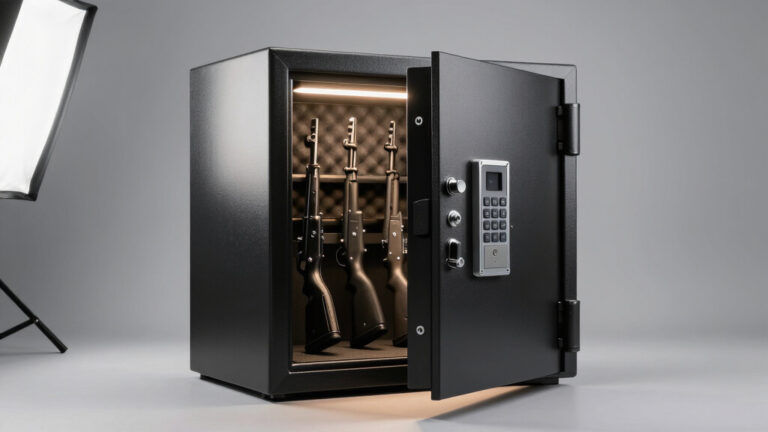
How to Build a Gun Safe Door in 3 Simple Steps
To build a gun safe door in three simple steps, start by gathering sturdy materials like plywood or steel and the right tools. Next, construct and reinforce a solid frame, using heavy-duty screws or welds and adding steel plates for extra security. Finally, install a reliable lock, seal the edges with weather stripping, and finish the door for durability and protection. Keep following this guide to access helpful tips for perfecting your gun safe door.
Gather Materials and Tools for Your Gun Safe Door
Before you start building your gun safe door, gather all the necessary materials and tools to guarantee a smooth process.
You’ll need sturdy plywood or steel sheets for the door’s body, heavy-duty hinges, a locking mechanism, and weather stripping to seal the edges.
Don’t forget reinforcing materials like steel bars or plates if you want extra security.
For tools, grab a drill, screwdriver, measuring tape, level, wrench, and a saw suitable for your chosen material.
Safety gear like gloves and goggles is essential, too.
Having everything ready prevents interruptions and guarantees accuracy.
Double-check your list beforehand so you won’t have to stop midway.
Once you have these materials and tools organized, you’ll be set to move on confidently to building and reinforcing your gun safe door frame.
Build and Reinforce the Gun Safe Door Frame
Start by constructing a sturdy frame that will support the entire gun safe door. Use thick, high-quality hardwood or metal to guarantee maximum strength. Measure and cut the pieces precisely, then assemble them with heavy-duty screws or welds to prevent any wobbling.
Once the frame is in place, reinforce it to resist tampering and forceful entry. Focus on these key steps:
- Add metal brackets at each corner for extra stability
- Insert steel plates between the frame layers to enhance security
- Apply a strong adhesive or epoxy to bond all joints firmly
Taking these steps will build a robust frame that holds up under pressure and keeps your valuables safe. Don’t rush; precision here pays off in the door’s durability.
Install the Gun Safe Door Lock and Add Final Touches
With a reinforced frame in place, you can now focus on installing the lock that will secure your gun safe door.
Choose a high-quality lock—mechanical or electronic—that fits your door’s thickness and frame design. Mark the lock’s position carefully, then drill holes for mounting screws and the locking mechanism.
Attach the lock firmly, making sure it aligns perfectly with the strike plate on the frame. Test the lock multiple times to confirm smooth operation and secure closure.
Finally, add weather stripping or a rubber seal around the door edges to prevent dust and moisture from entering. You might also paint or finish the door to protect the metal and give your safe a polished look.
These final touches enhance durability and guarantee your safe door functions reliably.
Frequently Asked Questions
What Type of Gun Safe Door Provides the Best Fire Resistance?
You’ll get the best fire resistance with a gun safe door featuring multiple steel layers combined with fireproof insulation like gypsum. This combination slows heat transfer, protecting your firearms effectively during a fire emergency.
How Often Should I Inspect and Maintain My Gun Safe Door?
Just like you wouldn’t skip oiling your bike chain, you should inspect and maintain your gun safe door every six months. Regular checks prevent rust and guarantee smooth locking, keeping your firearms secure and ready when needed.
Can I Retrofit an Existing Safe Door to Improve Security?
Yes, you can retrofit an existing safe door to boost security. You’ll want to add stronger locks, reinforce hinges, and maybe install a relocking mechanism. Just make sure your upgrades fit your safe’s design and materials.
What Are the Legal Requirements for Gun Safe Security in My Area?
You’ll need to check your local laws, as requirements vary by area. Most places require a secure locking mechanism and fire resistance. Contact your state’s department of public safety or a local law enforcement office for specifics.
Are Biometric Locks More Secure Than Traditional Combination Locks?
Biometric locks can be more secure since they use unique fingerprints, reducing unauthorized access. However, they might fail with dirty sensors or power issues. Combination locks are reliable but vulnerable to guessing or wear patterns. Choose based on your needs.
Conclusion
Building your own gun safe door is easier than you might think. Did you know that over 60% of gun owners don’t use a safe to store their firearms? By following these three simple steps—gathering materials, reinforcing the frame, and installing a reliable lock—you’re taking an essential step toward protecting your guns and your family. With a secure door, you’re not just building safety; you’re building peace of mind.