Top 12 Best Budget AMD CPU Cooler That Will Blow Your Mind
Many people who want the best budget amd cpu cooler know the frustration of dealing with overheating or noisy fans. A poorly chosen cooler can make a system loud and still fail to keep the CPU within safe temperatures, especially under load. The best budget amd cpu cooler balances quiet operation and efficient heat dissipation without pushing the price too high, which is a tricky combination to find.
What really sets a good budget AMD cooler apart are the quality of the heat pipes and the size of the fan. Copper heat pipes conduct heat away from the CPU much better than aluminum alone.
A 92mm to 120mm fan tends to offer a good balance between airflow and noise, spinning at speeds around 1500 to 2000 RPM. Fitment is crucial too, coolers need to match socket types and keep clearance for RAM and GPU without causing installation headaches. Easy cleaning access is a bonus since dust buildup cracks down performance quickly.
Need a Quick Check?
| Image | Product | Price |
|---|---|---|
Our Top Picks 1  | Thermalright Assassin X120 | Check Price |
Our Top Picks 2  | Thermalright Peerless Assassin 120 | Check Price |
Our Top Picks 3 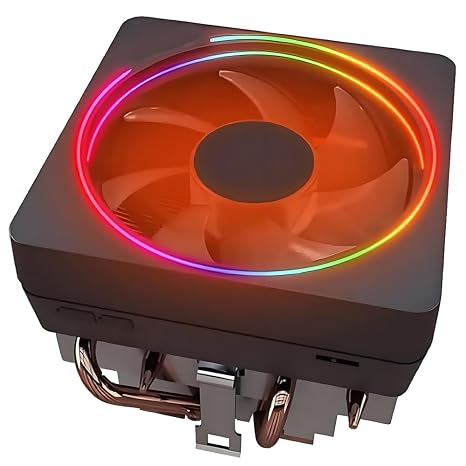 | Wraith Prism Aluminum Cooler | Check Price |
Our Selected Top 12 Budget Amd Cpu Cooler You Can Trust
This list features reliable and affordable CPU coolers designed specifically for AMD processors. Each review highlights performance capabilities, ideal user scenarios, and key advantages and drawbacks to help you find a cooler that balances efficiency and budget.
1. Thermalright Assassin X120 Refined SE CPU Air Cooler
Keeping your AMD CPU cool on a budget can be tricky, but this air cooler tackles that challenge well. It fits nicely into most desktop setups and is especially suited for those wanting solid performance without spending a fortune. Its single biggest strength is balancing effective cooling with low noise levels.
Setting it up involves a straightforward mounting process compatible with desktop CPUs. The 4-pin power connector lets you control fan speed directly from your motherboard, helping to keep noise under 26 dB during regular use. The fan spins up to 1550 rpm, producing a good airflow of over 66 cfm, which helps maintain stable temperatures without being loud or annoying.
Heat pipe technology combined with a fan-based design keeps your processor cool under typical loads. The build leans on reliable materials and a practical design, ensuring durability over time. The strongest praise notes how quiet it runs while the most common gripe mentions that it might not handle very high TDP CPUs as effectively as pricier models.
The cooling is effective for mainstream desktop CPUs and surprisingly quiet during daily tasks, but it can show its limits under very demanding loads where more powerful coolers excel. The solid build adds confidence to its reliability.
Anyone looking for a budget-friendly option that keeps noise low will find it fitting. Those planning to push high-end AMD processors hard may want to explore higher-capacity coolers to avoid overheating risks.
Pros
- Quiet operation at just 25.6 dB
- Good airflow capacity of 66.17 cfm
- Easy installation with 4-pin connector
- Sturdy build from a trusted brand
Cons
- May struggle with very high TDP CPUs
- Fan speed capped at 1550 rpm limits peak cooling
| Specification | Details |
|---|---|
| Power Connector Type | 4-Pin |
| Voltage | 12 volts_of_direct_current |
| Cooling Method | Heat pipe and fan-based |
| Noise Level | 25.6 db |
| Maximum Rotational Speed | 1550 rpm |
| Air Flow Capacity | 66.17 cfm |
2. Thermalright Peerless Assassin 120 SE CPU Cooler
With a powerful wattage of 265 watts, the Thermalright Peerless Assassin 120 SE is designed to keep desktop CPUs running cool under pressure. It fits builders looking for a budget air cooler that stays quiet while managing heat efficiently. Its standout feature is the balanced cooling performance paired with low noise.
Installation involves connecting its 4-pin power connector to your motherboard, supporting standard desktop setups. The fan spins up to 1550 rpm, which keeps noise to a reasonable 25.6 dB, making daily operation unobtrusive whether you’re gaming or working. The cooler’s airflow at 66.17 cfm ensures solid heat dissipation without overwhelming your case.
Constructed with solid materials typical of Thermalright’s 20 years in accessories, it feels sturdy and reliable. It does its cooling job well, maintaining low CPU temps during intense use. Most praise goes to its quiet operation, while some notice it might not be the best fit for very compact cases due to size or clearance.
The cooler’s quiet operation is often noted as a strong advantage, offering effective heat management without loud fan noise. Some users find it bulky for compact builds, requiring careful measurement before purchase.
Gamers and everyday users who want solid cooling with low noise will appreciate this model. Those with small form factor cases or needing higher fan speeds for extreme overclocking might look for different options.
Pros
- High cooling capacity at 265 watts
- Quiet operation with 25.6 dB noise level
- Decent airflow of 66.17 cfm
- Compatible with standard desktop CPUs
Cons
- May be too bulky for smaller cases
- Fan speed limited to a maximum of 1550 rpm
| Specification | Details |
|---|---|
| Power Connector Type | 4-Pin |
| Voltage | 12 volts |
| Wattage | 265 watts |
| Noise Level | 25.6 db |
| Maximum Rotational Speed | 1550 rpm |
| Air Flow Capacity | 66.17 cfm |
3. Wraith Cooler Prism Aluminum Heat Sink CPU Fan
People looking for an affordable, reliable cooler for AMD CPUs will find this one a solid option. It works well with a wide range of AMD sockets and stands out for its efficient heat dissipation thanks to its copper heat pipes and aluminum heatsink.
Mounting the cooler is straightforward since it comes with pre-applied thermal paste and fits most AMD motherboards using the standard bracket. The fan runs quietly at 14 db, and its 4-pin connector allows for precise speed control.
It’s made for everyday desktop use and manages to stay cool without drawing too much power or creating noise.
Cooling performance is strong due to the four 6 mm direct-contact copper heat pipes combined with the aluminum heatsink. Its build feels sturdy and well-made with a solid copper base. High praise surrounds its quiet operation and effective cooling, while some note that the standard bracket is not included, which could complicate installation for some.
Quiet operation and effective cooling are often praised, but the lack of a mounting bracket can make installation tricky for some users. The design combines copper heat pipes and an aluminum sink to keep temperatures low without too much noise.
Those with compatible AMD Ryzen processors who want a budget-friendly cooler with decent performance will be satisfied. Users needing a cooler with included mounting hardware or very quiet operation under heavy loads might want to explore other options.
Pros
- Works with many AMD sockets
- Quiet fan at 14 db
- Pre-applied thermal paste included
- Efficient heat transfer design
Cons
- Mounting bracket not included
- Maximum fan speed can be loud under load
| Specification | Details |
|---|---|
| Power Connector Type | 4-Pin |
| Voltage | 12 volts_of_direct_current |
| Wattage | 105 watts |
| Noise Level | 14 db |
| Maximum Rotational Speed | 2800 rpm |
| Air Flow Capacity | 45 cfm |
4. Wraith Stealth AM4 AM5 Socket CPU Cooler

Known for its quiet operation and compatibility with both AM4 and AM5 sockets, the Wraith Stealth suits anyone looking for a reliable, budget-friendly CPU cooler for AMD builds. Its biggest strength lies in efficiently managing heat without adding noise distractions during work or gaming.
Installation takes just a few minutes thanks to a straightforward screw-mount design that fits easily on compatible motherboards. The 4-pin power connector and low power consumption mean it doesn’t put extra strain on your system. In daily use, the optimized aluminum fins combined with a silent fan keep temps under control without drawing attention with noise.
It handles everyday cooling needs well, dissipating heat quietly with a fan speed topping out at 2000 rpm. The build quality focuses on durability with an aluminum heatsink and carefully designed fan blades.
Most users appreciate how quiet it runs. Some note that it might not be sufficient for high-end overclocked CPUs, but it performs solidly within its intended range.
Quiet operation stands out as the best feature, allowing the CPU cooler to work without causing distractions. Some users find that its cooling capacity falls short for high-performance needs, making it better suited to moderate workloads or stock processor speeds.
Great choice for those on a tight budget looking for decent cooling with minimal noise. Anyone needing extra power for overclocked or high-TDP CPUs should probably look for a stronger cooler option.
Pros
- Quiet fan keeps noise minimal under load
- Simple screw-mount installation
- Compatible with both AM4 and AM5 sockets
- Low power consumption at 2 watts
Cons
- Not ideal for heavily overclocked CPUs
- Cooling capacity limited to moderate use
| Specification | Details |
|---|---|
| Power Connector Type | 4-Pin |
| Voltage | 12 volts |
| Wattage | 2 watts |
| Noise Level | 30 db |
| Maximum Rotational Speed | 2000 rpm |
| Cooling Method | Air |
5. AMD Wraith Stealth Socket AM4 CPU Cooler

AMD Wraith Stealth Socket AM4 CPU Cooler is a compact cooling solution designed specifically for AM4 sockets. Its best feature is fitting neatly into smaller builds without sacrificing core cooling performance.
Ideal for budget-conscious users who want something reliable that comes straight from the AMD box.
Setting it up is pretty straightforward with direct screw mounting to the AM4 socket motherboard. The included pre-applied thermal paste saves a step during installation.
Day-to-day, the 3.5-inch 90mm fan runs quietly thanks to the 4-pin PWM connector that adjusts speed based on temperature. You rarely need to think about cleaning as the aluminum heatsink design keeps dust buildup manageable.
Cooling performance stays solid for mid-range workloads without overheating. The aluminum heatsink isn’t fancy but is well made and durable. Most praise goes to its easy installation and compact size.
Common complaints mention the fan being a bit louder under heavy load and that it’s not ideal for overclocking or high-TDP CPUs.
Many find installation quick and appreciate the included thermal paste, making build setup easier. Noise from the fan during intense CPU use is the most common issue mentioned in feedback.
Those building a stock or lightly tweaked AM4 Ryzen system will find this cooler well suited. Users planning serious overclocking or high-performance tasks should consider a beefier cooler option instead.
Pros
- Compact size fits most AM4 builds easily
- Pre-applied thermal paste simplifies installation
- Quiet fan with PWM speed control
- Solid aluminum heatsink material
Cons
- Fan can get noisy under heavy load
- Limited cooling for overclocking scenarios
| Specification | Details |
|---|---|
| Supports Motherboard Socket | AM4 |
| Aluminum heatsink | Yes |
| Fan size | 3.5-inch 90mm |
| Connector type | 4-pin PWM |
| Mounting | Direct screw mounting to socket AM4 motherboard |
6. Cooler Master Hyper 212 Black II CPU Air Cooler

Quiet and efficient, the Cooler Master Hyper 212 Black II fits well in budget AMD setups aiming for reliable cooling. It’s a solid choice for gamers and productivity users who want steady performance without too much noise or hassle during installation.
Setting it up involves a straightforward mounting bracket that’s friendly even for first-time builders. Its four heat pipes work with Direct Contact Technology to handle heat transfer smoothly.
You’ll notice the fan runs quietly at 1,750 RPM while still pushing decent airflow, making day-to-day use pleasant without distracting noise.
Cooling is solid with a capacity supporting up to 220W, which is more than enough for most Ryzen 7 processors. Construction feels durable and thoughtfully designed, with a minimalist black cover that looks good inside a desktop case.
Most praise revolves around its quiet operation and efficient heat management. Some users find that it could push a bit more air for the price.
Heat transfer efficiency and quiet fan operation receive strong praise, making it a good match for stable AMD CPU cooling. The most frequent complaint centers on airflow, which some feel is a bit limited when pushing performance hard.
Individuals looking for quiet cooling in everyday or gaming use will likely be satisfied. Those planning heavy overclocking or highest performance setups may want to explore more powerful cooling options to ensure adequate airflow and heat dissipation.
Pros
- Quiet fan at 1,750 RPM with low noise output
- Supports up to 220W cooling capacity
- Simple installation with user-friendly mounting bracket
- Clean, modern black design fits many builds
Cons
- Airflow could be stronger for overclocking needs
- Fan speed tops out at 2,500 RPM, limiting max cooling
| Specification | Details |
|---|---|
| Power Connector Type | 4-Pin |
| Voltage | 12 volts |
| Wattage | 2.4 watts |
| Noise Level | 26 db |
| Maximum Rotational Speed | 2500 rpm |
| Air Flow Capacity | 42 cfm |
7. ARCTIC Liquid Freezer III Pro 360 AIO CPU Cooler

Great cooling power and smart design make this a solid pick for budget-conscious AMD builds. Its standout feature is the integrated VRM fan, which helps keep voltage regulators cool, ideal for steady, reliable performance during long gaming or work sessions.
Setup is straightforward with native offset mounting tailored for AMD CPUs, helping the cooler target heat where it matters most. The four-pin PWM fans offer precise speed control, which runs quietly during everyday tasks but ramps up effectively under load. The included ARCTIC P12 PRO fans are noticeably quieter than previous models, adding comfort to daily use.
Performance matches what you’d expect from a 360 AIO liquid cooler, keeping temperatures well under control even during heavy use. Build quality feels solid, especially with the optimized contact pressure that extends CPU lifespan.
Most praise highlights its cooling reliability and quiet operation. Some find the 3000 rpm max fan speed a bit high in noise under extreme loads.
Strong cooling performance and quiet operation stand out, with the VRM fan being a particular highlight. Noise levels may spike when fans run at full speed, especially during heavy CPU loads.
Those wanting reliable temperature control for AMD setups will appreciate this cooler. Systems in compact cases or users sensitive to loud fans might prefer alternatives with lower peak noise.
Pros
- Integrated VRM fan for extra cooling
- Quieter ARCTIC P12 PRO fans
- Optimized contact pressure for better heat transfer
- Effective cooling for long sessions
Cons
- High noise at maximum fan speed
- Setup can be bulky in smaller cases
| Specification | Details |
|---|---|
| Power Connector Type | 4-Pin |
| Voltage | 12 volts |
| Wattage | 3.96 watts |
| Maximum Rotational Speed | 3000 rpm |
| Air Flow Capacity | 77 cfm |
8. CPU Air Cooler with 4 Heat Pipes and 120mm Fan
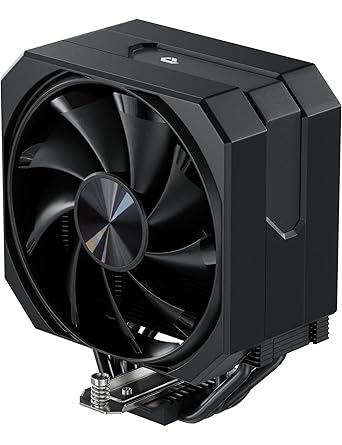
Constructed with four 6mm heat pipes and a 120mm fan, this air cooler suits those running budget AMD or Intel builds who need solid cooling without breaking the bank. It stands out for its universal socket compatibility, fitting a wide range of platforms including AM5 and Intel LGA 1700, making it a flexible choice for upgrades or new builds.
Installation is pretty straightforward as it supports various socket types like AM4, AM3, and multiple Intel variants up to LGA 2066. The 4-pin power connector and 12V operation mean it integrates with most motherboards easily. Its 1650 rpm fan speed keeps noise around 26 dB, quiet enough for daily tasks without distraction.
Regular cleaning is manageable since the fan and fins are accessible without removing the whole unit.
Heat dissipation works well thanks to the large direct heat pipe contact area of 25mm, efficiently drawing heat away during heavy gaming or multitasking. The cooler feels solid and durable, with the strongest praise focusing on its effective performance in budget setups.
One common complaint revolves around the fan speed and airflow, which may not satisfy users pushing high overclocks.
Strong heat dissipation and broad socket compatibility receive frequent positive mention, making the cooler a dependable choice in budget builds. Several users note that the fan’s performance isn’t geared for systems pushed to their thermal limits, leading to some disappointment for intensive overclockers.
Ideal for everyday gaming and office PCs running AMD or Intel processors within regular clock speeds. This cooler suits those prioritizing quiet operation and easy setup over extreme cooling capability. Builds demanding serious overclocking would benefit from exploring higher-end coolers instead.
Pros
- Compatible with a wide range of Intel and AMD sockets
- Four heat pipes ensure efficient heat dissipation
- Quiet operation at 26 dB noise level
- Reasonably easy to install and maintain
Cons
- Fan speed might not satisfy heavy overclocking needs
- Cooling performance limited by 1.45 watts power usage
| Specification | Details |
|---|---|
| Power Connector Type | 4-Pin |
| Voltage | 12 volts_of_direct_current |
| Wattage | 1.45 watts |
| Noise Level | 26 db |
| Maximum Rotational Speed | 1650 rpm |
| Air Flow Capacity | 68.2 cfm |
9. Thermalright PS120SE Dual Fan CPU Air Cooler

Strong cooling power is what stands out most about the Thermalright PS120SE Dual Fan CPU Air Cooler, making it great for anyone looking to keep a high-TDP AMD processor running cool without spending a lot. Its ability to handle CPUs up to 280W makes it especially suitable for powerful builds on a budget.
Setting it up is straightforward, with a 4-pin power connector that works easily with most desktop motherboard headers. The dual fans spin at up to 1650 rpm, delivering a solid airflow of 66.17 cfm while keeping noise levels at a moderate 25.6 dB. The cooler’s design uses the AGHP technique, which helps keep temperatures stable regardless of your PC’s orientation.
Performance-wise, it keeps temperatures down very effectively thanks to seven 6mm heatpipes and a solid build quality. The materials feel sturdy and reliable, holding up well over time.
Some people mention that occasionally the noise could be a bit noticeable, but as an air cooler in this class, it’s generally praised for quiet operation and strong heat dissipation.
Strong cooling and solid construction make this cooler reliable for heavy use, with noise level as the most common complaint among those pushing it hard. It performs well at dissipating heat without breaking the bank.
Anyone building a budget-friendly PC with a mid to high-end AMD CPU will find it a good match. Users with very small cases or extremely noise-sensitive setups might want to consider a different option.
Pros
- Handles high TDP CPUs up to 280 watts
- Low noise level around 25.6 dB
- Dual fan setup for strong airflow
- Compatible with most desktop motherboards
Cons
- Noise can be noticeable at full speed
- Size might not fit in very compact cases
| Specification | Details |
|---|---|
| Maximum Rotational Speed | 1650 rpm |
| Noise Level | 25.6 db |
| Air Flow Capacity | 66.17 cfm |
| Power Connector Type | 4-Pin |
| Wattage | 280 watts |
10. Thermalright Phantom Spirit 120SE CPU Air Cooler

Picking a cooler that balances strong performance with a budget-friendly price is key, and this air cooler fits that spot well. It’s made for desktop users who want good heat dissipation without spending too much, handling CPUs with TDP between 105W and 280W thanks to advanced heatpipe tech.
Setting it up is straightforward, with a 4-pin power connector making compatibility with most motherboard headers easy. Fans run at a peak speed of 1500 RPM, keeping noise to a manageable 25.6 dB, which means it won’t be a disruption even during heavier tasks. The 120SE uses airflow at 66.17 CFM, so it clears heat efficiently throughout your system.
Performance is solid because it uses upgraded 7x6mm heatpipes with a special AGHP 4th generation technology. The build quality reflects Thermalright’s experience, focusing on reliable cooling for mid to high TDP CPUs.
Common feedback highlights quiet operation as a big plus, though some find the size and mounting can be a bit fiddly in certain PC cases.
Fans run quietly while keeping core temperatures stable, which stands out as the main advantage. Some find installation a bit challenging due to size and the mounting setup.
Anyone building a mid-range desktop who needs strong cooling at a reasonable cost will be satisfied with how this cooler performs. Users with compact cases or very limited space may want to look for a smaller option.
Pros
- Quiet operation even at max fan speed
- Supports CPUs up to 280W TDP
- Solid airflow with 66.17 CFM rating
- 4-pin connector ensures good motherboard compatibility
Cons
- Can be tricky to mount in tight cases
- Size may not fit all desktop layouts
| Specification | Details |
|---|---|
| Power Connector Type | 4-Pin |
| Voltage | 12 volts_of_direct_current |
| Cooling Method | Air |
| Noise Level | 25.6 db |
| Maximum Rotational Speed | 1500 rpm |
| Air Flow Capacity | 66.17 cfm |
11. Thermaltake Gravity A2 95W CPU Cooler

When looking for a CPU cooler that handles low power AMD processors without breaking the bank, this unit fits the bill by balancing solid cooling with quiet operation. Its standout feature is a thoughtfully designed aluminum heatsink that efficiently dissipates heat up to 95 watts, making it a good match for compact builds.
Installation is straightforward thanks to a user-friendly design and a compact 92 mm fan. Running at a maximum speed of 3500 rpm, the fan manages airflow quietly at just 33.5 dB, so daily use won’t be noisy or distracting. The 4-pin power connector allows motherboard control of fan speed, helping maintain a consistent and balanced cooling experience during regular tasks.
Cooling performance is steady for processors within its 95W limit, handling heat without fuss. The heatsink’s shape optimizes heat dissipation, and the solid build feels reliable in typical desktop setups. Positive remarks often highlight how quiet it runs, while some wish it offered better cooling for higher power CPUs or larger cases.
Quiet operation is often noted as the best aspect, with the fan maintaining low noise during use. The most frequent downside relates to limited cooling capacity for processors requiring above 95 watts, which may cause higher fan speeds and noise.
Those with low power AMD systems will appreciate its performance, especially in compact desktops. Users with more demanding CPUs or larger cases should consider other options for better cooling power and airflow.
Pros
- Quiet fan operation at 33.5 dB
- Easy installation process
- Effective heat dissipation for low power CPUs
- Compact size fits smaller cases easily
Cons
- Not ideal for CPUs above 95 watts
- Fan speed can get quite high under load
| Specification | Details |
|---|---|
| Cooling Method | Fan, Thermal |
| Power Connector Type | 4-Pin |
| Maximum Rotational Speed | 3500 rpm |
| Noise Level | 33.5 db |
| Air Flow Capacity | 46.24 cfm |
| Wattage | 95 watts |
12. Thermalright BA120 CPU Air Cooler

Running quietly at 25.6 dB and pushing 66.17 CFM of air, this cooler suits budget-conscious PC builders who want solid cooling without noisy fans. Its biggest strength lies in balancing airflow and noise, ideal for desktop setups needing reliable air cooling.
Setup involves a standard 4-pin power connector operating at 12 volts and 3.6 watts, which makes installation straightforward on most desktop CPUs. The fan speed maxes out at 1550 RPM, providing enough airflow while keeping the noise level low enough for daily tasks or gaming without distraction.
Cooling performance meets expectations for air coolers in its price range, efficiently managing CPU temperatures during regular and moderately intense workloads. The build quality reflects Thermalright’s experience, delivering a sturdy feel. Most praise focuses on its quiet operation, while some mention a bulkier size that could challenge compact cases.
Quiet fan noise is the most appreciated feature, making it suitable for users sensitive to sound. Common feedback points to its size being a bit large, which may pose fitment challenges in smaller PC cases.
People seeking calm yet effective cooling will find it a good match. Those building ultra-compact systems or requiring very high cooling capacity might want to consider other options better tailored to those needs.
Pros
- Quiet operation at 25.6 db
- Strong airflow at 66.17 cfm
- Simple 4-pin power connection
- Solid build quality
Cons
- Bulky size limits use in compact cases
- Moderate wattage restricts extreme cooling
| Specification | Details |
|---|---|
| Power Connector Type | 4-Pin |
| Voltage | 12 volts |
| Wattage | 3.6 watts |
| Noise Level | 25.6 db |
| Maximum Rotational Speed | 1550 rpm |
| Air Flow Capacity | 66.17 cfm |
Best Budget AMD CPU Coolers Comparison Table
| Product | Cooling Method | Noise Level | Maximum Speed | Air Flow Capacity |
|---|---|---|---|---|
| Thermalright Assassin X120 | Heat pipe and fan-based | 25.6 db | 1550 rpm | 66.17 cfm |
| Thermalright Peerless Assassin 120 | Air | 25.6 db | 1550 rpm | 66.17 cfm |
| Wraith Prism Aluminum Cooler | Fan | 14 db | 2800 rpm | 45 cfm |
| Wraith Stealth AM4 AM5 | Air | 30 db | 2000 rpm | – |
| AMD Wraith Stealth AM4 | – | – | – | – |
| Cooler Master Hyper 212 Black | Fan | 26 db | 2500 rpm | 42 cfm |
| ARCTIC Liquid Freezer III Pro | Liquid | – | 3000 rpm | 77 cfm |
| Generic 4-Heatpipe 120mm Cooler | Air | 26 db | 1650 rpm | 68.2 cfm |
| Thermalright PS120SE Dual Fan | Air | 25.6 db | 1650 rpm | 66.17 cfm |
| Thermalright Phantom Spirit 120SE | Air | 25.6 db | 1500 rpm | 66.17 cfm |
| Thermaltake Gravity A2 95W | Fan, Thermal | 33.5 db | 3500 rpm | 46.24 cfm |
| Thermalright BA120 Cooler | Air | 25.6 db | 1550 rpm | 66.17 cfm |
- Cooling MethodHeat pipe and fan-based
- Noise Level25.6 db
- Maximum Speed1550 rpm
- Air Flow Capacity66.17 cfm
- Cooling MethodAir
- Noise Level25.6 db
- Maximum Speed1550 rpm
- Air Flow Capacity66.17 cfm
- Cooling MethodFan
- Noise Level14 db
- Maximum Speed2800 rpm
- Air Flow Capacity45 cfm
- Cooling MethodAir
- Noise Level30 db
- Maximum Speed2000 rpm
- Air Flow Capacity–
- Cooling Method–
- Noise Level–
- Maximum Speed–
- Air Flow Capacity–
- Cooling MethodFan
- Noise Level26 db
- Maximum Speed2500 rpm
- Air Flow Capacity42 cfm
- Cooling MethodLiquid
- Noise Level–
- Maximum Speed3000 rpm
- Air Flow Capacity77 cfm
- Cooling MethodAir
- Noise Level26 db
- Maximum Speed1650 rpm
- Air Flow Capacity68.2 cfm
- Cooling MethodAir
- Noise Level25.6 db
- Maximum Speed1650 rpm
- Air Flow Capacity66.17 cfm
- Cooling MethodAir
- Noise Level25.6 db
- Maximum Speed1500 rpm
- Air Flow Capacity66.17 cfm
- Cooling MethodFan, Thermal
- Noise Level33.5 db
- Maximum Speed3500 rpm
- Air Flow Capacity46.24 cfm
- Cooling MethodAir
- Noise Level25.6 db
- Maximum Speed1550 rpm
- Air Flow Capacity66.17 cfm
How to Choose the Right Budget AMD CPU Cooler
Choosing the right budget AMD CPU cooler depends on factors like compatibility with your CPU socket, cooling efficiency, and noise levels. Prioritizing these elements ensures effective temperature control and quieter operation, which helps avoid costly repairs or early replacements caused by overheating.
Compatibility with Amd Sockets
Some coolers claim universal support but fail to fit properly on certain AMD sockets, causing confusion and frustration. In daily use, a cooler that matches current and legacy socket types (like AM4 and AM5) will mount securely without pressure on the motherboard or pins.
Clearance is crucial as well; RAM slots around the CPU often have tall heat spreaders that can block oversized coolers.
Compatibility means not just socket alignment but also fitting within different motherboard sizes, from compact mATX layouts to large ATX boards. A cooler that fails this can block PCIe slots or make RAM installation a hassle. Look for coolers specifying support for multiple AMD sockets and showing clear dimensions relating to RAM height and motherboard layout.
Cooling Performance
Running a processor near its thermal limit leads to throttling and unstable performance. A cooler with effective heat dissipation, usually via copper heat pipes and aluminum fins, keeps temperatures in check during demanding tasks like gaming or video editing. The surface contact with the CPU and fan airflow pattern both influence this.
Heat pipes made of copper and dense fin arrays improve the transfer and release of heat. With a good cooler, the CPU stays within safe temperatures, meaning longer component life and no sudden drops in clock speed.
Aim for coolers with a balanced combination of materials and a fan that can push sufficient airflow without strain.
Noise Levels
Loud fan noise distracts when working or watching videos. Some budget coolers spin their fans aggressively under load, making it hard to concentrate or enjoy a quiet room. A cooler with well-tuned fan speed profiles provides low noise at idle and only ramps up when really needed, avoiding constant buzzing.
The trick is balancing airflow and noise output. Bigger fans can run slower and quieter but are not always found in budget models. Fans rated around 20 to 30 dBA at full speed are usually acceptable for office environments.
Choosing a cooler that controls fan speed intelligently makes daily use more comfortable.
Size and Installation
Many budget coolers are bulky, and navigating the space inside various PC cases is tricky. Cases with limited CPU cooler height can block tall coolers.
Some also interfere with RAM slots, especially if the modules have large heat spreaders. Installing a cooler in a cramped build can easily turn into a struggle without the right design.
Look for clear physical dimensions, height especially, and instructions showing compatibility with PC cases and RAM clearance. Easy installation is a relief; models that come with a mounting kit designed for AMD sockets and don’t require special tools save a lot of time and fuss during setup.
Compact, thoughtfully designed coolers fit well and install securely.
Build Quality and Durability
The materials in these coolers vary widely. Thin aluminum fins can bend easily, and cheap plastic fans may rattle or fail after few months. Durable copper heat pipes and solid mounting brackets lead to a cooler that stays effective and stable for years.
Loose fan connectors or weak mounting can cause vibrations and reduce cooling efficiency.
Pay attention to build quality in the fan blades and bearings too, quality products usually use sleeve or hydraulic bearings that last longer and generate less noise. Mounting hardware that firmly secures the cooler without stressing the motherboard prevents damage.
Proper dust resistance also matters to reduce maintenance frequency and keep cooling optimal.
Optimizing Cooling Performance with Budget AMD CPU Coolers
Most budget AMD CPU coolers on the market deliver solid cooling performance when matched appropriately with the processor’s thermal output. A few key points help maximize efficiency during use. First, ensure the cooler’s fan speed settings are configured in the BIOS or through motherboard software to balance noise and cooling.
Slower fan speeds reduce noise but raise temperatures slightly, while faster speeds improve heat dissipation. Secondly, proper thermal paste application is crucial.
A thin, even layer between the CPU and cooler base guarantees good contact and heat transfer.
Additional tips to optimize performance:
- Use coolers slightly above the CPU’s TDP rating for better headroom.
- Keep case airflow balanced with intake and exhaust fans.
- Regularly clean dust buildup on the cooler fins and fan blades.
Following these simple practices can significantly extend the cooler’s lifespan and maintain steady CPU temperatures even under load.
Common Installation Mistakes to Avoid for AMD CPU Coolers
Many issues with AMD CPU cooler installations stem from uneven mounting pressure or incorrect orientation. It’s important to use the mounting bracket and screws specified for your CPU socket to avoid damaging the processor or motherboard.
Applying too much or too little thermal paste causes poor heat transfer and higher temperatures.
Things to avoid during installation:
- Don’t overtighten screws; snug is enough to secure without warping the CPU.
- Avoid moving the cooler after placing thermal paste to prevent air bubbles.
- Ensure the fan connector is properly plugged into the CPU_FAN header on the motherboard.
- Check clearance around RAM and other components to make sure the cooler fits without obstruction.
Double-checking these details helps prevent common mistakes that lead to poor cooling or hardware damage.
Comparing Air vs. Liquid Cooling Options Within Budget Constraints
Air coolers are generally simpler and less expensive compared to liquid cooling solutions, especially on a budget. Most affordable air coolers rely on a heatsink with aluminum fins and a fan to dissipate heat effectively.
They require minimal maintenance and rarely pose risks of leaks or pump failures.
Budget liquid coolers, typically all-in-one (AIO) models, provide better cooling performance in smaller spaces due to their radiators and liquid coolant circulation. However, AIOs tend to be pricier and might exceed tight budget limits. They also require space to mount the radiator and some familiarity with installation steps.
Choosing between air and liquid cooling within budget depends on:
- Case compatibility and clearance for the cooler’s size.
- Noise tolerance, as air coolers can generate varying fan noise.
- Preference for maintenance frequency since AIOs might need more upkeep.
Both types can work for AMD CPUs, but simplicity and cost often make air coolers a practical choice in budget builds.
People Also Asked
How Do I Properly Install a Budget AMD CPU Cooler?
Apply a small amount of thermal paste before securing the cooler to the CPU socket to ensure proper heat transfer. Make sure to align the mounting brackets properly and tighten screws evenly to avoid uneven pressure on the CPU. Checking the cooler manual for specific compatibility with your motherboard helps prevent installation issues.
Will a Budget Cooler Fit in a Small PC Case?
Some budget coolers fit smaller cases, but measuring the clearance inside your case is crucial before buying. Check the cooler’s height and compare it to the available space above the motherboard or near RAM slots. Low-profile coolers often work better in compact builds than taller tower-style coolers.
Is a Budget AMD Cooler Safe for Overclocking?
Budget AMD coolers can handle mild overclocking, but they may struggle with higher power draws that generate more heat. Monitoring CPU temperatures during stress tests is important to avoid overheating. When temperatures rise too much, upgrading to a better cooling solution might be necessary.
How Long Does a Budget AMD CPU Cooler Usually Last?
A budget AMD cooler typically lasts several years with normal use, though longevity depends on fan quality and maintenance. Cleaning dust buildup from fan blades and heatsinks regularly can prevent noise and inefficiency. Replacing the thermal paste every few years also helps maintain effective cooling performance.
What Common Problems Occur with Budget AMD CPU Coolers?
Common issues include fan noise and dust accumulation, which reduce cooling efficiency over time. Poor mounting or uneven contact with the CPU can cause higher temperatures. Fans in budget coolers may wear out faster, leading to uneven speeds or failure, so keeping spares handy or knowing replacement options is useful.
Conclusion
Choosing a budget AMD CPU cooler comes down to cooling performance, noise levels, and compatibility with your CPU socket and case size. You want something that keeps temperatures in check without being too loud, fitting well within your system without blocking components or restricting airflow.
Consider how much space you have inside your case and how much noise you’ll tolerate day-to-day. Also, balance your cooler choice with the amount you want to spend and how heavily you plan to push your CPU.
Check the comparison table and the picks above to find one that fits your needs best.

I’m Grant Mitchell, a firearms and hunting writer with years of experience at the range and in the field. I write about rifles, shotguns, handguns, optics, safe storage, cleaning, and responsible ownership, along with practical hunting tips. My goal is to share accurate, safety-first information that helps you choose the right firearm, maintain it properly, and become a more confident shooter.