Top 12 Best 120mm Air Cooler That Will Boost Your PC Speed
The worst feeling is realizing your PC is running hotter than it should because of a failing cooler. Fans that hum loudly but don’t move enough air, or heatsinks that barely touch the CPU, are a common headache. Finding the best 120mm air cooler can change how your system performs and sounds during heavy use.
Good 120mm air coolers typically have dense aluminum fins paired with copper heat pipes, usually four or six for decent heat transfer. Size matters, but the cooler must fit within your case and not block RAM slots or tall components.
Airflow and noise levels matter too; fans spinning between 800 and 1600 RPM generally provide a solid balance between cooling and quiet operation. Easy cleaning also helps maintain performance over time.
Need a Quick Check?
| Image | Product | Price |
|---|---|---|
Our Top Picks 1 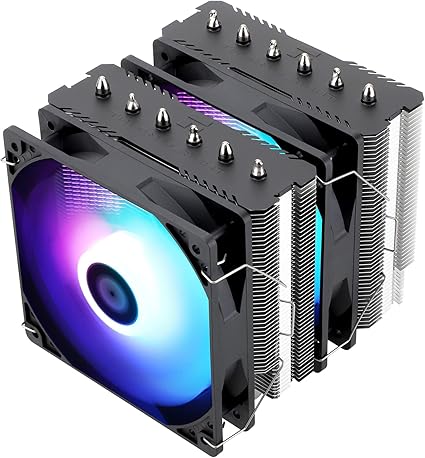 | Thermalright Peerless Assassin 120 SE | Check Price |
Our Top Picks 2  | Thermalright Phantom Spirit 120SE | Check Price |
Our Top Picks 3  | Thermalright PS120SE | Check Price |
Our Selected Top 12 120mm Air Cooler Worth Considering
This list features carefully chosen 120mm air coolers designed for efficient cooling performance. Each review explains how well the cooler works, who it is best suited for, and highlights its main advantages and disadvantages to help you make an informed decision.
1. Thermalright Peerless Assassin 120 SE ARGB CPU Cooler
Among 120mm air coolers, the Thermalright Peerless Assassin 120 SE ARGB stands out for combining solid cooling power with quiet operation. It’s ideal for desktop users who want reliable temperature control without excess noise, especially suited for typical gaming or productivity builds.
Setup involves attaching the 4-pin fan connector, running at 12 volts DC, which makes installation straightforward. Its ARGB lighting adds a bit of style, but the key benefit is how it manages heat day to day with low noise output.
At 25 dB, it stays unobtrusive during long sessions, and the fan speed can reach up to 1550 rpm to ramp up cooling when needed.
Performance-wise, the cooler handles heat well thanks to an airflow capacity of 66.17 CFM, keeping your CPU within safe temperatures. Construction quality comes from Thermalright’s 20 years of experience, making it solid and durable.
Most users commend its quiet operation, although some note it doesn’t push air quite as hard as larger models.
The cooler receives praise for its quietness during extended use, which keeps the system sound-level friendly. On the other hand, it is sometimes criticized for not delivering as much airflow power as larger or more expensive options.
People seeking a balance between noise and adequate cooling for mid-range CPUs will find this cooler very suitable. Those with high-performance or overclocked setups may want to explore options with higher maximum fan speeds and airflow.
Pros
- Quiet operation at 25 dB
- Good airflow for 120mm fan
- Simple installation with 4-pin connector
- ARGB lighting adds visual flair
Cons
- Cooling capacity lower than bigger coolers
- Fan speed topping at 1550 rpm limits peak performance
| Specification | Details |
|---|---|
| Power Connector Type | 4-Pin |
| Voltage | 12 volts_of_direct_current |
| Noise Level | 25 db |
| Maximum Rotational Speed | 1550 rpm |
| Air Flow Capacity | 66.17 cfm |
| Wattage | 7 watts |
2. Thermalright Phantom Spirit 120SE CPU Cooler
Thermalright Phantom Spirit 120SE CPU Cooler is designed for desktop users needing solid cooling within a 120mm form factor. Its key strength lies in handling a wide range of CPU heat outputs, from 105W up to 280W, making it a versatile choice for various builds.
Setting up the cooler is straightforward with a 4-pin power connector providing stable 12V power. The silent fan operates at a maximum 1500 rpm, maintaining a noise level of just 25.6 dB, so it won’t disturb your workspace. Thanks to AGHP 4th generation heatpipe technology, it efficiently manages heat in both vertical and horizontal orientations, making routine use worry-free.
Performance matches expectations for a mid-range air cooler, keeping temperatures well-controlled for most CPUs within its TDP range. The build feels solid, reflecting Thermalright’s long experience in cooler manufacturing.
The main positive highlights are its quiet operation and effective heat dissipation. Some users note that its cooling upper limit requires checking compatibility with higher-end CPUs or overclocked systems.
Many appreciate the quiet operation alongside efficient heat removal across a broad CPU power range. The most common drawback is that it might not fully meet cooling needs for extreme overclocking or the highest-end processors.
This cooler suits anyone building a desktop that fits a 120mm space and needs reliable, quiet airflow for typical to moderately demanding CPUs. Those aiming for the strongest cooling possible or large workstations should look toward larger or higher-capacity solutions.
Pros
- Handles TDP up to 280W
- Quiet at 25.6 dB noise level
- Works in vertical and horizontal setups
- Stable 12V power via 4-pin connector
Cons
- May struggle with very high-end CPUs
- Limited to 120mm fan size
| Specification | Details |
|---|---|
| Cooling Method | Air |
| Power Connector Type | 4-Pin |
| Voltage | 12 volts_of_direct_current |
| Noise Level | 25.6 db |
| Maximum Rotational Speed | 1500 rpm |
| Air Flow Capacity | 66.17 cfm |
3. Thermalright PS120SE CPU Cooler
Running cool and quiet, this air cooler suits desktop users looking for a reliable 120mm solution. Its standout feature is handling a wide range of TDP from 105W up to 280W, making it versatile for different CPU power needs.
Setup involves a straightforward 4-pin power connection at 12 volts, which fits most standard desktop motherboards. The cooler stays steady thanks to the advanced AGHP heatpipe design that manages heat well regardless of orientation. Daily use benefits from a moderate noise level of 25.6 dB, keeping your workspace relatively quiet while the fan spins up to 1650 rpm to push air efficiently.
Cooling performance aligns well with the cooler’s TDP range, effectively managing heat under different loads. It’s solidly built with a focus on longevity and consistent heat dissipation.
The most praised aspect is how well it works quietly; some users note that it could be a bit louder at maximum speed, which is common for air coolers in this class.
Quiet cooling performance is the strongest point, making it suitable for office or casual gaming setups. Most feedback mentions fan noise rising at full speed as the main trade-off for its power.
Users with mid to high-power CPUs will appreciate its versatility and cooling power. Those seeking ultra-silent operation might want to look at liquid cooling or larger air coolers instead.
Pros
- Handles wide TDP range 105W to 280W
- Quiet operation at 25.6 dB noise level
- 4-pin connector compatible with most desktops
- Advanced heatpipe tech for better cooling
Cons
- Fan noise increases near maximum RPM
- May require space consideration due to heatpipe design
| Specification | Details |
|---|---|
| Cooling Method | Air |
| Power Connector Type | 4-Pin |
| Noise Level | 25.6 db |
| Maximum Rotational Speed | 1650 rpm |
| Air Flow Capacity | 66.17 cfm |
| Wattage | 280 watts |
4. Thermalright Assassin Spirit 120 EVO Black CPU Cooler

Popular among those seeking quiet, effective cooling in a compact size, this cooler excels at balancing airflow and noise. Well-suited for desktop setups where space is limited, it stands out for keeping temperatures low without getting loud.
Installation is straightforward with a 4-pin connector powering the fan at 12 volts. The maximum fan speed of 2000 rpm means you can expect solid airflow while the noise level stays under 30 dB, which helps during long work or gaming sessions. Cleaning is manageable since the design avoids overly tight spaces around the fins.
Airflow at 68.9 cfm keeps the CPU nicely cooled for most tasks. The build quality reflects Thermalright’s experience, with sturdy materials focused on durability.
Many praise the quiet operation, although some note the fan speed can feel a bit high under load. The cooler’s shape fits smaller cases without interfering with surrounding parts.
Many appreciate how quiet the fan stays during normal use, keeping distractions down. A frequent complaint is that the fan speed ramps up noticeably when the CPU gets busy, which may catch attention in very quiet rooms.
Anyone looking for a reliable, quiet cooler that works well in smaller cases will find this a good match. Those needing ultra-low noise for silent builds might want to explore others with lower max speeds or larger fans.
Pros
- Quiet operation below 30 dB during use
- Good airflow at 68.9 cfm
- Compact design fits smaller desktops
- Durable build quality
Cons
- Fan speed can feel high under load
- Limited to desktop use only
| Specification | Details |
|---|---|
| Power Connector Type | 4-Pin |
| Voltage | 12 volts |
| Noise Level | 28.2 db |
| Maximum Rotational Speed | 2000 rpm |
| Air Flow Capacity | 68.9 cfm |
| Cooling Method | Air |
5. Thermalright Assassin X120 Refined SE ARGB CPU Cooler

Aluminum fins and a compact design make this CPU cooler a solid pick for smaller desktop setups aiming for effective cooling without noise disruption. Its single biggest strength lies in balancing airflow capacity with low noise output, fitting well where space and quiet operation matter.
Installation involves a 4-pin power connector compatible with most motherboards, making setup straightforward. The fan spins up to 1550 rpm, pushing air at 66.17 cfm, keeping temperatures stable throughout the day. Noise level stays around 25.6 decibels, which is quiet enough not to distract during regular desktop use.
Cooling does its job well with steady airflow and a solid build focused on reliability. Reviews show people appreciate how quietly it runs during heavy workloads.
Some mention that while it cools nicely, the size can be limiting in very tight cases or with certain RAM configurations.
Quiet running is the most praised feature, making it suitable for noise-sensitive environments. Some users find the cooler’s size restricts compatibility with certain case layouts and memory sticks with large heat spreaders.
People who want a balance of quiet cooling and compact size will appreciate this cooler. Those with very small cases or high-profile RAM should consider alternatives to avoid fit issues.
Pros
- Quiet operation at 25.6 db noise level
- Strong airflow despite compact size
- Simple 4-pin power connector setup
- Durable construction with aluminum fins
Cons
- May have clearance issues in tight spaces
- Not ideal for RAM with tall heat spreaders
| Specification | Details |
|---|---|
| Power Connector Type | 4-Pin |
| Voltage | 12 volts |
| Cooling Method | Air |
| Noise Level | 25.6 db |
| Maximum Rotational Speed | 1550 rpm |
| Air Flow Capacity | 66.17 cfm |
6. Thermalright Assassin Spirit 120 EVO Dark CPU Cooler

Size and noise level often catch attention first, and here the Thermalright Assassin Spirit 120 EVO Dark stands out with low noise at just 27 dB and a modest size of 120 x 73 x 156 mm. It’s ideal for desktop users needing a quiet, compact air cooler with sufficient airflow.
Setup is straightforward, thanks to a standard 4-pin power connector running at 12 volts. Day-to-day use is quiet with a max fan speed of 1850 rpm, which keeps noise under control.
The aluminum body makes cleaning easier since dust doesn’t cling as much, and its size fits well in most mid-sized cases without crowding other components.
It cools effectively with an airflow capacity of 70.4 cfm, making it reliable for regular desktop CPUs. The build sounds solid, focusing on aluminum for durability and heat dissipation.
Praises often highlight its quiet operation, while complaints generally revolve around limited compatibility for larger or less common sockets.
Quiet fan noise at 27 dB is the most praised feature, making it suitable for noise-sensitive environments. Common issues arise from its limited compatibility with certain CPU sockets, restricting its use to more common desktop setups. The cooler’s aluminum material works fine but might lag behind in heat transfer compared to copper alternatives.
People looking for a reliable and quiet air cooler that fits standard desktops will find it a practical choice. Those needing broader socket support or extreme cooling performance might want to explore other models with different materials or sizes.
Pros
- Quiet operation at only 27 dB
- Compact size fits most desktop cases
- Simple 4-pin connection for easy setup
- Good airflow capacity of 70.4 cfm
Cons
- Compatibility may be limited for uncommon sockets
- Aluminum material less effective than copper options
| Specification | Details |
|---|---|
| Size | 120 (L) x 73 (W) x 156 (H) mm |
| Noise Level | 27 db |
| Power Connector Type | 4-Pin |
| Maximum Rotational Speed | 1850 rpm |
| Air Flow Capacity | 70.4 cfm |
| Voltage | 12 volts |
7. Be Quiet! Pure Rock 3 Black CPU Cooler

Great for gaming and multimedia setups, this CPU cooler offers 190W TDP, making it a solid choice when you want strong cooling without stepping up to an expensive or bulky model. It suits consumer PCs, including mainstream and entry-level builds, where effective heat management is key.
Installation feels straightforward with compatibility across both Intel (1151, 1200, 1700, etc.) and AMD (AM4, AM5) sockets. The 4-pin power connector pairs with PWM control, allowing the 120mm fan to adjust speeds based on temperature, keeping noise and airflow balanced during daily tasks.
The black heat pipes blend nicely with the heat sink, adding a bit of style inside the case.
Heat gets moved efficiently through four 6mm heat pipes with minimal bends, funneling it to well-designed fins. Users praise it for quiet operation despite hitting up to 2000 rpm, though some mention the noise level can reach 34.8 dB under load.
The build quality is solid, focused on performance and lasting durability, while some wish it had a bit more aggressive cooling for very high-end CPUs.
Strong cooling performance combined with quiet functioning at usual speeds gets high marks, but the noise level can increase noticeably when the fan spins up to its 2000 rpm maximum. The cooler’s build quality holds up well, and the design keeps heat movement efficient through its well-placed heat pipes.
People running mainstream or moderately powerful gaming builds will find it well suited to their needs. Those planning to use overclocked or high TDP CPUs should consider solutions with greater cooling capacity or stronger fans. It fits well for users who prioritize a balance between cooling and noise.
Pros
- Supports a wide range of Intel and AMD sockets
- Good heat pipe design for effective cooling
- Quiet operation at typical speeds
- Stylish all-black finish blends well inside cases
Cons
- Noise can rise to 34.8 dB under heavy load
- May struggle with extreme high-end CPU cooling needs
| Specification | Details |
|---|---|
| Cooling Method | Air |
| Power Connector Type | 4-Pin |
| Voltage | 12 volts |
| Wattage (TDP) | 190 watts |
| Maximum Rotational Speed | 2000 rpm |
| Noise Level | 34.8 dB |
8. ARCTIC Freezer 36 Black CPU Cooler

Keeping high-end CPUs cool during intense use can be tricky, but this air cooler handles the job well. Suited for users with AM4, AM5, LGA1851, or LGA1700 sockets, its biggest strength lies in efficient heat transfer through its design and fan setup.
Installation requires the original AMD screws for AM4/AM5 mounting, so having those handy helps. The Intel mounting frame spreads contact pressure evenly, making the cooler sit properly on the CPU.
Running on a 4-pin power connector at 12 volts and spinning up to 1800 rpm, the 120 mm fan keeps airflow strong without being overly loud in daily use.
It cools effectively thanks to 4 offset heat pipes that quickly move heat to the fins. The build feels solid and focused on performance.
Reviews praise the cooling power, especially on demanding CPUs. A common complaint is the need to source AMD screws separately if they’re missing, which can be a minor hassle.
The cooler effectively dissipates heat on high-end CPUs thanks to its heat pipe design and optimized fan setup. A notable inconvenience is the need to find AMD mounting screws separately if they are missing, which interrupts easy installation for some users.
Those running systems with supported AM4/AM5 or Intel sockets who value quiet but capable cooling will appreciate this model. Users seeking a more straightforward installation or higher fan speed for extreme overclocking might want to consider alternative cooling options.
Pros
- Good heat transfer with 4 offset heat pipes
- Quiet 120 mm fan with strong airflow
- Compatible with recent AMD and Intel sockets
- Effective Intel mounting frame for contact pressure
Cons
- AMD mounting screws must come from motherboard
- Fan max speed could be limiting for extreme overclocking
| Specification | Details |
|---|---|
| Power Connector Type | 4-Pin |
| Voltage | 12 volts |
| Wattage | 1.2 watts |
| Maximum Rotational Speed | 1800 rpm |
| Air Flow Capacity | 56.3 cfm |
| Compatible Devices | AM4, AM5, LGA1851, LGA1700 |
9. Thermalright Peerless Assassin 120 SE CPU Cooler

Delivering 66.17 CFM airflow at a maximum speed of 1550 RPM, Thermalright Peerless Assassin 120 SE is ideal for anyone wanting solid 120mm air cooling with a dual tower design. It fits most desktop builds well without getting in the way of graphics cards or motherboard components.
Installation goes smoothly thanks to the SS2 install system and metal pressure plate, which ensure firm contact with the CPU surface. Its offset asymmetric layout keeps the cooler from blocking other parts around the socket, making daily maintenance and cleaning easier.
The 4-pin connector supports PWM control for quiet operation at just 25.6 db noise level.
The cooler keeps temperatures under control pretty efficiently with a copper and aluminum heatsink paired with nickel-plated heat pipes and a brushed black anodized top cover. Its build quality feels solid and durable.
Several users appreciate the quiet yet effective cooling, but some mention it can be a bit bulky for smaller cases.
Many find the cooling effective and quiet thanks to the heat pipe and dual tower setup paired with the 4-pin PWM fan. The common drawback is its bulkiness, which complicates installation in cramped or compact builds. The cooler trades size for performance and noise control.
Ideal for desktop users prioritizing solid cooling without noise who have mid-to-large cases. Users with tight interiors or mini builds might want a slimmer alternative to avoid fitting troubles.
Pros
- Strong airflow with dual tower heatsink design
- Quiet operation at just 25.6 dB noise level
- Good clearance around CPU socket area
- Secure CPU contact with metal pressure plate
Cons
- Bulky size may not fit smaller cases
- Weight can be noticeable during installation
| Specification | Details |
|---|---|
| Maximum Rotational Speed | 1550 rpm |
| Air Flow Capacity | 66.17 cfm |
| Noise Level | 25.6 db |
| Power Connector Type | 4-Pin |
| Voltage | 12 volts |
| Wattage | 2.88 watts |
10. Thermalright Phantom Spirit 120 EVO CPU Cooler

People looking for a solid 120mm air cooler that balances strong cooling with quiet operation will find this one appealing. It suits those who want a cooler that fits well in many desktop setups while offering a well-made, attractive design.
Its biggest strength lies in combining effective heat dissipation with a modest noise level.
Setting it up is straightforward, thanks to its compact size of about 125 by 135 by 157 mm, which fits comfortably in most standard cases without interfering with memory slots. The 4-pin connector lets you control fan speed easily. Daily use is quiet at 27 dB, and the airflow of 69 CFM keeps your CPU temperatures in check without requiring high RPM.
Cooling works consistently through its twin-tower aluminum radiator and seven blackened heatpipes, all connected to a finely carved pure copper base for better heat transfer. The anodic black frosted finish gives it a sturdy, refined look. The main praise is its quiet, efficient cooling performance.
A common downside is that the maximum fan speed is limited to 27 RPM, which may restrict heavy overclocking.
The cooler receives strong praise for its quiet, efficient performance backed by solid aluminum and copper construction. The most mentioned drawback is the limited maximum fan speed, which could hold back users looking for extreme cooling power.
Those with standard desktop builds wanting reliable, low-noise cooling will be happy with this CPU cooler. Users aiming for aggressive overclocking might want to look for a model with higher fan speed and airflow specs.
Pros
- Quiet operation at 27 dB
- High airflow capacity of 69 CFM
- Compact, compatible size avoids memory interference
- Durable anodic black frosted finish
Cons
- Fan speed maxes out at 27 RPM
- Might not suit heavy overclocking needs
| Specification | Details |
|---|---|
| Power Connector Type | 4-Pin |
| Voltage | 12 volts |
| Wattage | 2.4 watts |
| Noise Level | 27 db |
| Maximum Rotational Speed | 27 rpm |
| Air Flow Capacity | 69 cfm |
11. Thermalright AXP120-X67 Black ARGB Low Profile CPU Cooler

A low-profile CPU cooler designed for compact builds without sacrificing cooling power, ideal for small form factor desktops. Its standout feature is the ability to fit in tight spaces while maintaining good airflow, making it a solid choice when height clearance is a limiting factor.
Installing the cooler is straightforward, thanks to metal fasteners that work with both Intel and AMD sockets. The included heat transfer paste boosts its effectiveness right out of the box.
The 120x120x15mm PWM fan adjusts speed automatically up to 1800 rpm, keeping noise levels reasonably low during regular use.
Cooling performance holds up well for its size, largely driven by the aluminum fins atop a copper base. The fan moves up to 59 CFM while staying below 26.1 dB in noise.
Materials feel sturdy and the compact dimensions (123.5x120x67 mm) make it an easy fit inside smaller cases. Common remarks praise its quiet operation; some users mention that airflow could feel limited compared to larger coolers.
The quiet fan and compact size are the strongest points, with many appreciating how it stays unobtrusive inside smaller builds. A common downside is that some users find the airflow inadequate for very high-performance CPUs or overclocking.
Great for anyone building small or low-profile systems who want decent cooling without noise. Power users or those with larger cases may want a cooler with stronger airflow or fan speed options for better temperature control.
Pros
- Low-profile design fits compact cases
- Quiet operation under most loads
- Easy installation with metal fasteners
- Effective heat transfer paste included
Cons
- Airflow less powerful than larger coolers
- Fan speed limited to 1800 rpm maximum
| Specification | Details |
|---|---|
| Fan Size | 120x120x15mm |
| Maximum Fan Speed | 1800 rpm ±10% |
| Air Flow | 59 CFM (MAX) |
| Noise Level | ≤ 26.1 dB(A) |
| Dimensions | 123.5(L) x 120(W) x 67(H) mm |
| Compatibility | Intel & AMD platforms |
12. Thermalright Peerless Assassin 120 Black CPU Cooler

Thermalright Peerless Assassin 120 Black is a twin-tower CPU air cooler that excels at keeping desktop processors cool without taking up too much space. Ideal for those needing solid heat dissipation performance, it stands out with a design that fits near the first graphics card slot while maintaining efficient airflow.
Setting it up is straightforward thanks to metal fasteners compatible with both Intel and AMD platforms. The cooler’s dimensions are manageable, and its offset asymmetric layout means it won’t block your graphics card, which helps with airflow around crowded components. The quiet 4-pin fan, running at up to 1550 rpm, keeps noise low during daily operation.
Heat moves away from the CPU quickly thanks to the 9600cm² aluminum heat sink area and full electroplating reflow welding process. The black nanoscale paint on the twin towers gives them a modern appearance while helping to dissipate heat. Praise often highlights its effective cooling at reasonable noise levels, though some note that at full speed, the 25.6 dB noise might still be noticeable in very quiet rooms.
Cooling performance impresses with a wide heat sink area and effective heat dispersion, yet the noise output reaches 25.6 dB at maximum fan speed, which may be noticeable in quieter environments. Installation benefits from solid metal fasteners and an asymmetric layout that avoids interference with nearby graphics cards.
People looking for strong air cooling without blocking their graphics card will appreciate it, especially those using Intel or AMD CPUs. Users seeking the absolute quietest cooler or those with very small cases might want to consider alternative options with lower profile or fan speeds.
Pros
- Compatible with Intel & AMD fasteners
- Offset layout fits near graphics card
- Quiet operation at moderate speed
- Large heat dissipation area of 9600cm²
Cons
- Noise level rises to 25.6 dB at max speed
- Double tower design increases cooler height
| Specification | Details |
|---|---|
| Power Connector Type | 4-Pin |
| Voltage | 12 volts_of_direct_current |
| Wattage | 4.8 watts |
| Noise Level | 25.6 db |
| Maximum Rotational Speed | 1550 rpm |
| Air Flow Capacity | 66.17 cfm |
Best 120mm Air Coolers Comparison Table
| Product | Noise Level | Max RPM | Air Flow Capacity | Wattage |
|---|---|---|---|---|
| Thermalright Peerless Assassin 120 SE | 25 db | 1550 rpm | 66.17 cfm | 7 watts |
| Thermalright Phantom Spirit 120SE | 25.6 db | 1500 rpm | 66.17 cfm | – |
| Thermalright PS120SE | 25.6 db | 1650 rpm | 66.17 cfm | 280 watts |
| Thermalright Assassin Spirit 120 EVO | 28.2 db | 2000 rpm | 68.9 cfm | – |
| Thermalright Assassin X120 Refined SE | 25.6 db | 1550 rpm | 66.17 cfm | – |
| Thermalright Assassin Spirit 120 EVO | 27 db | 1850 rpm | 70.4 cfm | 1.92 watts |
| be quiet! Pure Rock 3 | 34.8 db | 2000 rpm | – | 190 watts |
| ARCTIC Freezer 36 Black | – | 1800 rpm | 56.3 cfm | 1.2 watts |
| Thermalright Peerless Assassin 120 SE | 25.6 db | 1550 rpm | 66.17 cfm | 2.88 watts |
| Thermalright Phantom Spirit 120 EVO | 27 db | 27 rpm | 69 cfm | 2.4 watts |
| Thermalright AXP120-X67 Black ARGB | 26.1 db | 1800 rpm | 59 cfm | – |
| Thermalright Peerless Assassin 120 Black | 25.6 db | 1550 rpm | 66.17 cfm | 4.8 watts |
- Noise Level25 db
- Max RPM1550 rpm
- Air Flow Capacity66.17 cfm
- Wattage7 watts
- Noise Level25.6 db
- Max RPM1500 rpm
- Air Flow Capacity66.17 cfm
- Wattage–
- Noise Level25.6 db
- Max RPM1650 rpm
- Air Flow Capacity66.17 cfm
- Wattage280 watts
- Noise Level28.2 db
- Max RPM2000 rpm
- Air Flow Capacity68.9 cfm
- Wattage–
- Noise Level25.6 db
- Max RPM1550 rpm
- Air Flow Capacity66.17 cfm
- Wattage–
- Noise Level27 db
- Max RPM1850 rpm
- Air Flow Capacity70.4 cfm
- Wattage1.92 watts
- Noise Level34.8 db
- Max RPM2000 rpm
- Air Flow Capacity–
- Wattage190 watts
- Noise Level–
- Max RPM1800 rpm
- Air Flow Capacity56.3 cfm
- Wattage1.2 watts
- Noise Level25.6 db
- Max RPM1550 rpm
- Air Flow Capacity66.17 cfm
- Wattage2.88 watts
- Noise Level27 db
- Max RPM27 rpm
- Air Flow Capacity69 cfm
- Wattage2.4 watts
- Noise Level26.1 db
- Max RPM1800 rpm
- Air Flow Capacity59 cfm
- Wattage–
- Noise Level25.6 db
- Max RPM1550 rpm
- Air Flow Capacity66.17 cfm
- Wattage4.8 watts
How to Choose the Right 120mm Air Cooler
Selecting a good 120mm air cooler involves focusing on noise levels, cooling efficiency, and compatibility with your case and CPU socket. Prioritizing these factors ensures effective heat management, prevents overheating, and avoids costly replacements or upgrades later on.
Compatibility and Socket Support
A cooler that doesn’t fit the CPU socket will be useless no matter how good its specs are. Socket support is the foundation; Intel and AMD have several types, such as LGA 1200, AM4, or AM5. Many coolers list a range of supported sockets but confirming your exact one is still essential.
Clearance issues appear most often around the RAM slots and motherboard components. Tall or large RAM sticks might conflict with the cooler’s heatsink or fan, making the system harder to assemble or requiring you to buy low-profile RAM instead.
Also, evaluate the space inside your case, including height restrictions and airflow paths. A cooler too large for your case can block airflow or physically not fit, leading to higher temperatures or installation failure.
Cooling Performance and Tdp Rating
Matching the cooler’s TDP to the CPU’s heat output prevents overheating or wasted money on an overly powerful unit. Processors often specify their thermal design power, say, 95 watts or 125 watts, and the cooler should at least meet or exceed this rating to handle continuous loads well. Cooling efficiency depends heavily on how many and what type of heatpipes are used, as well as fin density in the heatsink.
High fin density offers more surface area but must be balanced with airflow to avoid resistance. The fan’s airflow rating, measured in CFM (cubic feet per minute), is a practical way to see how much air can pass through to cool the fins.
Check fan speed ranges and airflow values to ensure it can keep the CPU cool without running at full blast constantly.
Noise Levels and Fan Quality
Low noise is key for everyday comfort, especially in quieter environments. Fan noise is usually noted in decibels (dBA) at different RPMs. Look for coolers that maintain sound levels under 30 dBA at normal operation to avoid the fan becoming distracting.
The bearing type in the fan impacts both noise and lifespan; sleeve bearings are cheaper but wear faster, whereas ball or fluid dynamic bearings last longer and run quieter. Fans with PWM support adjust their speed dynamically based on CPU temperature, so they spin slower during light workloads and ramp up only when needed.
This feature reduces noise and power consumption while maintaining effective cooling when the system heats up.
Build Quality and Materials
All-copper heatpipes and base plates transfer heat much better than aluminum alone, but they often cost more. A copper base directly touching the CPU improves thermal conductivity, speeding heat movement away from the chip.
Aluminium fins are common and lightweight but should be sturdy to resist bending during installation. Poorly made fins or heatsink assemblies can bend or break, reducing cooling efficiency and complicating mounting. Fan blades should be balanced and built from durable plastic, with the frame supporting both them and the bearings securely.
A well-constructed fan frame helps maintain consistent airflow and limits vibrations that increase noise over time.
Installation and Maintenance Ease
A complex mounting system can turn a simple upgrade into hours of frustration. Coolers that provide socket-compatible brackets and clear step-by-step instructions minimize errors during installation. Some mounting mechanisms require a backplate on the motherboard, so checking for included hardware and compatibility saves headaches.
Cleaning the cooler shouldn’t require full disassembly; fans with easy removal or dust filters can help maintain performance without tearing the unit apart. Accessibility of screws or clips is also important because small or hidden fasteners complicate routine dust removal or fan replacement, especially in compact cases.
Optimizing Airflow for Maximum Cooling Efficiency
Positioning the fan correctly has a direct impact on cooling performance. For a single 120mm air cooler, setting it to push air through the heatsink toward the rear exhaust of the case helps maintain steady airflow.
Key points for optimizing airflow:
- Place intake fans at the front or bottom of the case to bring in fresh air.
- Make sure cables aren’t obstructing the air path around the cooler.
- Use quality case fans that maintain consistent RPM without excessive noise.
- Ensure air can exit efficiently through rear and top vents to prevent hot air buildup.
Regularly checking these details can prevent hot spots, allowing the 120mm air cooler to operate at its best. Even the highest quality cooler cannot compensate for poor ventilation inside the case.
Routine Maintenance Practices to Extend Cooler Lifespan
Keep the cooler’s fan blades free from dust by using a soft brush or compressed air every few weeks. Dust accumulation reduces airflow, leading to higher CPU temperatures.
Simple maintenance steps include:
- Cleaning fan blades and heatsink fins carefully without bending them.
- Inspecting the mounting mechanism to confirm the cooler remains tightly fixed to the CPU.
- Replacing the thermal paste roughly once a year to maintain efficient heat transfer.
- Checking that fan bearings spin smoothly without unusual noises.
Following these routines can help avoid overheating issues that shorten the cooler’s effective cooling performance over time.
Comparing 120mm Air Coolers with All-in-One Liquid Coolers
120mm air coolers typically provide reliable cooling at a lower cost and simpler installation compared to all-in-one (AIO) liquid coolers. Air coolers have fewer moving parts and do not require a pump, reducing points of failure.
On the other hand, AIO liquid coolers often offer better thermal performance under heavy load because their liquid can transfer heat away faster across larger radiators. However, they carry risks like pump failure or leaks.
Air coolers, especially 120mm models, tend to be more compact and compatible with a wide range of cases without interference to RAM or motherboard components. They also run quieter as there is no pump noise, just the fan.
Choosing between the two depends on system requirements, budget, and personal preference regarding noise and maintenance.
People Also Asked
How Do I Install a 120mm Air Cooler Properly?
A 120mm air cooler installs by aligning it with the CPU socket bracket and securing it with clips or screws. Applying thermal paste evenly between the CPU and cooler helps maintain good heat conduction. Make sure the fan orientation allows airflow towards the rear exhaust for better ventilation.
Is a 120mm Air Cooler Compatible with My CPU Socket?
Most 120mm air coolers come with mounting brackets compatible with popular sockets like Intel LGA115x and AMD AM4. Checking your CPU socket model and cooler specifications before purchasing prevents compatibility issues. Some coolers include adjustable brackets to cover a broader range of sockets.
How Long Does a 120mm Air Cooler Typically Last?
A 120mm air cooler can last several years with proper maintenance. Cleaning dust off the fan blades and heatsink regularly prevents overheating and prolongs the cooler’s effective lifespan. Fans may eventually wear out but can usually be replaced separately.
What Are Common Problems with 120mm Air Coolers?
Common problems include noisy fans due to dust buildup or bearing wear and insufficient cooling from poor contact with the CPU. Applying the right amount of thermal paste and ensuring tight mounting can avoid these issues. Fan speed controls or replacements help manage noise.
Can a 120mm Air Cooler Fit in a Small PC Case?
A 120mm air cooler often fits in compact cases but check the maximum CPU cooler height supported by your case specifications. Some smaller cases require low-profile coolers or top-down designs instead of tower-style air coolers. Measuring clearance around RAM and motherboard components is important.
Conclusion
Choosing a 120mm air cooler means focusing on cooling performance, noise levels, and compatibility with your case and CPU socket. These factors affect how well the cooler fits your setup and how quiet it runs during daily use. Pay attention to fan speed and static pressure because they influence cooling efficiency, especially if your case has restricted airflow.
Think about the size of your PC case and your budget before making a final choice. Smaller spaces might need a low-profile cooler to avoid clearance issues.
Check the comparison table and the detailed picks above to find the best option that meets your specific needs without overspending or compromising on performance.

I’m Grant Mitchell, a firearms and hunting writer with years of experience at the range and in the field. I write about rifles, shotguns, handguns, optics, safe storage, cleaning, and responsible ownership, along with practical hunting tips. My goal is to share accurate, safety-first information that helps you choose the right firearm, maintain it properly, and become a more confident shooter.